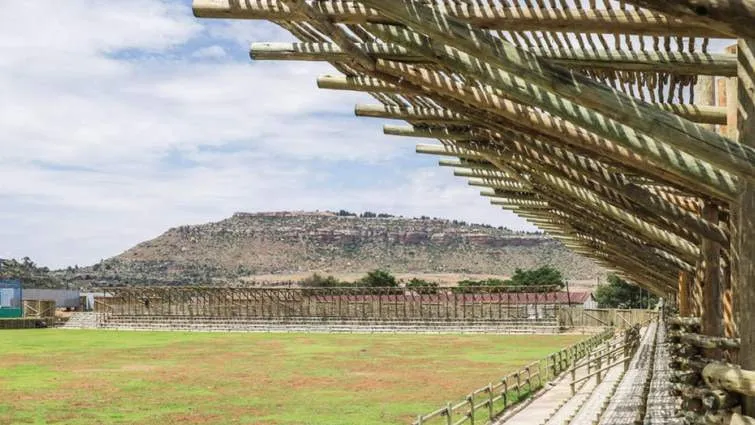
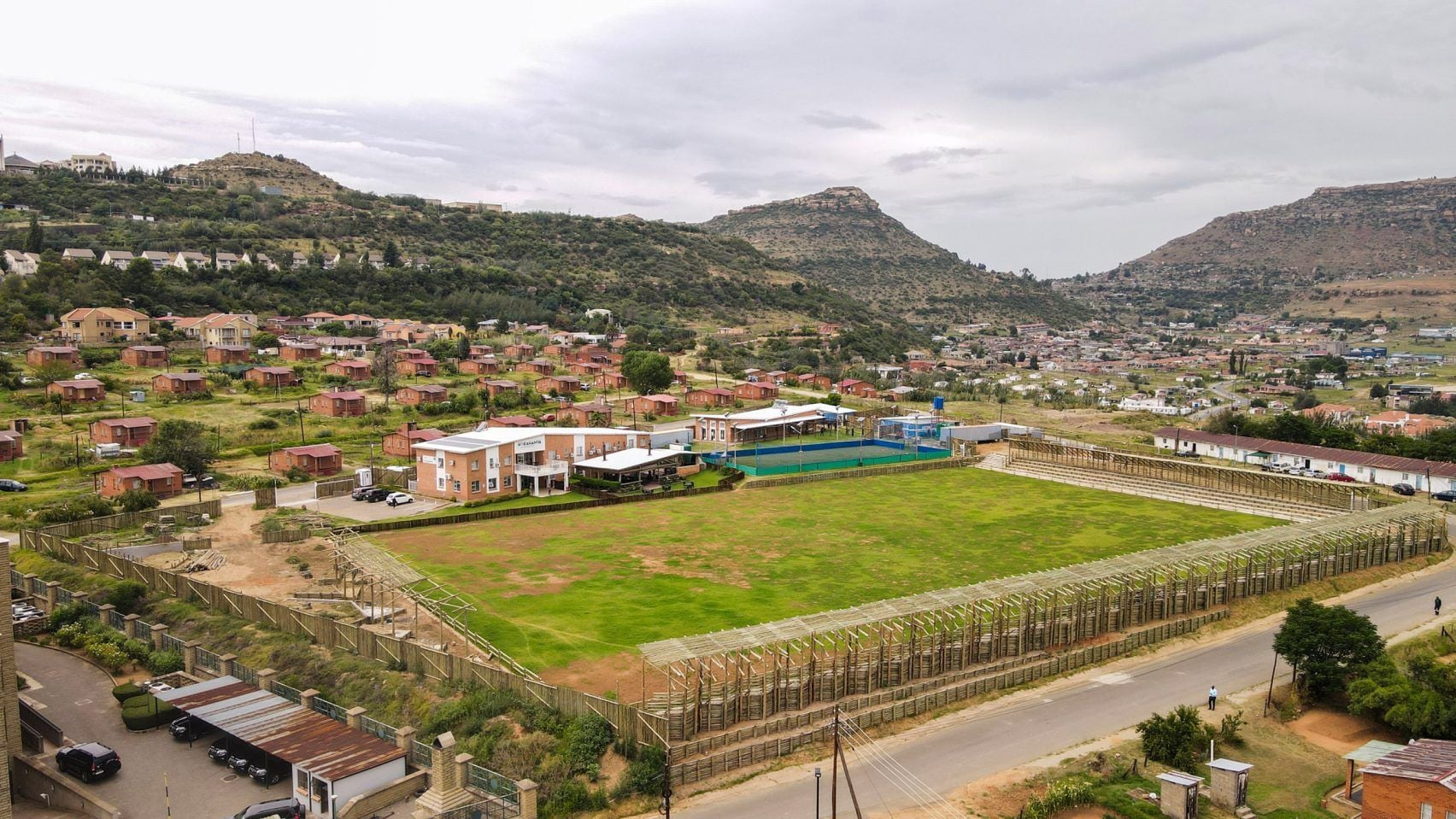
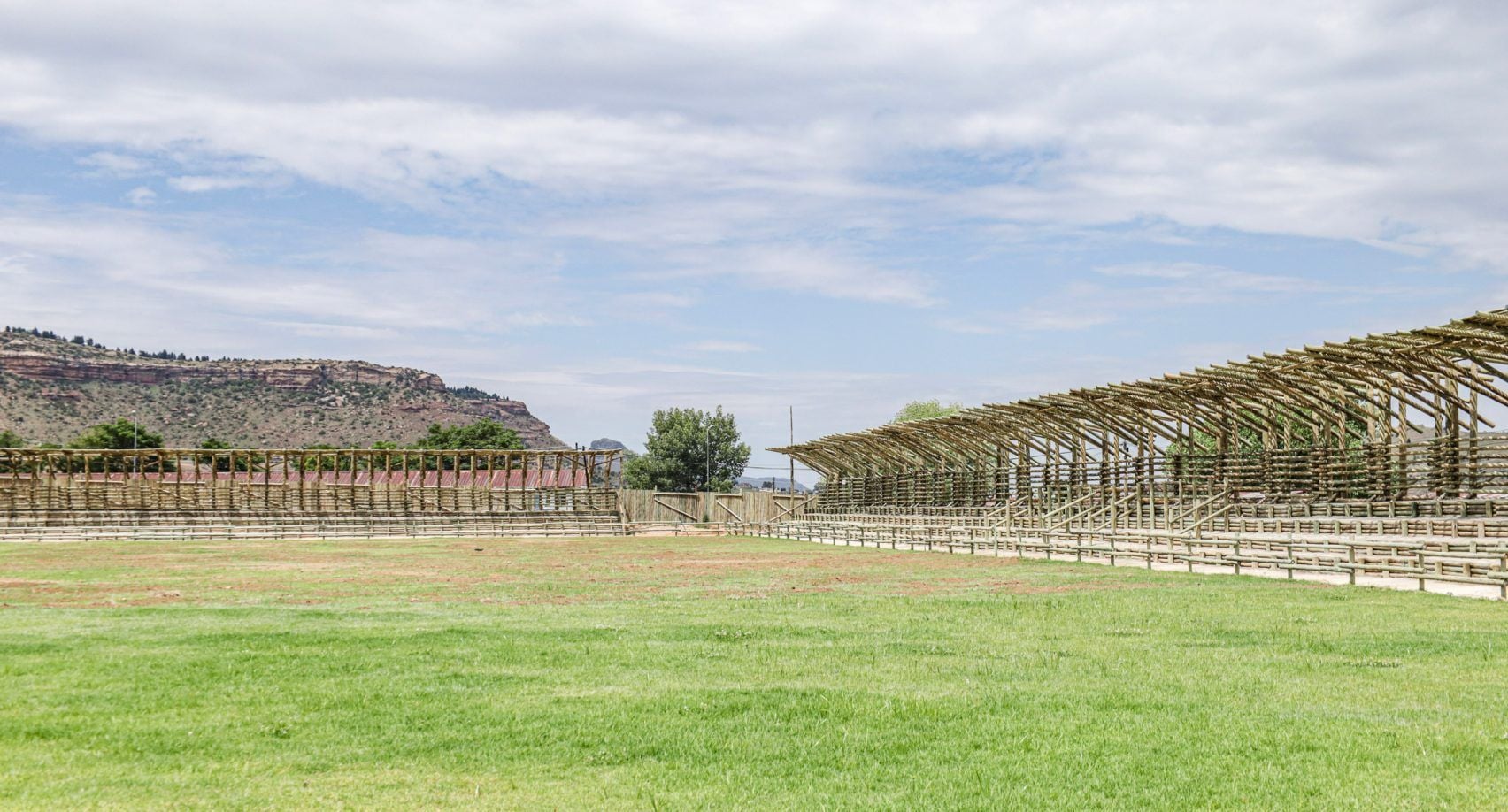
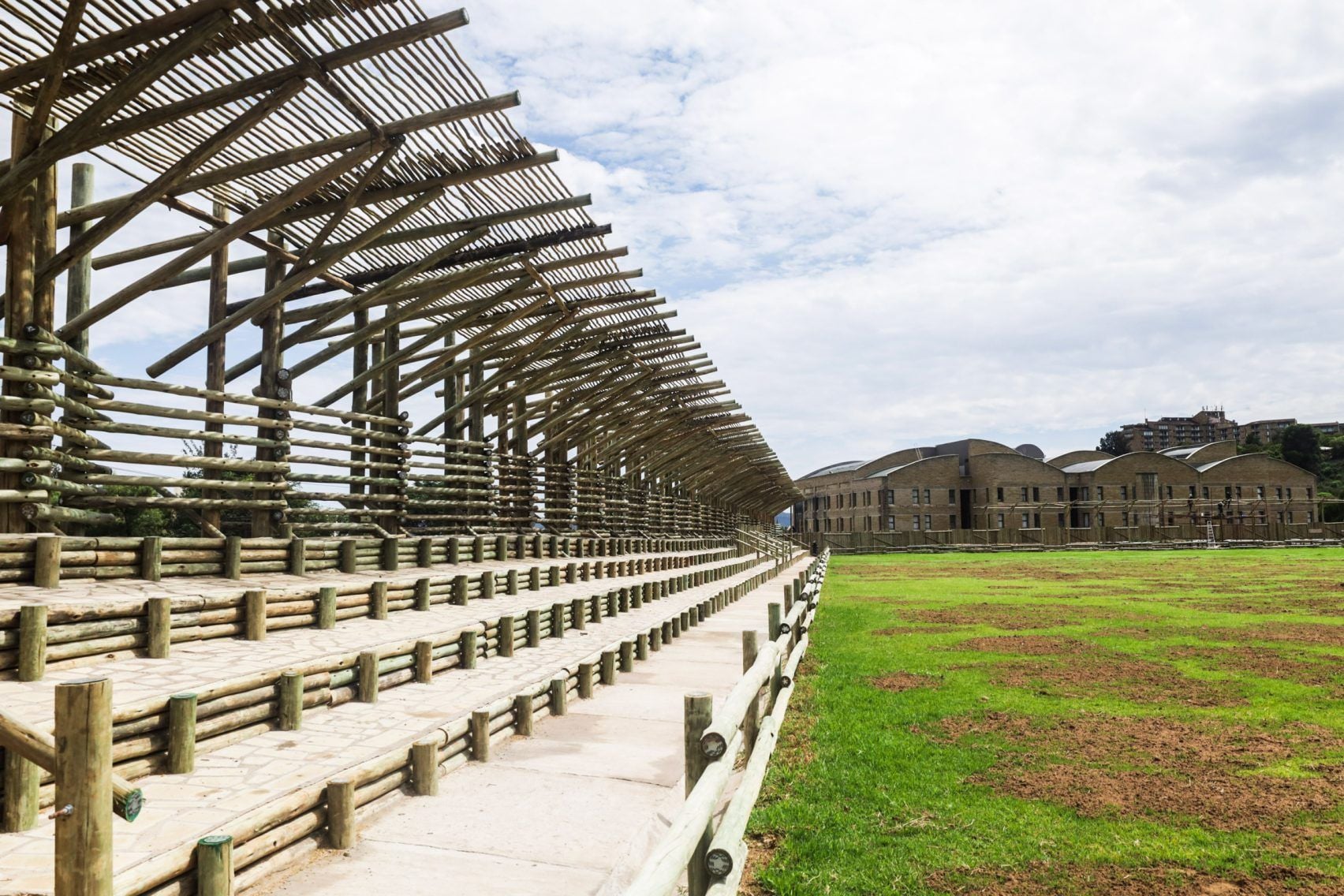
An unusual soccer stadium, built almost entirely of wood, has opened in the African city of Lesotho. The project was created by the nonprofit organization Rise International for the Kick4Life social entrepreneurship center with the aim of blending harmoniously with the surrounding environment.
The project is the result of Rise International’s In Loco program, which provides hands-on construction training for young people living in rural communities across Africa. By creating jobs for local residents, the project also provided Lesotho with a permanent home for its men’s and women’s soccer teams for the first time.
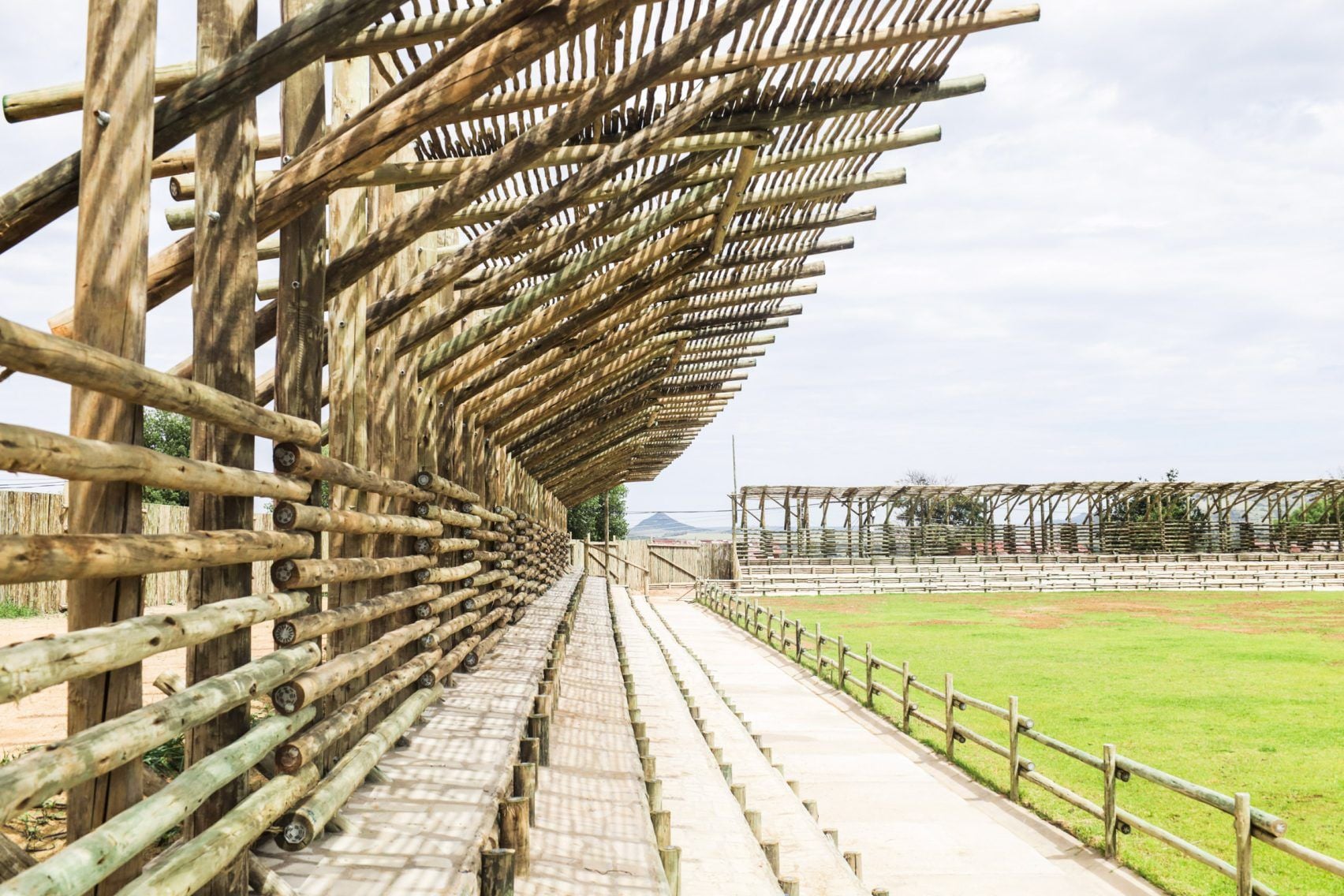
The stands of this soccer stadium are formed by zigzagging eucalyptus poles and sandstone blocks.
“This is a unique project not only because it is the world’s first stadium specifically designed to promote social change, but also because of the unique approach to its design and construction,” Rise International noted.
The stadium’s design combines modern infrastructure with tradition, ensuring harmony with the surrounding landscape.
The spectator seating, fencing, and canopies are made from 8,584 treated eucalyptus poles, or rubberwood poles.
Its design was developed to blend harmoniously into the natural surroundings while embodying modern interpretations of local folk traditions and crafts, such as “litema”—a type of wall art of the Sotho people.
“Built from rubber tree trunks, it reflects traditional architecture and highlights the beauty of the Koaling and Koatsaneng mountains, which stretch out behind the stadium,” noted the organization Rise International.
The zigzag pattern of the vertical posts reflects the local “litema” decorative technique, which honors local art, while the wooden slats provide shade reminiscent of traditional thatched roofs.
According to the organization, all the wood used in the project is FSC-certified and sourced from plantations operated by the logging company MTO Forestry in Mpumalanga Province, South Africa.
Kick4Life stated that this is “Africa’s first stadium built with FSC-certified wood.”
A key part of the project was landscaping, which helped restore the ecological balance of the site and minimize flooding.
The project involved the use of permeable paving, as well as local trees, shrubs, and grasses that were specifically selected for their ease of maintenance and minimal watering requirements.
“Flooding and soil erosion, which previously occurred along the earthen embankment, no longer happen thanks to the landscaped stands, which have enhanced long-term environmental sustainability,” Rise International noted.
Africa may split into two parts due to a new tectonic fault in Zambia.
France has declared Russia’s failure in Africaand the weakness of its economic model.
The withdrawal of Russian troops from the strategically important city of Kidal in northern Mali in April was not only a loss of ground for the Kremlin but also a blow to its reputation.