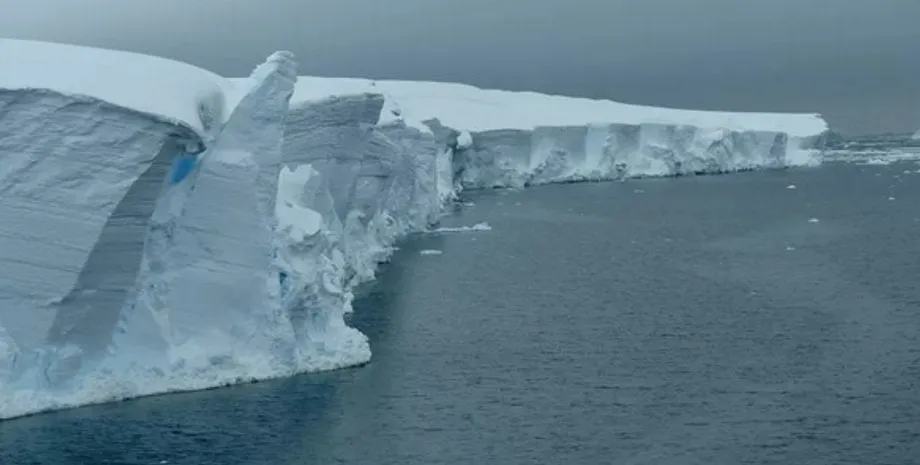
After decades of relative stability, sea ice in Antarctica has begun to shrink rapidly due to the rise of warm deep ocean waters. Scientists note that the decline in ice area in 2023 was record-breaking and was not predicted by climate models, which may indicate dangerous changes in the region’s climate system.
For a long time, Antarctica was considered an exception amid global warming. Since the late 1970s, satellites have recorded seasonal expansion and contraction of sea ice around the continent, but overall, its area remained stable. Between 2007 and 2015, it even increased.
However, after 2015, the situation changed dramatically. In 2023, the winter sea ice extent fell to a record low. According to the researchers, the probability of such an event occurring without the influence of climate change was approximately one in 3.5 million.
In a new study, scientists concluded that a fundamental shift in the oceanic system has occurred around Antarctica. Heat that previously remained deep beneath the surface is now rising and melting the sea ice.
This was caused by stronger winds over the Southern Ocean. These winds intensified due to the ozone hole and greenhouse gas emissions. The winds gradually brought warm, salty deep-ocean water closer to the surface.
Previously, cold, fresh water at the surface kept the heat below, but over time this barrier weakened. By 2015, the warm waters had come so close to the surface that storms and strong winds began mixing them with the upper layers of the ocean.
Now, as scientists explain, a closed cycle has emerged. Warm water rises, melts the ice, and makes the surface waters saltier. Because of this, they mix more easily with the warm depths, which further accelerates melting and hinders the formation of new ice.
The retreat of the ice threatens not only the climate but also the Antarctic ecosystem. Algae grow on and beneath the ice, serving as food for krill. Krill, in turn, are food for penguins, seals, whales, and seabirds.
Low sea ice levels have already been linked to the mass death of emperor penguin chicks. Scientists warn that a prolonged reduction in sea ice could alter the entire ecosystem of the Southern Ocean.
Researchers also emphasize that the problem is not limited to Antarctica. Sea ice reflects sunlight and helps cool the planet. If it decreases, the ocean absorbs more heat.
In addition, changes in the Southern Ocean’s circulation could reduce its ability to store heat and carbon. Previously, Antarctica helped mitigate global warming, but now, according to the study’s authors, the situation may be shifting in the opposite direction.
An ice repository for the future of science has been created in Antarctica.