
Floating wetlands in Australia cut lagoon emissions by about 30%
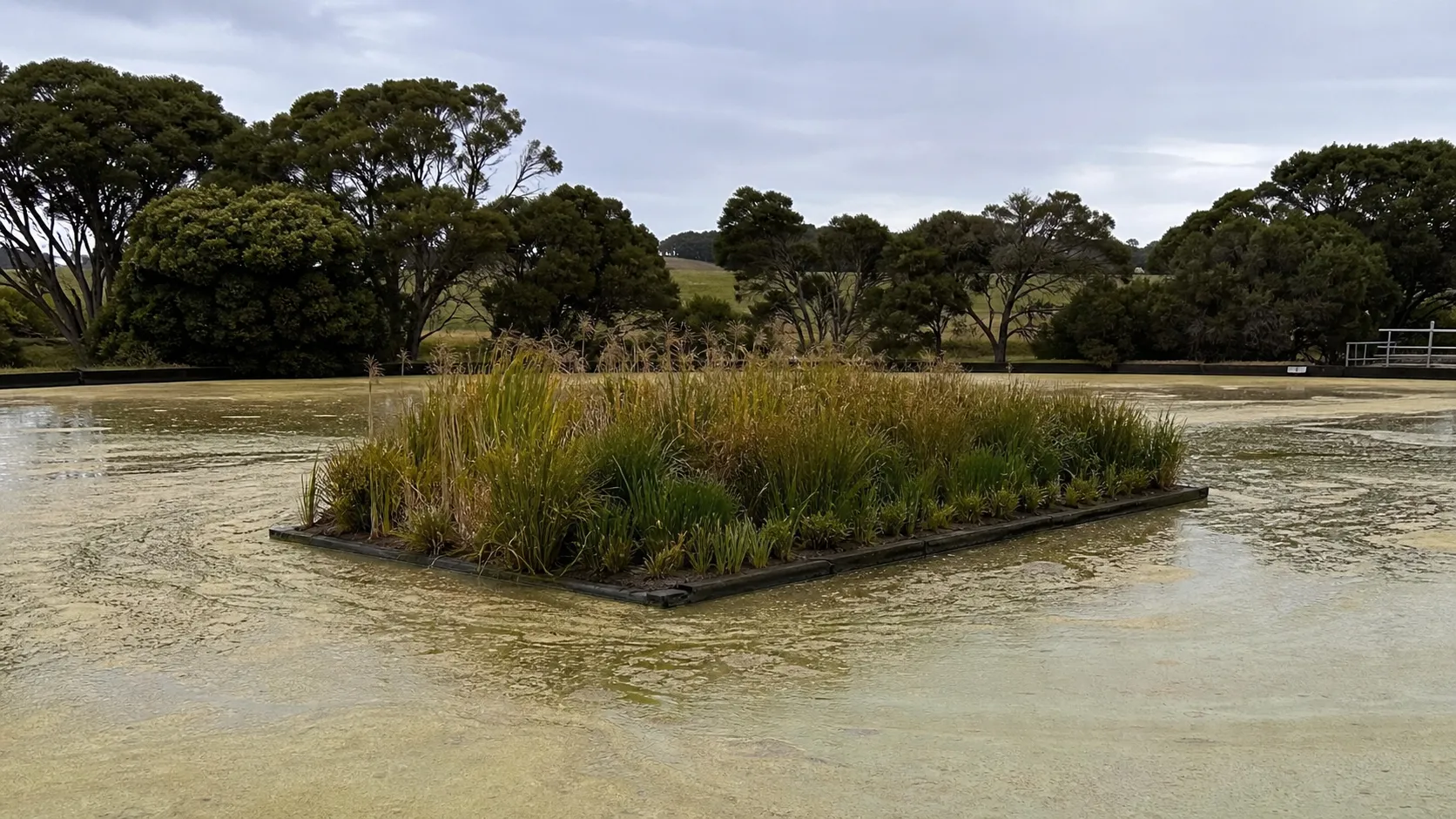
On Phillip Island in Australia, floating wetlands with native plants reduced greenhouse gas emissions from a wastewater lagoon by about 30% over two years. ABC News Australia reports on the results of a joint study by RMIT University, Westernport Water and CSIRO.
A platform with reeds and sedges
Researchers installed a 330-square-metre floating platform on the lagoon — roughly the size of one and a half tennis courts. Native species of reeds and sedges were planted on it, with their roots hanging into the wastewater. The lagoon held about 14 million litres of water.
Lucas Schuster, a research fellow at RMIT's Centre for Nature Positive Solutions, explained that the plants' root systems create an environment for microorganisms. They can help break down organic matter and absorb nutrients and pollutants.
Results of two years of measurements
Emissions in the lagoon were continuously measured over two years using solar-powered sensors. Compared with a control lagoon without floating wetlands, the experimental structure reduced carbon dioxide emissions by up to 36%, methane emissions by up to 66%, and nitrogen emissions by 18%.
More current news is available on the UA.News Telegram channel Telegram.
According to Schuster, wastewater treatment is a significant source of emissions globally: the sector produces about 700 million tonnes of greenhouse gases annually. In the state of Victoria, the figure is about 1 million tonnes per year.
Next trials on farms
Researchers are already testing similar floating structures in farm ponds in the Bass Coast area. They are studying whether the technology can help improve water quality, support biodiversity and reduce emissions. The team also plans to explore the possibility of making the platforms from recycled or plant-based materials instead of plastic baskets.
Farmer Camilla Graves, who had floating wetlands installed in two of her 26 ponds, said such structures could also provide ducks with shelter from predators. Water supply companies have already expressed interest in further trials of the technology.


