
Fewer southern right whales recorded in Australia during this year’s count
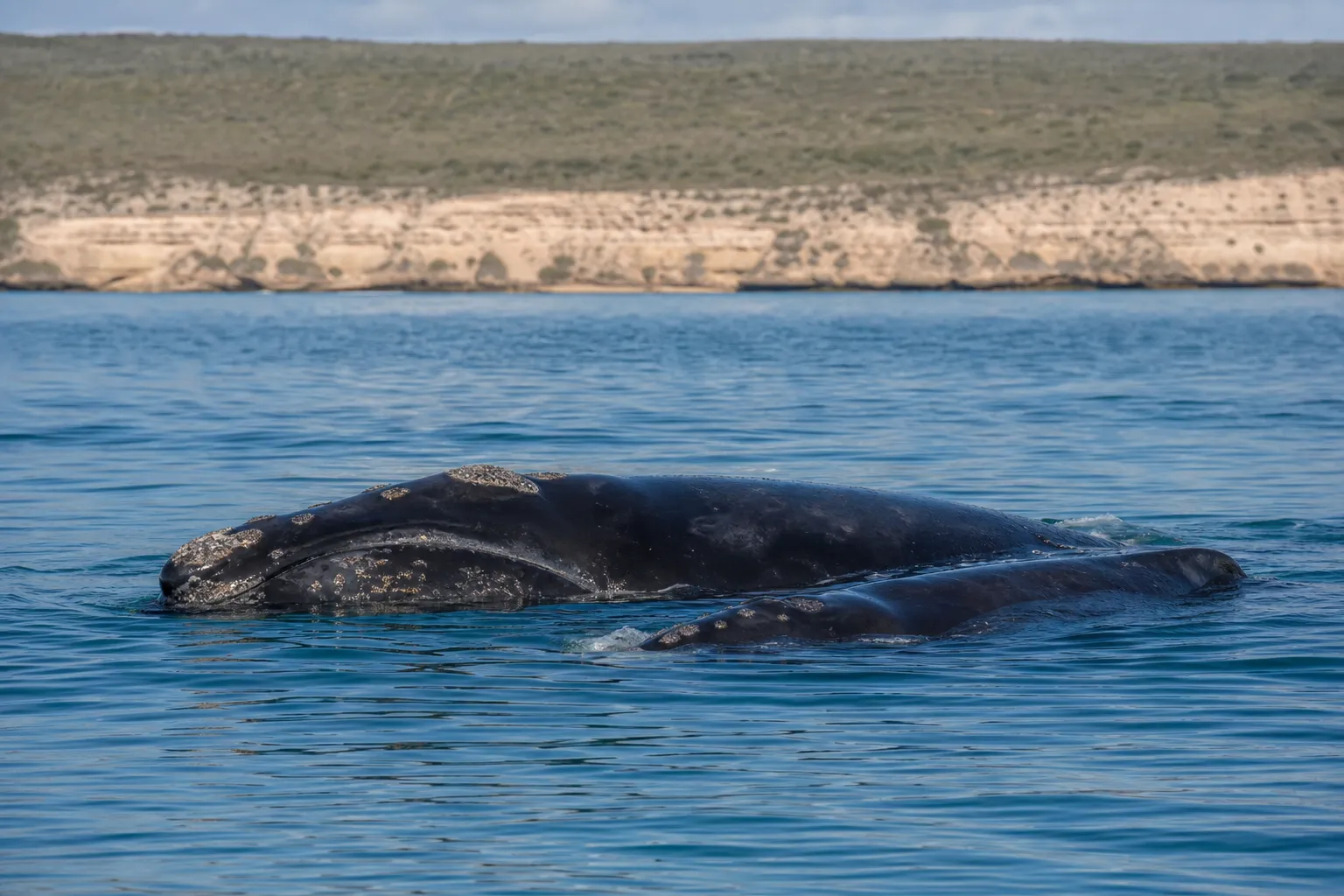
During this year’s count of southern right whales off Australia’s southern coast, scientists recorded 520 animals, including 235 female-calf pairs. This is fewer than last year, when 646 whales and 304 calves were counted, ABC News Australia reports.
For 50 years, researchers have tracked the migration of these whales between Fremantle in Western Australia and Ceduna in the far west of South Australia. In winter, southern right whales move from Antarctica to Australia’s southern coast to breed in warmer waters.
The head of this year’s census, Murdoch University senior researcher Joshua Smith, said the number of recorded individuals was 20% lower than ten years ago. According to him, population growth has stalled since 2011, while breeding rates may be declining.
Intervals between breeding are increasing
It was previously believed that whale breeding cycles repeated every three to four years. According to this year’s count, this interval is now approaching five years. Smith explained that long-term observations are needed to assess trends — around ten years and two to three cycles of a reproductive female returning to the coast.
More current news is available on the UA.News Telegram channel Telegram.
In addition to female-calf pairs, about 50 whales without calves were recorded during the count. Traditional breeding sites, including Head of Bight and Israelite Bay in Western Australia, remained active, although overall activity was unusually low.
Observations in the Great Australian Bight
Claire Charlton, chief scientist of the Australian Right Whale Research Program, said that 61 female-calf pairs were recorded in the Great Australian Bight. She linked changes in breeding cycles to the whales’ condition and the success of their feeding.
According to Charlton, ocean warming affects marine food chains, while krill fishing may reduce the availability of food for whales. She also noted the low number of observations in Victoria and New South Wales, where no female-calf pairs were recorded.
Researchers identified Israelite Bay, Point Ann and Point Charles in Western Australia, as well as Head of Bight in South Australia, as southern right whale hotspots. The species is listed as endangered in Australia.


