
Estonia proposes revoking protected status for buildings with occupation symbols — ERR News
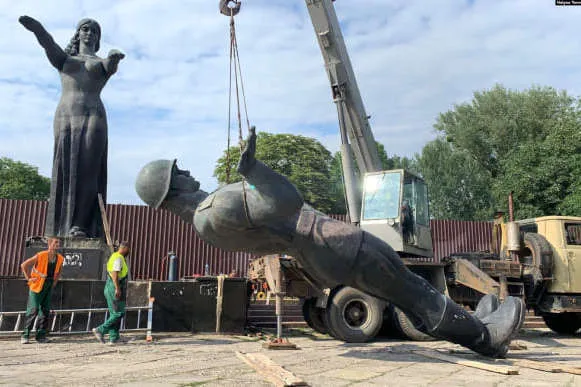
Estonian Justice Minister Liisa-Ly Pakosta has proposed allowing buildings and structures erected during the country’s occupation in 1940–1991 and associated with symbols of occupation regimes to be stripped of state protection. The initiative is intended to unlock discussion of legislation concerning the so-called red monuments, which stalled after a presidential veto in 2023, ERR News reports.
The proposed provision
Pakosta, who represents the Eesti 200 party, said that there has been no progress in considering the bill amending the Building Code since March 2025. The document is under consideration by the Economic Affairs Committee of the Estonian parliament, the Riigikogu.
The minister proposed introducing an exception into the Heritage Conservation Act for buildings and structures erected during Estonia’s occupation. Under her proposal, objects that incite hatred or support an occupation regime, an act of aggression, genocide, crimes against humanity, or war crimes through texts, symbols, images, or other forms would not be subject to state protection.
Pakosta noted that objects of cultural value should represent the most valuable part of Estonia’s cultural heritage. In her view, structures erected during the occupation that incite hatred or support an occupation regime or international crimes do not belong to this part of the heritage.
More current news is available on the UA.News Telegram channel Telegram.
What will change for owners
After these changes enter into force, the relevant minister, having heard the opinion of the Heritage Council, will be able to revoke monument status for a structure that does not meet the criteria for state protection by a separate decision. After that, the owner will be able to independently determine the object’s future, including removing or covering occupation symbols.
The discussion on dismantling structures with occupation symbols and the so-called red monuments in Estonia has continued since 2022. In the autumn of that year, the government initiated a bill to amend the Building Code, the acts governing its implementation and planning, as well as the State Assets Act. The Riigikogu adopted the document in February 2023, but the following month President Alar Karis refused to promulgate it, citing insufficient legal certainty.
After the full-scale invasion of Ukraine by the Russian Federation, an aggressor state, in February 2022, discussions in Estonia intensified over the status of Soviet monuments, statues, military graves, murals, and building decoration elements. Some of these objects have already been dismantled or covered.




