
A new species of bird has been discovered in Japan — Science Daily
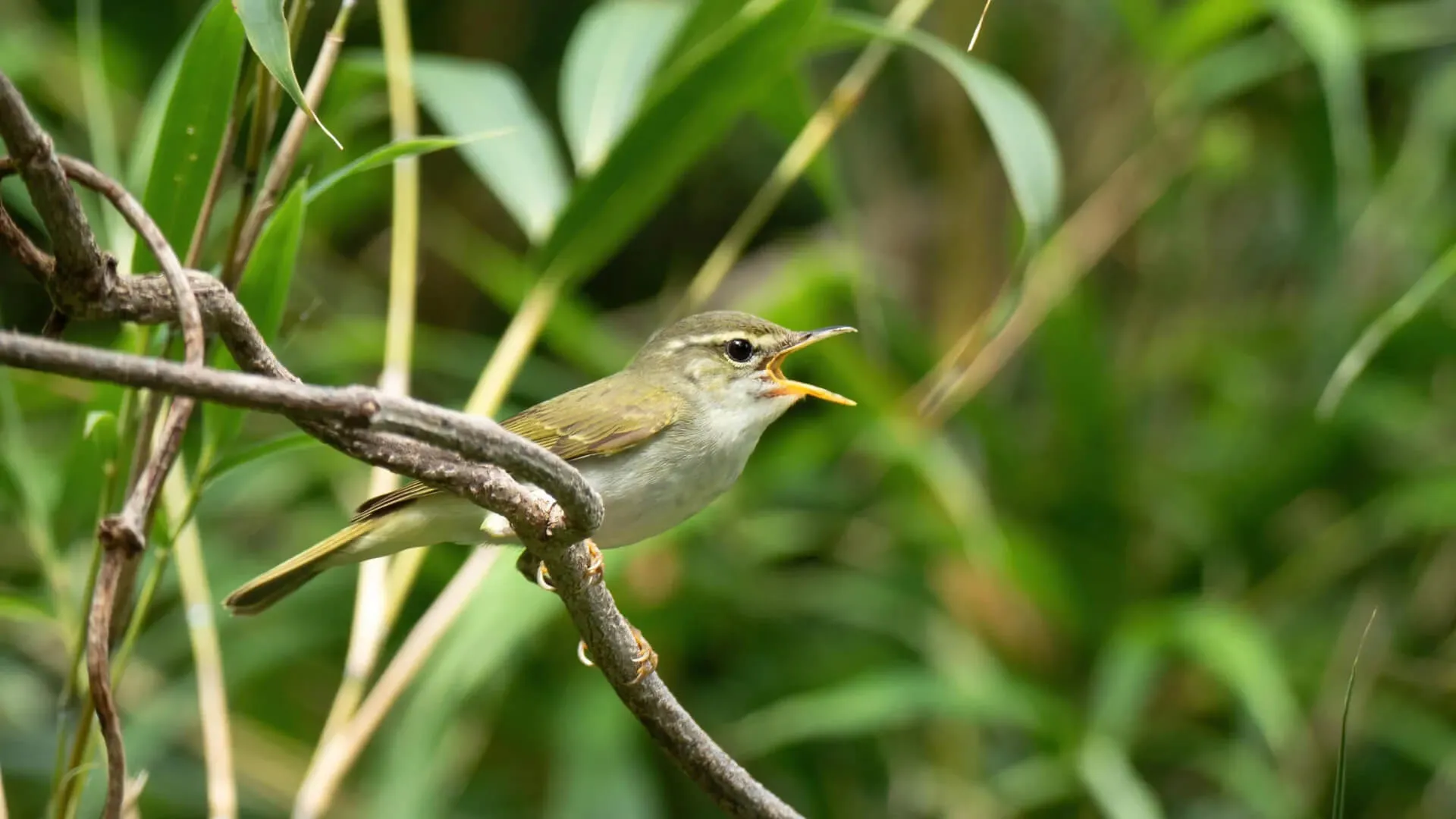
An international team of researchers has officially described a new species of bird—the Tokara Warbler—marking the first discovery of a new bird species in Japan in more than 40 years.
Scientists found that outwardly, this bird looks almost identical to the already known Izu Bunting, but DNA analysis and detailed studies of their songs have proven that these are two completely different species.
This unique discovery demonstrates how modern genetic tools are revealing our planet’s hidden biodiversity, which would otherwise remain unnoticed.
The rare migratory Ijima Leaf Warbler (Phylloscopus ijimae), or Ijima Warbler, was previously considered a single species found only on two island groups in Japan.
Because these birds look identical, experts were long unable to detect their evolutionary divergence without the use of laboratory methods.
Whole-genome sequencing data provided the most compelling evidence of genetic isolation among populations.
“This shows how important it is to use genetic methods to uncover hidden biodiversity in the midst of a global biodiversity crisis. These methods can help us gain a more comprehensive understanding that will inform future conservation efforts,” says Per Alström of Uppsala University, one of the researchers who discovered the new species of wheatear.
The Izu Warbler inhabits the Izu Islands south of Tokyo, while the newly discovered Tokara leaf warbler (Phylloscopus tokaraensis) inhabits the Tokara Islands, located approximately 1,000 kilometers to the southwest.
Scientists first discovered evidence of genetic differences between these birds ten years ago, after which they began extensive fieldwork, the study of museum specimens, and additional laboratory analyses.
The study was conducted jointly by experts from Uppsala University, the University of Gothenburg, and two Japanese research institutions.
“The new species is somewhat mysterious and difficult to identify. Outwardly, it does not differ from the Ijima’s bunting. It is the DNA analysis and differences in song that indicate this is a separate species,” says Alström.
Both bird species occupy very limited island habitats, which automatically means their total populations are small.
For example, the Tokara Archipelago covers a total area of just over 100 square kilometers, spread across twelve separate islands.
Scientists have found that both species have extremely low genetic diversity, which could make them more vulnerable to sudden environmental changes, human-induced pressure, and dangerous diseases.
Science Daily reports on this.
A bird that flew nearly 7,000 kilometers arrived at a nature reserve in the Odesa region
In Chernobyl, the nesting of the Red Book-listed golden plover was recorded for the second time


