
Aquifer near Doñana Park in Spain is being depleted — Deutsche Welle
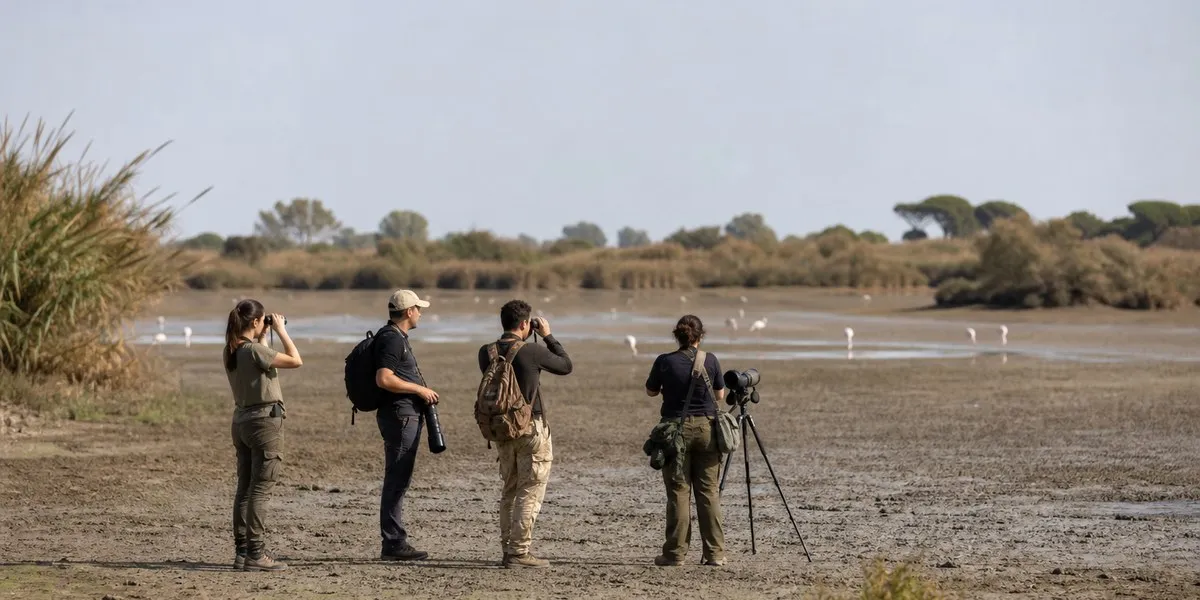
In southwestern Spain, the aquifer on which the region of Doñana National Park depends is being depleted. The UNESCO-protected area, which is home to millions of migratory birds and the Iberian lynx, is suffering not only from heat and drought but also from excessive water extraction for intensive agriculture, Deutsche Welle reports.
Spain supplies around a quarter of Europe’s fresh vegetables and fruit throughout the year. At the same time, groundwater reserves near Doñana are used by hundreds of illegal wells. According to a 2016 estimate by WWF Spain, the wetlands had more than 1,000 illegal wells and over 1,700 ponds used without permission to irrigate an area comparable to 4,200 football fields.
Strawberries and illegal water extraction
In 1971, Spanish authorities declared irrigation in the region a matter of national importance under the Almonte-Marismas plan. A major bet was placed on growing strawberries, which were called “red gold.” According to calculations based on FAO data, strawberries can generate up to €150,000 in gross income per hectare per year, compared with about €20,000 for potatoes and approximately €15,000 for grapes.
More current news is available on the UA.News Telegram channel Telegram.
However, the expansion of strawberry plantations required ever more water. Farmers began installing illegal wells and reservoirs because even official quotas were insufficient to irrigate the expanding fields. Pedro Bañez, a representative of the Condado Water Users Association, linked the situation to severe drought and insufficient attention from the administration.
Monitoring and restoration of territories
After the death of a two-year-old child who fell into a deep, allegedly illegal well on a farm near Málaga in 2019, Spain’s Civil Guard created special units to combat water theft. In 2021, the Court of Justice of the European Union ruled that Spain had failed to properly protect Doñana’s aquifer and had violated EU law.
Police and environmental organizations track illegal water extraction using satellite imagery, drones, and meter inspections. Farmers caught extracting water illegally may face charges of environmental crimes and fraud, with penalties of up to five years in prison. Local and national authorities agreed on a joint €1.4 billion plan, and nearly 300 illegal wells have already been sealed in the Doñana area. Authorities are buying some land to restore natural areas, while farmers are switching to drip irrigation, moisture sensors, and crops requiring less water.




