
Israel relocates 25-ton mikveh from Second Temple period — Jerusalem Post
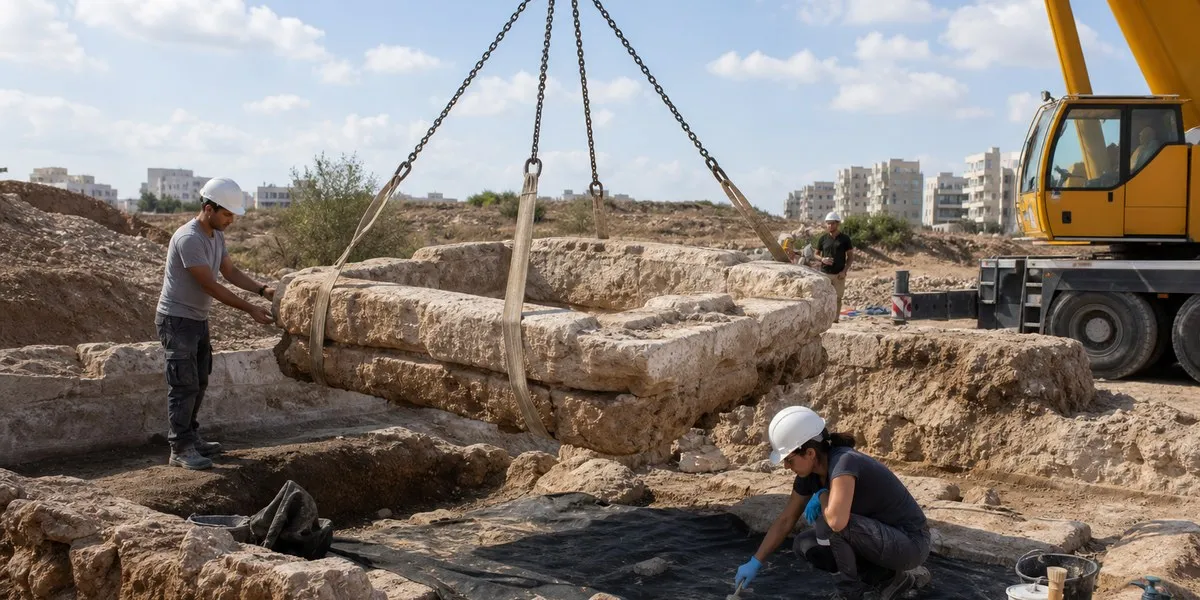
In Kiryat Gat, Israel, the Israel Antiquities Authority temporarily relocated a ritual bath — a mikveh — from the Second Temple period, discovered during archaeological excavations in the Karmei Gat area. The structure is about 2,000 years old and weighs 25 tonnes. As The Jerusalem Post reports, the work was carried out ahead of planned development in the area to protect the monument from damage.
Evidence of an ancient settlement
The excavations were funded by the Israel Land Authority. In addition to the mikveh, archaeologists found stone vessels. The Antiquities Authority said these finds are direct evidence of the existence of a Jewish settlement in this area during the Second Temple period.
Excavation directors Elena Kogan-Zehavi, Maayan Margulis and Shira Lifshitz noted that the discovered settlement is the first and currently the only known Jewish settlement in this area. According to them, Jewish settlements from the Roman period are known in the Judean Lowlands, but none had previously been found at the junction of the Judean Lowlands and the northern Negev.
The finds indicate that Jewish residents likely left the settlement during the Bar Kokhba revolt in the 2nd century CE. About 500 years later, during the Byzantine period, the site was settled by another population.
More current news is available on the UA.News Telegram channel Telegram.
Preparing for transportation
Four employees of the conservation department spent two weeks fully exposing the mikveh structure. Specialists excavated the soil around the structure, carefully drilled out space beneath it and installed steel beams to support the structure and lift it out of the ground.
The ancient plaster on the walls was covered with gauze and adhesive materials so that vibrations during transport would not cause it to peel away. The entire structure was also reinforced with foam. A 300-tonne-capacity crane was used to lift the mikveh because it had to operate at a distance from the load. Due to the structure's width of about four metres, oversized-load transport was used.
The mikveh was transported to a storage facility in nearby Beit Guvrin. The road was closed during transportation, and the truck was escorted by vehicles in front and behind. After construction in Karmei Gat is completed, the monument is planned to be returned to the site where it was found and incorporated into the public space of the new district.


