
Israel develops aerogel to collect and biodegrade oil — Jerusalem Post
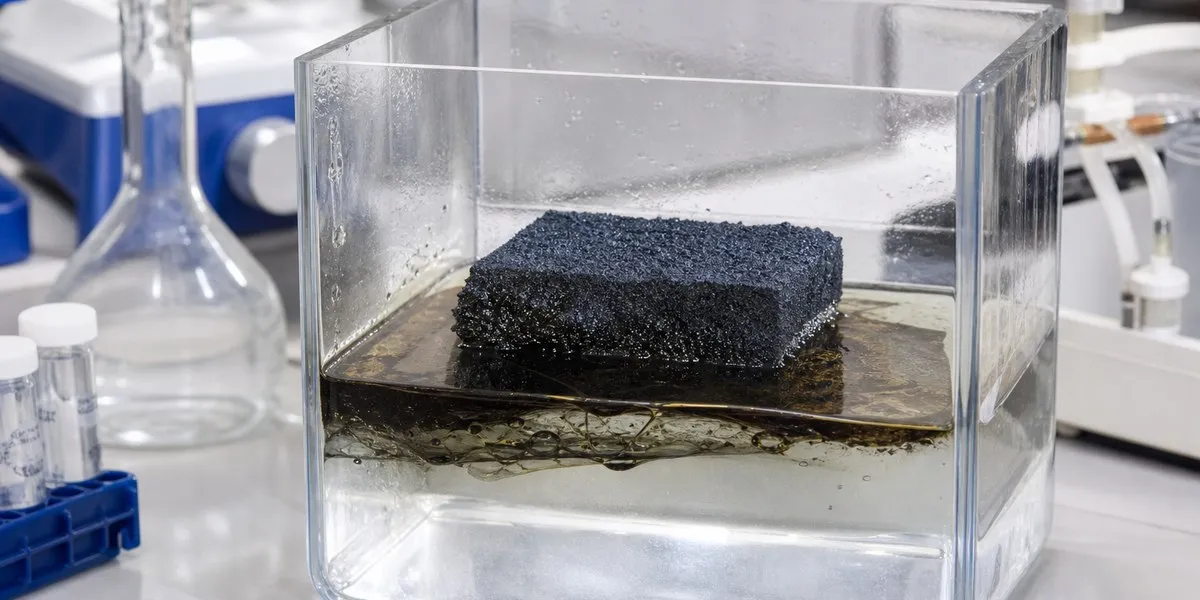
Researchers at Ben-Gurion University of the Negev in Beersheba, Israel, have developed a porous aerogel for capturing oil pollution in water and its subsequent biodegradation. Laboratory tests showed that the material can adsorb crude oil, fuel, tar and other hydrocarbons in amounts 80–100 times its own weight, The Jerusalem Post reports.
Material made from cellulose fibers
The aerogel was developed at the Environmental Biotechnology Laboratory led by Professor Ariel Kushmaro and Dr. Danit Lisa Karsagi Biron of the university's Faculty of Engineering. It was made from cellulose fibers that can be obtained, among other sources, from used egg cartons, old newspapers and other paper materials.
The material is enriched with nitrogen and phosphorus. These nutrients support bacteria capable of breaking down oil. According to Kushmaro, the aerogel provides bacteria with a surface to attach to and ensures their close contact with the adsorbed hydrocarbons and the necessary nutrients. This creates conditions for microbial degradation of the captured pollution.
More current news is available on the UA.News Telegram channel Telegram.
Sea trials are still ahead
To create the aerogel, the team used nutrient enrichment, freeze-drying and pyrolysis — the thermal decomposition of organic materials without oxygen. The material is hydrophobic, has a large surface area and floats on water. Kushmaro said that on the water's surface, the aerogel promotes oil aggregation, and its disappearance may take two to three weeks.
According to the scientist, in the event of a spill in the open sea, the aerogel could potentially be dropped from an aircraft. The material itself is biodegradable, and the team does not expect waves, currents or temperature changes to hinder the cleanup. However, the technology has so far been tested only in the laboratory: a company needs to be established for sea trials and material production. The development is undergoing the patent process through BGN Technologies, the university's technology commercialization arm.
The research results were published in the journal Chemical Engineering Journal Advances in an article on nutrient-added carbonized aerogels for the combined adsorption and biodegradation of oil in water.


