
Russia Wants to Introduce a Fee for Air Travelers on Domestic Flights
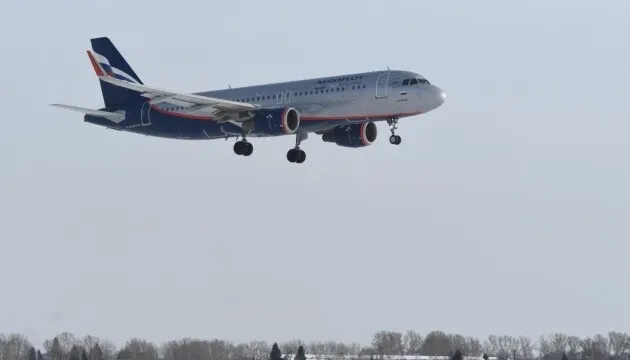
In Russia, there are discussions about introducing a new fee for airline passengers, with the proceeds planned to be used to support the leasing and operation of new Russian aircraft. The initiative is being discussed by the Ministry of Transport, the Ministry of Industry and Trade, and Rostec.
However, no final decision has yet been made regarding the introduction of the fee, its amount, or the mechanism for collecting it. According to one of the publication’s sources, the initiative is in the early stages of discussion.
According to most of Kommersant’s sources, the new fee could amount to up to 500 rubles per ticket for domestic flights and up to 1,000 rubles for international flights.
However, another source cited higher possible amounts—up to 700 rubles for domestic flights and up to 2,000 rubles for international flights.
Based on Russian airlines’ passenger traffic in 2025, which totaled 81.45 million passengers on domestic flights and 27.4 million on international flights, annual revenue from such a fee could amount to 68.12–84.41 billion rubles, depending on its rate.
At current passenger traffic levels, over a four-year period—from 2027 to 2030—the fee could theoretically generate 200–250 billion rubles.
According to the proposal under consideration, a portion of the collected funds could be transferred to leasing companies. They are to use this money to cover the difference between the cost of Russian aircraft and the preferential price at which they are supplied to airlines.
The remaining funds could be directed directly to airlines to compensate for the higher operating costs of Russian aircraft compared to their foreign counterparts, particularly fuel costs.
Thus, the proposed mechanism would effectively shift part of the cost of the Russian aviation industry’s transition to domestically produced aircraft onto passengers.
The initiative to introduce the new fee arose against the backdrop of the Russian government’s plans to increase the use of domestically produced aircraft.
Specifically, Aeroflot has ordered 90 MC-21 aircraft from Rostec, with deliveries of the first batch scheduled to begin in 2027. At the same time, under the new contract, deliveries of the 90 aircraft could continue until 2032.
Earlier, Anton Alikhanov, head of the Ministry of Industry and Trade, stated that the costs of developing the MC-21 should not affect the price of airline tickets, as the state is assuming the corresponding financial burden.
Analysts quoted by Kommersant point out that an increase in airfare due to the new fee could lead to a decline in passenger traffic.
In this regard, one of the alternative options mentioned is financing the initial operating costs of the new aircraft directly from the state budget.
At present, the new passenger fee has not been introduced in Russia; its amount and collection procedure are still under discussion.
This is reported by the media, citing sources familiar with the proposal.
As a reminder, Russia is widely imposing restrictions on aircraft refueling due to the fuel crisis. Such measures are already in effect at 26 airports—from Kaliningrad to Petropavlovsk-Kamchatsky.
Russia is unable to cope with the fuel crisis in its domestic market, caused by strikes by the Ukrainian Defense Forces on its oil infrastructure. According to the ISW, attacks on Russian oil refineries are increasingly affecting the country’s fuel supply.
Russian dictator Vova Putin dismissed the country’s fuel crisis as “inconveniences” and shifted the blame onto the government.


