
1,700-year-old fragment of the Odyssey found in Utrecht
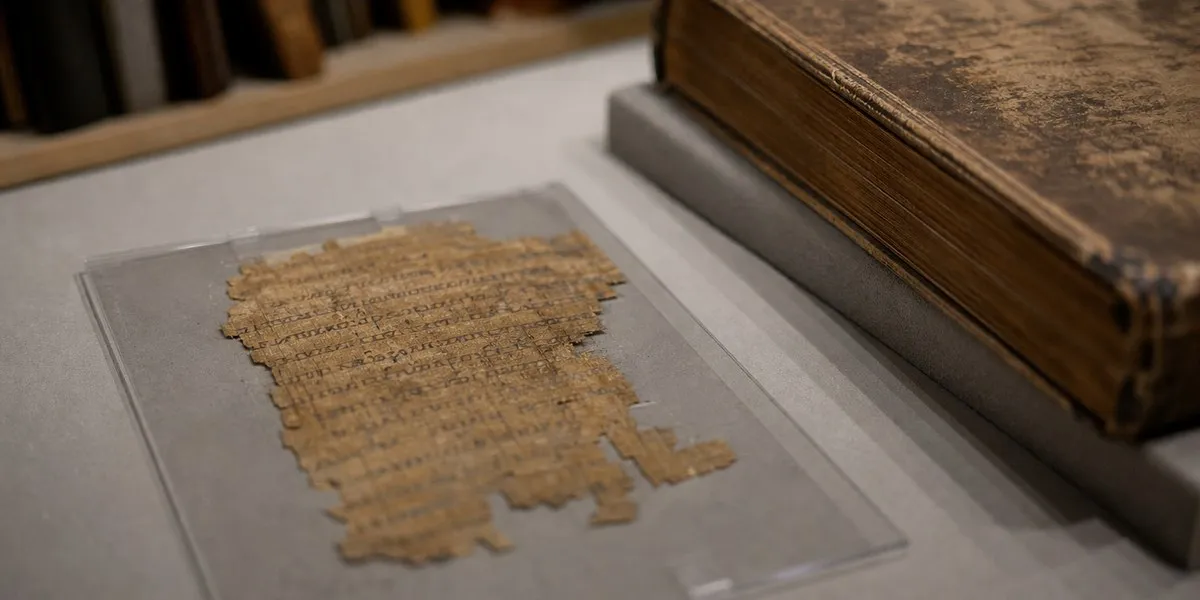
A small fragment of an ancient parchment manuscript containing lines from Book 12 of Homer's Odyssey has been discovered in the library of Utrecht University in the Netherlands. The find was made by Greek literature specialist Professor Mark de Kreij of Radboud University while he was studying early Christian manuscripts acquired by the library in the mid-20th century.
Excerpt from Book 12
The fragment measures approximately 6.6 by 7.7 centimeters. It preserves lines about the episode in which the sun god Helios learns that Odysseus' companions killed and ate his sacred cattle. Helios then asks the gods to punish the crew, and Zeus destroys Odysseus' ship. Only the hero himself survives.
Before these events, the goddess Circe warned Odysseus not to approach Thrinacia, the island of Helios. However, after passing Scylla and Charybdis, his men landed there because of a lack of food. Odysseus allowed them to go ashore on the condition that they would not touch the cattle, but after a month of storms, the hero's companions broke this promise.
More current news is available on the UA.News Telegram channel Telegram.
Origin of the manuscript
As Live Science reports, the parchment was probably part of a pocket codex containing the text of the Odyssey, created in Egypt around 300 AD. The fragment is also dated to the 3rd or 4th century AD and linked to the Faiyum Oasis in Egypt.
According to Utrecht University, about 30 similar fragments are known. Mark de Kreij suggested that this excerpt may have survived because it came from the middle of a small book and was protected by other pages. It is unknown exactly how the parchment entered the university's collection of Egyptian and Greek texts.
The researcher found the fragment in 2024. His complete study of the collection of Greco-Roman texts from Egypt held at Utrecht University is due to be published as a separate book titled “Hieratic, Demotic, Greek, and Coptic Texts in the Utrecht University Collection.”


