
Wadeful ruled out Germany's return to Russian gas
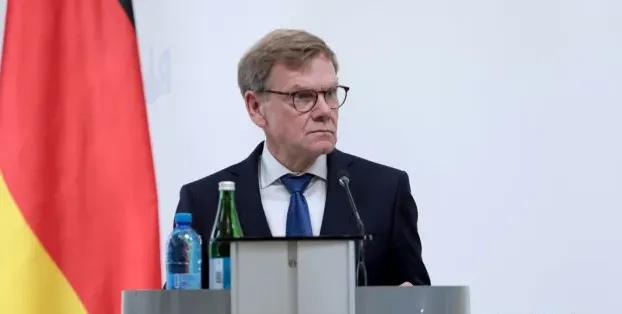
Germany has no plans to resume operations of the Nord Stream gas pipelines and does not want to return to dependence on Russian gas. German Foreign Minister Johann Wadeful made this statement on September 29 in Strasbourg. According to him, Berlin is open to restoring normal relations with Russia in the future, but currently views the Russian government’s policies as a threat to European security.
Germany has no intention of resuming operations of the “Nord Stream” gas pipelines. The government has no such plans and does not want to become dependent on Russian energy resources again. German Foreign Minister Johann Wadeful made this statement during a speech at the Parliamentary Assembly of the Council of Europe in Strasbourg on September 29.
Responding to questions from lawmakers about the possible resumption of Russian gas supplies, Wadeful said that the German government is not currently considering such a scenario. “The federal government has no plans to restart ‘Nord Stream.’ We have fallen into a dependence on Russia that is far too great and misguided, and we cannot allow that to happen again,” the minister stated.
Thus, Wadeful ruled out a return to the model under which Germany was heavily dependent on Russian gas. The issue of resuming Russian gas supplies periodically comes up in German politics. In particular, representatives of the opposition party “Alternative for Germany” have previously discussed the possibility of resuming supplies.
The German government’s current position remains different. Berlin has repeatedly stated that it does not consider restarting the “Nord Stream” pipeline. As far back as 2025, German government officials said they did not expect the pipelines to resume operations and supported measures targeting “Nord Stream.” At the same time, Wadepul emphasized that Germany is not opposed to Russia as a country or its citizens. According to him, normal relations between Berlin and Moscow could resume in the future.
But for this to happen, the minister said, the Russian government’s policy must change. “We have nothing against the Russian people or the country itself. But the current Russian government is violating international law and waging a war of aggression against Ukraine,” Wadeful said.
Against this backdrop, he spoke separately about European security. According to the German foreign minister, in the near term, European countries must proceed on the assumption that their security cannot be built in partnership with the current Russian government. “Therefore, for now—and likely for some time to come—we must acknowledge that we will achieve security in Europe not alongside Russia, but only against Russia,” said Wadeful.
He also called on European countries to strengthen their own defense capabilities. In his view, this should be done primarily within the framework of NATO and the European Union. Wadeful’s statement came amid growing debate in Europe about future relations with Russia. Some politicians advocate maintaining sanctions and further reducing energy dependence on Moscow. At the same time, certain political forces in some EU countries are raising the issue of a possible return to purchasing Russian gas once the war ends.
For Germany, the issue is particularly sensitive given the extent of its former dependence on Russian gas. After Russia launched a full-scale war against Ukraine, Berlin began rapidly reducing its purchases of Russian fuel and seeking other energy suppliers. In 2026, this policy remains unchanged. Germany is expanding its cooperation with other gas suppliers and seeking to diversify its energy market to avoid dependence on a single country. Wadeful himself has previously stated that it is important for Germany to have multiple sources of energy supply.
Separately, German law enforcement agencies continue to investigate the situation surrounding the “Nord Stream” pipelines. In September 2022, explosions damaged the Nord Stream 1 and Nord Stream 2 gas pipelines in the Baltic Sea. German authorities are continuing to investigate the circumstances of the sabotage. At the same time, the question of a possible restoration of the “Nord Stream” pipelines is not currently on the table for Berlin. The German government explicitly states that it does not plan to return to the previous model of energy relations with Russia.
Wadeful also emphasized the need to strengthen European security. In his view, European countries should rely first and foremost on their own defense capabilities and the alliance mechanisms of NATO and the EU. Thus, Berlin’s position is clear at this time: the German government has no plans to resume the “Nord Stream” project. Even if relations between Europe and Russia change in the future, Wadeful considers a return to the former energy dependence unacceptable.
Ukrainian national Volodymyr Zhuravlov, whom German law enforcement suspects of involvement in the sabotage of the “Nord Stream” gas pipelines, has applied to the Croatian authorities for political asylum.




