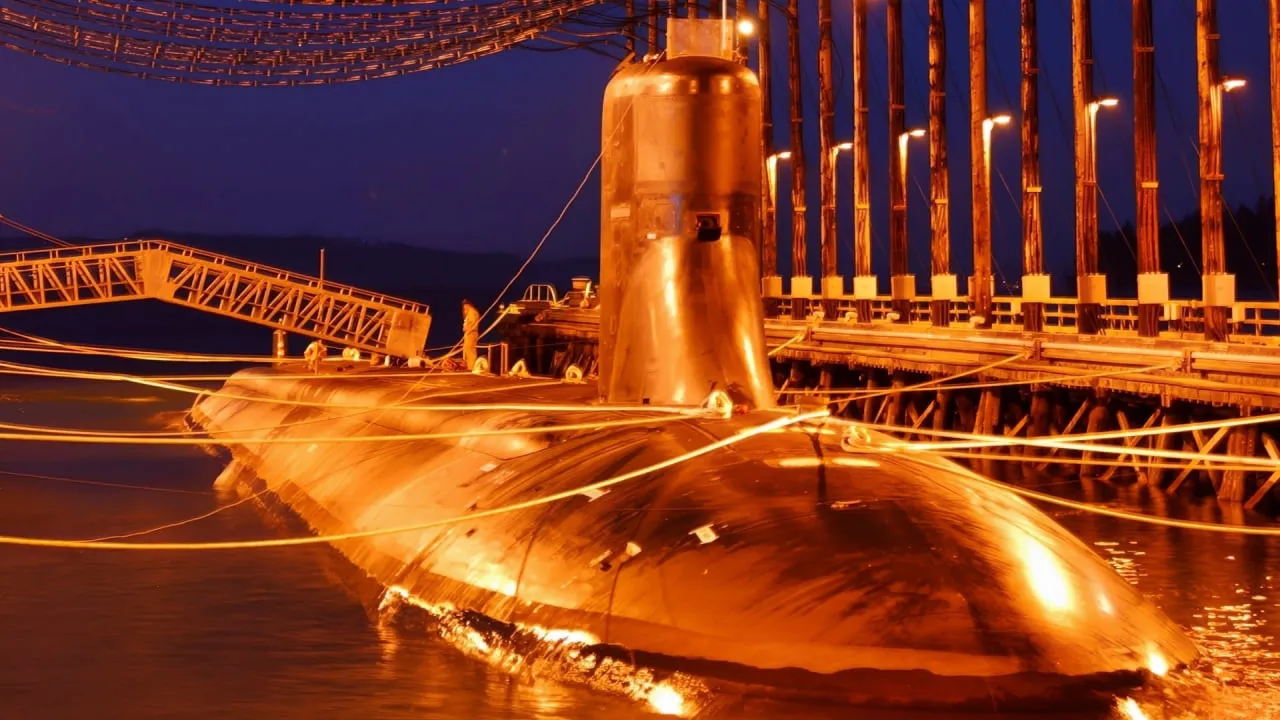
This is reported by 19FortyFive.
Experts point out that this situation is the result of past strategic miscalculations that affected the development of the submarine fleet. At the same time, the existing submarine is not fully equipped to handle the tasks that may arise during modern combat operations.
Against this backdrop, potential rivals, particularly Russia and China, could gain an additional advantage by observing the weakening of one of the key components of American military power.
As noted, the other two vessels of this super-powerful class have been stuck in repair docks for years, leaving a huge gap in Pacific defense.
“We made a mistake that we can never correct. We should have built more Seawolf-class submarines. We are paying the price, and there is no turning back,” the publication quotes a former Electric Boat engineer as saying.
According to media reports:
The USS Connecticut has been undergoing repairs for over four years following a collision with an underwater mountain and will not return to service until at least the end of 2026.
The USS Seawolf has just begun a major modernization that will last until the summer of 2029.
The only available vessel—the USS Jimmy Carter—is a modified “spy” submarine for special operations, not a submarine hunter, as stated in the article.
According to available data, these submarines were developed in response to the Soviet threat of the 1980s, when espionage and the acquisition of Western technologies allowed the USSR to make its Akula-class submarines unprecedentedly quiet.
The Seawolf was intended to be a "clean slate" and dominate underwater. As the article notes, this submarine can dive to depths of 2,000–3,000 feet thanks to ultra-high-strength HY-100 steel and reach speeds exceeding 35 knots while remaining nearly silent.
According to experts, even the more modern Virginia-class submarines cannot fully replace the Seawolf. They are slower, less heavily armed (they have 4 torpedo tubes compared to the Seawolf’s 8), and are not designed for extreme depths. Meanwhile, China is rapidly expanding its fleet with Type 093B and Type 095 submarines, narrowing the acoustic gap. As noted in the article, Beijing already operates more submarines in the Pacific than the U.S. can deploy in the region.
Instead of the planned 29 Seawolf-class submarines, the Navy received only three due to budget cuts following the Cold War. Now, as Kazianis asserts, the Pentagon acknowledges the gap and is attempting to develop the next-generation SSN(X), though their production is not scheduled until the 2040s. Chinese forces will not wait, and the time that has been lost cannot be recovered with any amount of money.
Russiansubmarines have begun limited sorties into the Black Sea, according to the Ukrainian Navy.
As a reminder, Ukrainian defenders recently carried out a large-scale operation to neutralize enemy military targets in the occupied territories and in border areas of the Russian Federation.
Russia has suffered losses at two sites simultaneously—a chemical plant in Togliatti, Samara Oblast, and military positions at Cape Fiolent in occupied Crimea.