
WSJ: NATO countries are facing a cotton shortage for gunpowder production
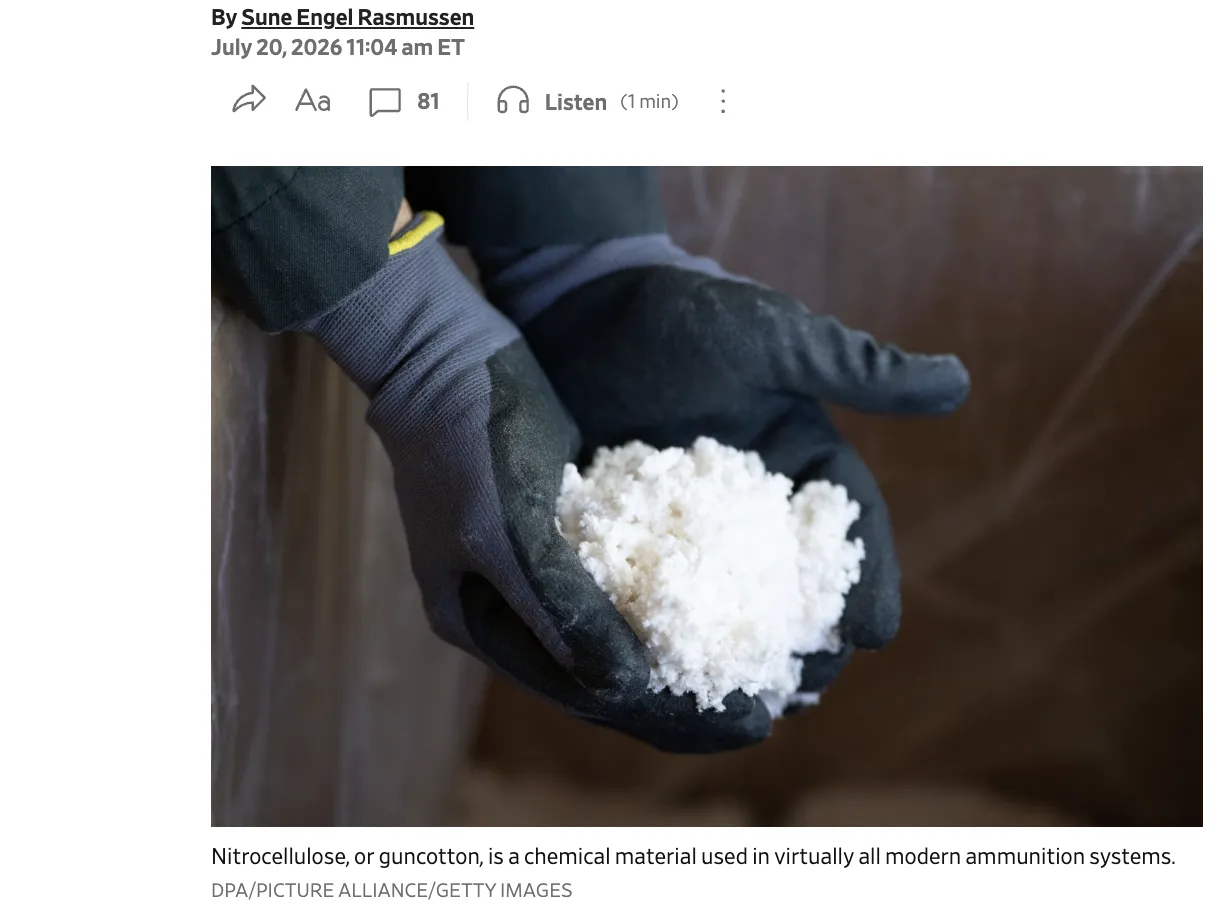
NATO countries are facing a shortage of the cotton needed to produce gunpowder. According to the WSJ, Europe needs to at least double its domestic production to strengthen its defense capabilities.
NATO countries are facing an acute shortage of the cotton needed to manufacture explosives for artillery munitions.
Nitrocellulose (pyroxylin) remains a key component in the production of smokeless gunpowder for shells. This compound is made from linters—the short, fibrous strands left over after processing cotton seeds.
Limited cotton supplies have become one of the main obstacles for the Alliance in its efforts to increase its own ammunition reserves.
“NATO does not have sufficient resources. Limited cotton supplies are one of the biggest challenges NATO faces in its efforts to build up ammunition stocks,” the article states.
According to the publication’s estimates, to safeguard supply chains against emergencies, Europe needs to more than double its own production of nitrocellulose—to 20,000 metric tons per year.
European countries are already taking steps to address the shortage. In particular, the German defense contractor Rheinmetall is converting a civilian nitrocellulose production plant for military use. In addition, Poland plans to build a new facility to produce this chemical compound.
Source: The Wall Street Journal
As a reminder, Lithuanian President Gitanas Nausėda stated on July 15 that Russia may be preparing provocations in the Baltic states or Poland. According to him, intelligence data indicates possible attempts by Moscow to test NATO’s readiness and unity.
Lithuania will allocate three million euros to develop its own interceptor drone.
Lithuania will ban nearly 600 Russians who fought against Ukraine from entering the Schengen Area.


