
The "25+" Evaders and Verbytsky's Legacy: How "Odessa Polytechnic" Got Caught Up in a Mobilization Scandal
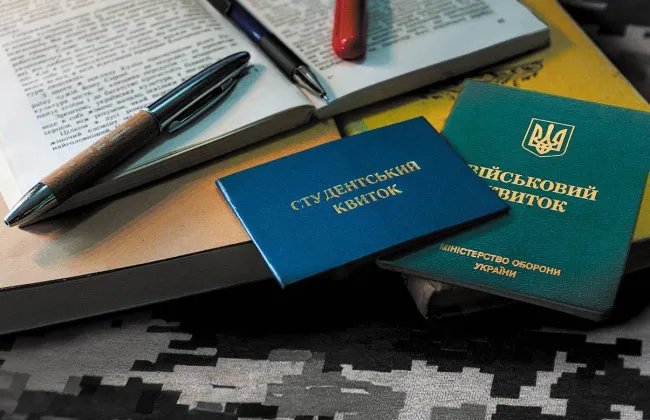
In 2025, the National University “Odessa Polytechnic” and its separate structural unit, the Odessa Automotive and Road Technical College, were subject to unscheduled inspections by the State Service for the Quality of Education of Ukraine. The inspection focused, in particular, on how the institutions admitted students and organized the educational process for men subject to military conscription.
UA.News learned of this from documents made available to the editorial staff.
Based on the results of the inspection, the State Service for Quality of Education identified numerous violations related to military registration and the organization of education. The materials were forwarded to the Primorsky District Military Registration and Enlistment Office and the Odesa City Military Registration and Enlistment Office. A report was filed against University Rector Hennadiy Oborskyi under Article 210-1 of the Code of Administrative Offenses, after which a ruling imposing an administrative penalty was issued. According to the Traffic Control Center, the rector paid the fine. Separately, Serhiy Myronenko, director of the Automotive and Road Technical College, was also held administratively liable.
However, the Ministry of Education and Science of Ukraine does not consider the payment of the fine to be the end of the matter. The Ministry stated that after the deadline for rectifying the violations has passed and the university’s actual corrective measures have been evaluated, the issue of further action and disciplinary decisions regarding the administration will still be considered.
How It All Began
The State Service for Education Quality of Ukraine ordered an unscheduled inspection of Odessa Polytechnic National University by a separate order based on a decision following a meeting at the Office of the President that took place in March 2025.
In November of that same year, the State Service for the Quality of Education of Ukraine inspected the admission process and the quality of the educational process for military-service-boundapplicants for full-time vocational pre-higher education who enrolled or were reinstated at the institution between 2022 and 2025.
Representatives from the Primorsky District Military Registration and Enlistment Office and the Odessa City Military Commissariat were also invited to join the State Service for Higher Education Commission. At the same time, a similar unscheduled inspection was conducted at the Odessa Automobile and Road Technical College of Odessa Polytechnic National University. It also focused on the admission process and the organization of the educational process for full-time students subject to military service.
What exactly was inspected
The inspectors visited the college to determine whether student IDs were being used as a means to evade mobilization. The auditors reviewed the personal files of men of draft age: they examined documents, clarified the grounds for switching to individualized study schedules, and verified military registration status and actual attendance in classes.
The results were quite revealing. In the university’s records, they found cases where men were enrolled without any military registration documents at all, or where the stamps in those documents were added only after the enrollment order had been issued. According to the paperwork, some students were not registered for military service anywhere at all. Furthermore, the university accepted outdated certificates of removal from military registration issued under regulations that had long since expired. The State Audit Office classified all these facts as direct violations of Government Resolution No. 1487 on the procedure for maintaining military registration. Separately, the auditors noted in their inspection reports that the admissions committee turned a blind eye to the lack of registration documents and calmly admitted the applicants. And the personal files themselves indicated at the time of enrollment that the men were not registered for military service. It was precisely this evidence that later formed the basis of the materials forwarded to the military registration and enlistment office.
There are a particularly large number of men of draft age
During the audit, the State Service for Higher Education drew attention to an unusually high number of adult students. The numbers speak for themselves—especially in the context of those who had arranged individual study schedules.
In the 2024–2025 academic year, 341 students were enrolled in such programs (of whom 235 were physically present in Ukraine). Of these, 69% were men of draft age. The following year, the figures peaked: of the 175 students on individual study plans, 100% were men of draft age.
When auditors randomly reviewed 119 personal files of these students, they found:
- a lack of written applications to switch to individualized study;
- no supporting documents whatsoever;
- inconsistencies and discrepancies in the dates on employment certificates;
- the use of “family circumstances” as a justification in violation of established rules;
- direct contradictions between documents within a single file.
A separate surprise was the remote entrance interviews for applicants aged 30 to 50. As it turned out, the university conducted these exams online without any official decision by the college that would even allow for such a format.
After the State Service for Youth and Sports of Ukraine (DSYAOU) forwarded the documents to the Primorsky District Military Registration and Enlistment Office and the Odessa City Military Registration and Enlistment Office, proceedings were immediately initiated there. After analyzing the scale of the violations of mobilization legislation, the military commissars drew up a report of an administrative offense against Gennadiy Oborsky, rector of Odessa Polytechnic National University, under Article 210-1 of the Code of Administrative Offenses (violation of legislation on defense training and mobilization). At the same time, administrative penalties were also imposed on the leadership of the university’s structural units.
As noted by the Primorsky Regional Territorial Center for Civil-Military Cooperation, a case (No. VO15/1019) was opened on November 10, 2025, against Serhiy Myronenko, director of the Odesa Automobile and Road Technical College. A report was filed against him under Part 3 of Article 210-1 of the Code of Administrative Offenses, and on November 13, a ruling imposing a fine was issued, which Myronenko officially received the following day.
The State Service for Higher Education and Youth Affairs ordered the college to rectify the violations
In addition to fines for the administrators, the State Service for Higher Education issued an official and binding order to the college—to urgently bring its documentation into order, rectify all identified violations, and provide the service with written confirmation. The college was given a deadline of February 27, 2026. If the requirements were ignored, management was threatened with new reports—this time under Article 188-54 of the Code of Administrative Offenses (failure to comply with the lawful demands of DSYAOU officials). All the facts were also reported to the Ministry of Education and Science of Ukraine for the adoption of appropriate personnel decisions.
Ministry of Education and Science: First, rectify the violations; then, consider disciplinary actions
However, the Ministry of Education and Science itself was in no hurry to make radical decisions.So when the university community protested, asking why the university administration continued to lead the institution despite the fines imposed by the Higher Education Quality Assurance Agency (HEQA), the Ministry of Education and Science of Ukraine explained its position: it cited the principle of university autonomy and clarified that a fine from the HEQA does not, in and of itself, entail automatic dismissal. They decided to wait for the final report from the State Agency for Higher Education after February 27, 2026, to assess how the university had addressed the shortcomings, and only then to make personnel and disciplinary decisions.
Here’s where we stand now
Almost half a year has passed since the deadline for rectifying the violations. The violations and fines have been substantiated and closed. Massive fraud involving the enrollment of conscripts has been officially confirmed. Rector Hennadiy Oborskyi and college director Serhiy Myronenko admitted to inadequate oversight and paid administrative fines.
Inspections and subsequent appeals to the Ministry of Defense brought to light the issue of students aged 25 and older who were formally enrolled at the university to obtain a deferment but were actually working and not attending classes. However, among the students aged 25 and older, former Deputy Prosecutor General of Ukraine Dmytro Verbytskyi—a figure implicated in a high-profile corruption scandal—had successfully slipped in. He is supposedly enrolled in a full-time graduate program at the National University “Odessa Polytechnic,” which gives him the official right to a deferment from mobilization. This information was officially confirmed by the university’s rector, Hennadiy Oborskyi, in response to a journalistic inquiry from the online media outlet UA.NEWS (a copy of the relevant document is in the editorial office’s possession).
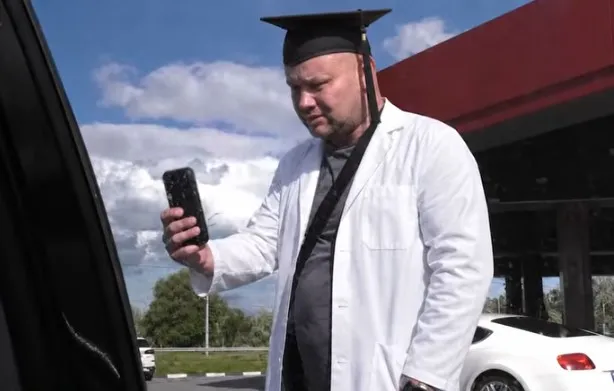
Student Dmytro Verbytskyi
However, Rector Oborsky ignored direct questions from journalists about whether Verbytsky is following his individual study plan, who his academic advisor is, and what stage his dissertation is at. “All other questions do not require further answers,” the official letter signed by the rector laconically states, which contradicts the provisions of the Law of Ukraine “On Access to Public Information.” In addition, the university president avoided answering questions regarding the issuance of certificates for the Territorial Military Commissariat, noting that in its relations with military commissariats, the university “acts in accordance with current legislation.”
What Will Be the Outcome?
So whether the university’s leaders will retain their positions now depends on compliance with the State Agency for Higher Education’s order. Since the deadline (February 27, 2026) has passed, the Ministry of Education and Science and the State Agency for Higher Education have assessed the actual rectification of the violations. The inspection materials remain under the control of the competent authorities, and the issue of personnel accountability for the leadership of “Odesa Polytechnic” has entered its decisive phase.
And at this stage, it is also worth noting that Rector Hennadiy Oborskyi’s contract expires in just 10 days, on August 31, 2026. According to the Law “On Higher Education,” the Ministry of Education and Science was supposed to announce a competition by June 30, but has not yet done so. This creates a legal vacuum at the university, jeopardizing the legitimacy of financial documents and the issuance of diplomas, as the rector effectively loses his authority.
An official complaint has already been sent to the Cabinet of Ministers and Prime Minister Yulia Svyrydenko regarding the deliberate blocking of the election. The complainant (one of the university’s faculty members) alleges that officials at the Ministry of Education and Science are deliberately covering for Oborskyi and helping to conceal documents related to the case of former Deputy Prosecutor General Dmytro Verbytskyi’s evasion of mobilization.
In their appeal to the head of the government, the initiators demand that an official investigation be conducted into the actions of MES officials, that Mykola Trofimenko be held disciplinarily accountable, to immediately unblock the rector’s election, and to bar Hennadiy Oborskyi from participating in it, as he has reached the maximum term of office.


