
EU plans to allow drones to spray fields with pesticides
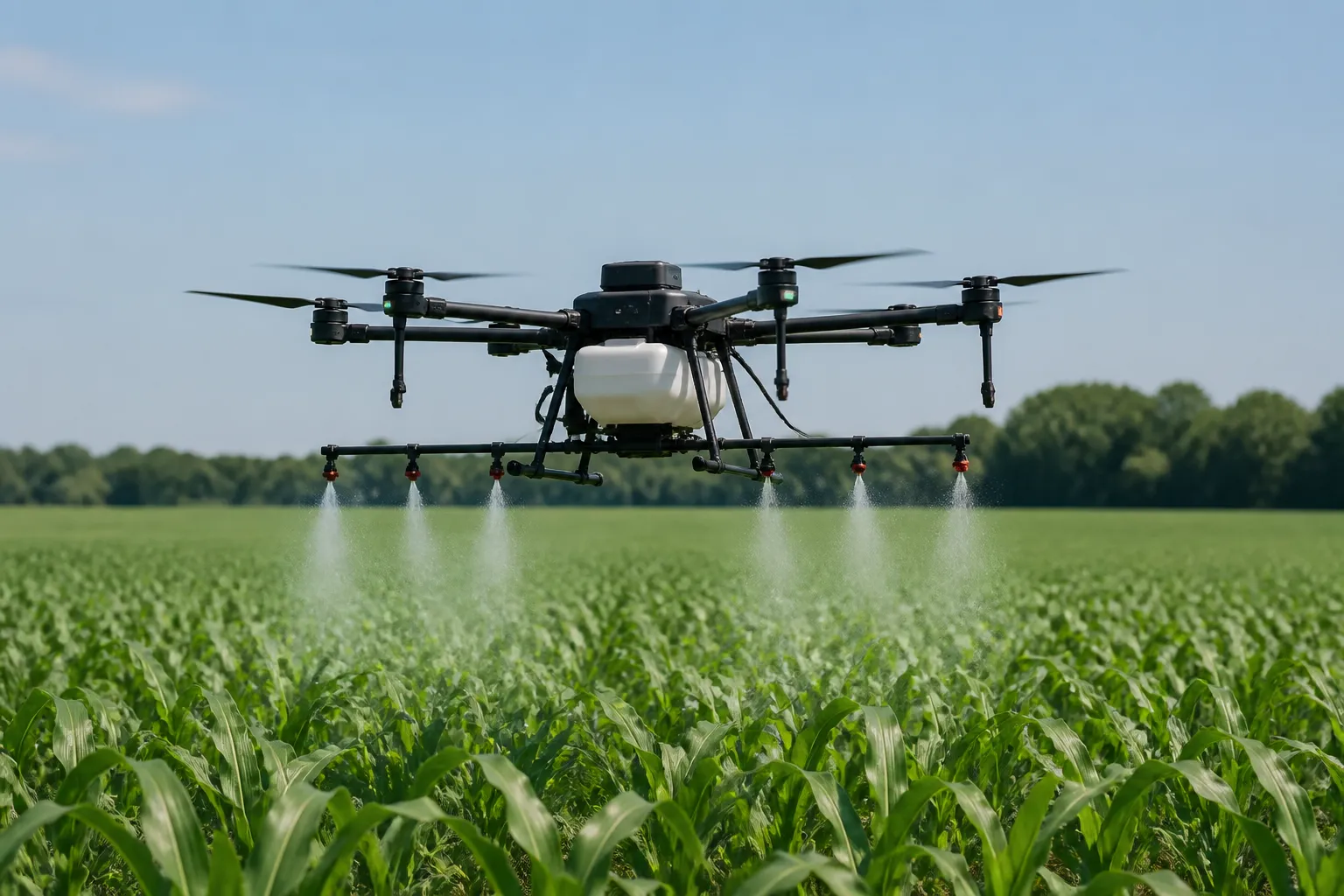
As part of the Omnibus X legislative package, the European Union plans to lift a long-standing ban on aerial spraying of agricultural land in order to allow the use of drones for pesticide application. As Deutsche Welle English reports, the European Council approved the package in May, and it also provides for changes to pesticide approval procedures.
The idea is to scan fields, identify affected areas and apply herbicides, fungicides and insecticides precisely. The EU aims to halve the use of chemical plant protection products by 2030.
More precise application does not guarantee pesticide reductions
Agricultural economist and human ecologist Thomas Daum of the School of Global Studies at the University of Gothenburg noted that drones can generally spray products more precisely than planes or helicopters. At the same time, he cautioned that drones themselves do not ensure a reduction in pesticide use.
According to Daum, the technology can help respond more quickly to pest outbreaks, particularly when the soil is wet or in hard-to-reach terrain. However, such flexibility may lower barriers to treating fields and lead to more frequent spraying. In the scholar's view, this could increase the agricultural sector's dependence on chemical plant protection.
More current news is available on the UA.News Telegram channel Telegram.
Scientists criticize changes to substance approvals
The Omnibus X package aims to reduce administrative costs and bureaucracy, as well as change the rules for approving pesticide active substances. Currently, such substances are usually approved at the EU level for ten years, after which manufacturers must resubmit data on their safety. Since this review was introduced in 2011, 59 active substances have not received renewed approval because they were deemed harmful to human health and the environment.
A group of researchers from 27 European scientific institutions criticized the proposed changes. Biologist Carsten Brühl of the Institute for Environmental Sciences at the Rhineland-Palatinate Technical University of Kaiserslautern-Landau said the package could allow many active substances to be approved indefinitely without regular reassessments. The scientists also point out that the transition period after an approval expires could increase from 18 months to three years.
Brühl stressed that synthetic chemical pesticides should be the last resort for plant protection. Among the alternatives, he named crop rotation, mixed cropping, attracting natural enemies of pests with flower strips and hedgerows, as well as mechanical weed removal.


