
Nepal allocates 43 million rupees for Marsi rice cultivation — Kathmandu Post
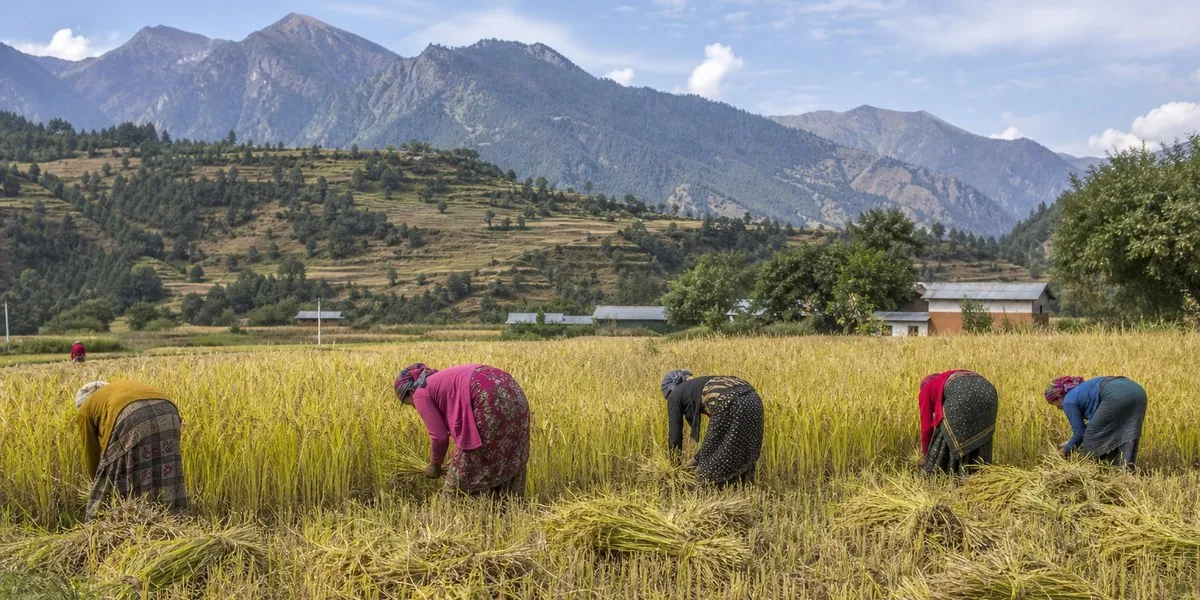
Nepal’s Karnali Province has allocated 43 million Nepalese rupees this year for the cultivation and marketing of local Marsi rice. Demand for this reddish-brown aromatic rice is growing in Nepalese cities and abroad, but the spread of plant diseases and rising costs are complicating its cultivation. As the Kathmandu Post reports, agricultural specialists are recording a decline in production due to crop damage.
Marsi rice is cultivated on 5,280 hectares in Karnali Province, and its production totaled 9,725 tonnes last year. The largest area is in Jumla district—2,888 hectares, where 6,125 tonnes were harvested last year. In Mugu and Humla, the crop was grown on 1,060 and 1,340 hectares, respectively.
Demand outpaces supply
Farmers in Jumla, Mugu and Humla receive orders for paddy rice and processed rice even before the harvest is completed. In Jumla, traders offer about 180 rupees per kilogram of paddy rice, while Marsi rice sells for 250–300 rupees per kilogram in Kathmandu.
More current news is available on the UA.News Telegram channel Telegram.
Harikrishna Bhandari, owner of the Karnali Organic Shop in Kathmandu, said he sold 15 tonnes of Marsi rice last year, three tonnes of which were exported to Japan, South Korea, the United States and the United Kingdom. The Chandannath Multipurpose Cooperative supplies rice, including to Kathmandu, Pokhara, Chitwan, Biratnagar and Dharan. According to its representative Rishiram Pandey, the product can cost up to 2,000 rupees per kilogram on international markets.
Diseases and crop insurance
Agricultural specialists note that over the past two to three years, crops have been affected by neck blast caused by the fungus Magnaporthe grisea. The disease damages the above-ground parts of the plant, reduces production and worsens grain quality. According to farmers, costs are also rising due to the purchase of seeds and fertilizers and the need for weeding, while hail destroyed crops on some farms last year.
Insurance companies began offering insurance for Marsi crops in Jumla in 2022 through the district agricultural development office. According to its data, after a state subsidy, the insurance premium is 50 rupees per ropani—a local unit of area equal to approximately 509 square meters. The ministry also said it had spent a total of 130 million rupees on the cultivation and promotion of Marsi rice and designated 17 local communities in three districts as production zones.




