
South Africa urged to modernize agricultural education with AI in mind — Daily Maverick
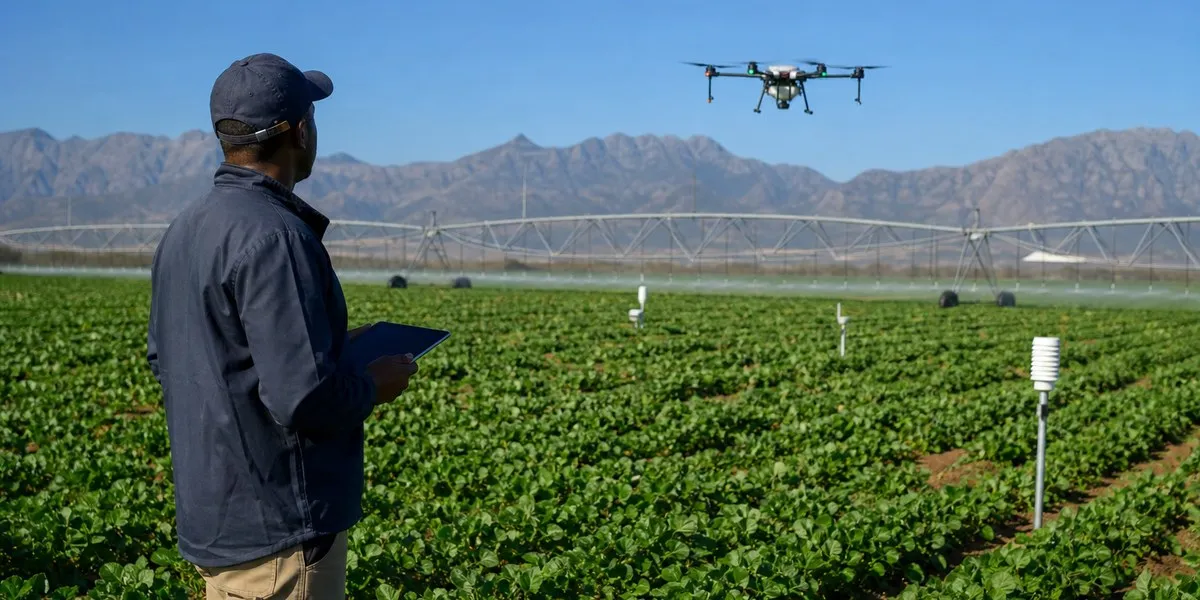
In South Africa, agricultural education programs should be updated in line with the spread of artificial intelligence, drones, satellite imagery, sensors, and data work in agriculture. This is stated in an opinion piece by Daily Maverick, which emphasizes the need to prepare young people for technological changes in the agricultural sector.
The author notes that technologies can help determine planting times, crops’ water needs, signs of plant diseases, and the potential impact of weather conditions on harvests. AI can also be used for early disease detection, identifying nutrient deficiencies, soil monitoring, weather forecasting, and irrigation management.
Skills for the digital agricultural sector
The publication says that agriculture includes not only crop and livestock production, but also biotechnology, engineering, finance, logistics, food processing, marketing, data science, and digital technologies. In the author’s view, agricultural programs should include technology and data skills, as well as knowledge of entrepreneurship, sustainability, communication, innovation, and problem-solving.
More current news is available on the UA.News Telegram channel Telegram.
Digital agriculture creates opportunities in data analytics, remote sensing, geographic information systems, drones, and farm management systems. Graduates of agricultural specialties can become farm managers, consultants, agribusiness specialists, data analysts, agricultural technologists, entrepreneurs, or developers of technological solutions for farmers.
Cooperation between education and industry
The author proposes involving farmers, agribusinesses, technology companies, and other participants in the agricultural value chain not only in consultations during program reviews, but also in their joint development and implementation. Industry representatives can help identify emerging professions and required skills, provide access to modern technologies, mentorship, practical projects, and opportunities to gain work experience.
The importance of work-integrated learning is also emphasized, in which students apply knowledge of precision agriculture, irrigation, machinery, farm management, and digital tools in a real production environment. At the same time, as the publication notes, technologies should enhance rather than replace farmers’ experience. The author also draws attention to the fact that access to innovation is needed not only by large commercial farms, but also by small producers and rural communities.


