
Israel studies resistance of carp relatives to CyHV-3 virus
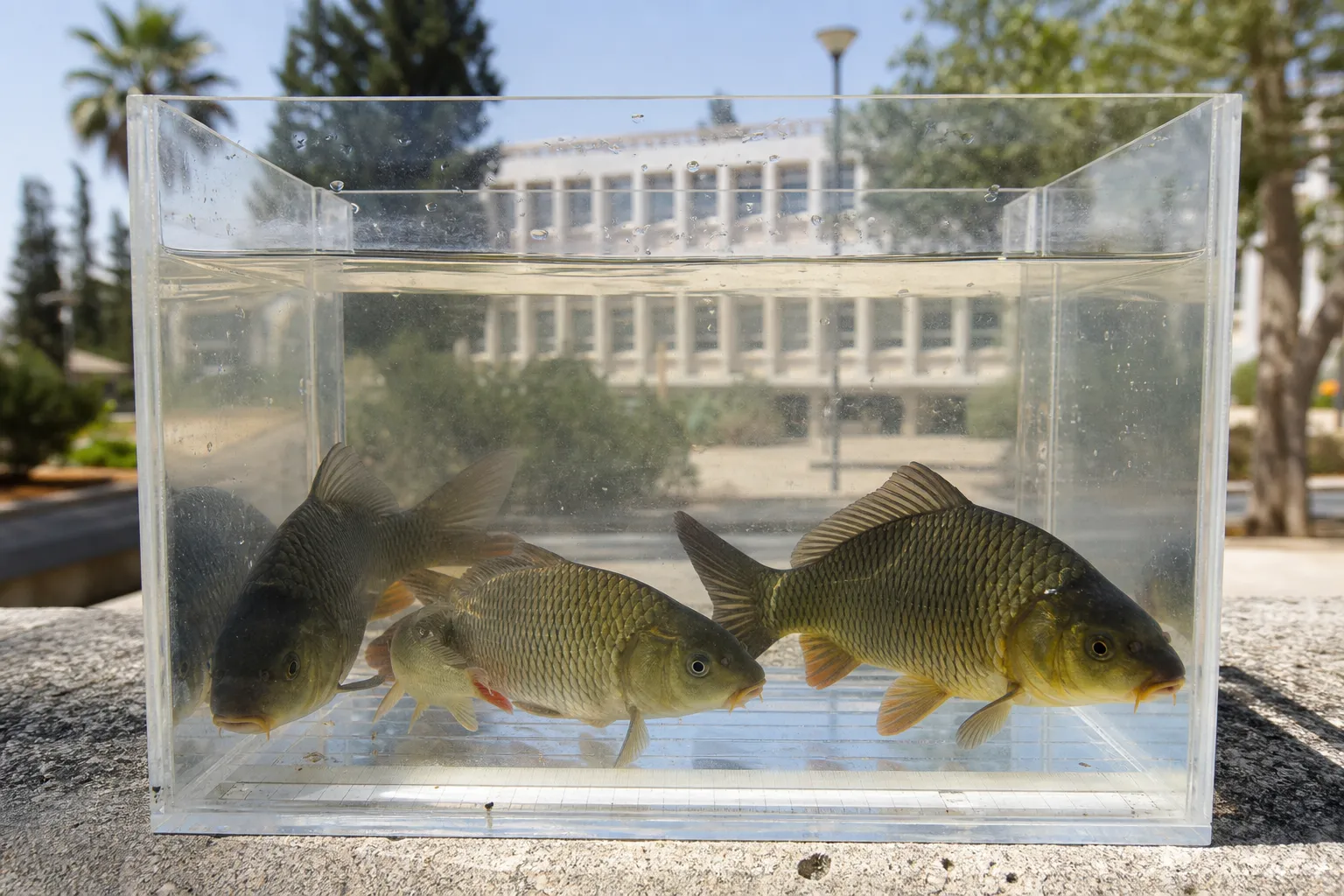
Israeli and American researchers found that several close relatives of the common carp transmit the CyHV-3 koi herpesvirus, which can rapidly wipe out fish populations in aquaculture, far less efficiently. The findings of researchers from the Hebrew University of Jerusalem and Michigan State University were published in the journal Aquaculture, The Jerusalem Post reports.
Resistance of related species
The scientists studied goldfish, grass carp, silver carp and black carp. According to the researchers, these species were rarely infected naturally. Even after deliberate infection with the virus, they quickly cleared the pathogen from their bodies, showed almost no signs of disease and transmitted the infection to other fish much less frequently.
During the experiments, healthy fish were placed in tanks together with infected common carp. The virus spread rapidly among common carp, but only a small proportion of the other studied species became infected, and almost none of these fish fell ill. The team also administered the virus by injection, bypassing natural protective barriers, but the differences in the species' responses persisted.
More current news is available on the UA.News Telegram channel Telegram.
Risks for aquaculture
The study leader, Professor Lior David of the Faculty of Agriculture, Food and Environment at the Hebrew University in Rehovot, noted that related species can still transmit the virus to common carp, but do so inefficiently. According to him, infected common carp remain the main risk for outbreaks, while the presence of the other studied species in bodies of water is unlikely to be the main cause of large-scale outbreaks.
CyHV-3 is one of the most destructive viruses in carp aquaculture: it can wipe out entire populations within a few days. David explained that the infection spreads especially easily at fish farms because of the high density of fish in a small volume of water. The researchers suggest that identifying genes associated with resistance could help breed common carp resistant to CyHV-3 in the future.




