
Farmers in Marigat use Lake Baringo water to irrigate tomatoes — Nation Kenya
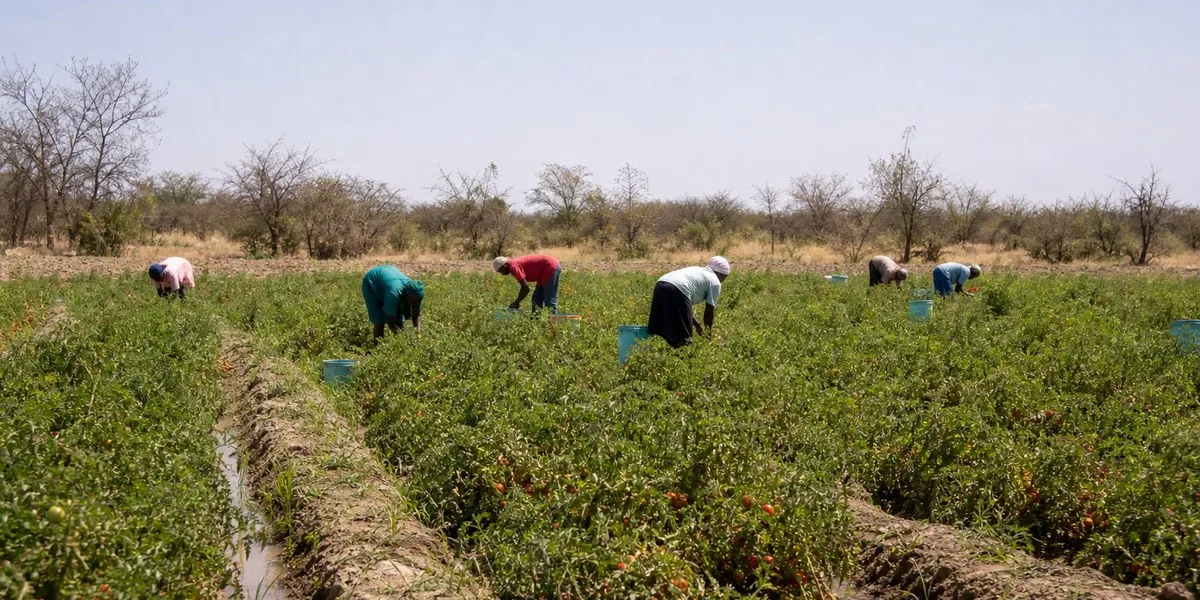
In Marigat Sub-County of Baringo County, Kenya, farmers use water from Lake Baringo to irrigate tomato fields. In the hot and arid region, rising water levels in the lake have become a source of water for farms growing tomatoes for local and distant markets, Nation Kenya reports.
From teaching to farming
One of the farmers is 28-year-old Peter Macharia, a graduate of Kenyatta University and a certified teacher. After completing his studies in 2023, he was unable to immediately find work in his field and began working on tomato farms, where he supervised workers and received a commission from seasonal profits.
During the season in December 2024 and January 2025, Macharia was able to save money and buy a diesel water pump and high-density polyethylene pipes. This allowed him to start his own farm. He gained practical experience from a family that grew tomatoes in Kampi ya Moto and Rongai in Nakuru County.
Irrigation, varieties and sales
Farmers use furrow irrigation connected to the Perkerra irrigation scheme: water is directed through channels along the rows of plants. According to Macharia, proper watering can sustain plants for up to four days before the next irrigation, making it possible to reduce diesel fuel costs for pumps.
More current news is available on the UA.News Telegram channel Telegram.
The area grows the hybrid varieties Ansal F1, Bigrock F1 and Harmony F1. They are chosen for their resistance or tolerance to common diseases, firm fruits and longer shelf life. Farmer Mellania Nduta noted that due to high temperatures, some tomato varieties here can be harvested about 60 days after transplanting, while under other conditions ripening may take around 90 days.
Risks for producers
In Marigat, more than 250 farmers have developed a sales arrangement under which they sell tomatoes directly in the fields. Middlemen bring buyers to the farms and negotiate purchases. This approach reduces transport costs for perishable produce, but also makes producers dependent on middlemen and price fluctuations.
Among the main problems, farmers cite the poor condition of access roads during the rainy season, a shortage of suitable land, crop damage by livestock, and the pest Tuta absoluta, known as the tomato leaf miner. When there is an oversupply, tomato prices can fall sharply, and producers risk not covering the costs of seedlings, fertilizers, pesticides, irrigation and labor.




