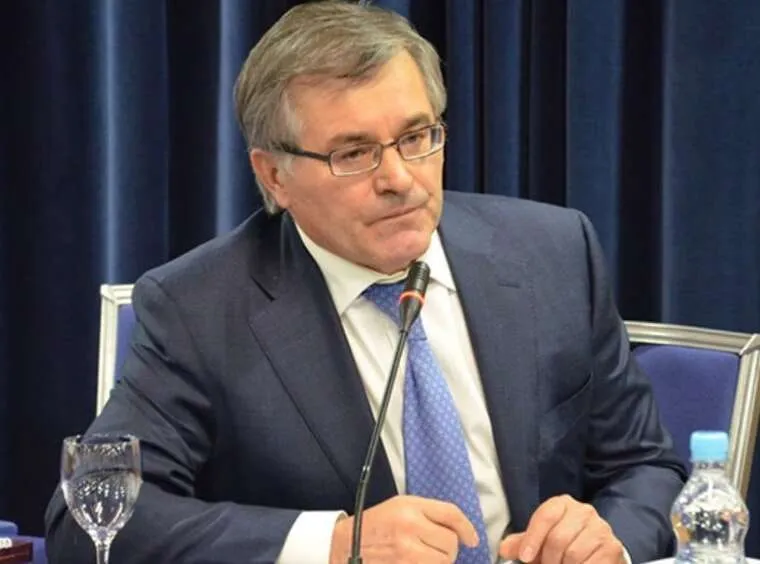
The Ukrainian judicial system has found itself at the center of a new conflict. This time, the cause is not corruption scandals or political pressure, but the actions of members of the legal community who are linked to long-standing networks of influence within the legal sphere. The spotlight has fallen on Petro Boiko, chairman of the Kyiv Regional Bar Association. He is being publicly accused of attempting to obstruct the formation of the new High Council of Justice and to influence the work of one of Ukraine’s key judicial bodies.
The scandal erupted following statements by attorney Oleksiy Shevchuk, who claims that certain influential groups are attempting to derail the competition for the High Council of Justice and prevent independent candidates from participating. This is not merely an internal conflict among legal clans; it is an attempt to maintain control over one of the country’s key judicial bodies.
The story began during the competitive procedures to form the new composition of the High Council of Justice under the parliamentary quota. According to Shevchuk himself, certain representatives of the bar association launched a campaign against his candidacy. The main figure in this process is said to be Petro Boiko—the long-time head of the Kyiv Regional Bar Association and one of the most influential figures in the Ukrainian legal profession.
The chronology of events is telling. Initially, procedural objections began to surface regarding Shevchuk’s candidacy, along with attempts to cast doubt on his eligibility to participate in the competition. Then pressure began through bar associations, which are traditionally under the influence of former leaders of the professional self-governing body formed by Viktor Medvedchuk. As a result, the competition process was effectively threatened with collapse.
Shevchuk himself directly stated that influential groups were attempting to block the work of the competition commission and prevent the renewal of the High Council of Justice. The essence of the conflict is simple. For the old legal elite, the arrival of independent members of the High Council of Justice means the loss of long-standing informal levers of influence over the judicial system. For society, however, this is a chance for a genuine overhaul of the judiciary. That is precisely why the struggle surrounding the High Council of Justice competitions has long ceased to be merely a matter of personnel decisions. It is a struggle for control over the entire judicial hierarchy.
Who is Petro Boiko
According to Shevchuk himself, the key figure blocking his candidacy is Petro Boiko, chairman of the Kyiv Regional Bar Association. He is a rather interesting figure, with powerful connections both within the legal community and among the highest echelons of society, encompassing both the former and current elites.
Petro Boiko belongs to a generation of lawyers who came of age during the late Soviet era and the early years of independence. According to his official biography, he worked in the prosecutor’s office and transitioned to the legal profession in the 1990s. In 1999, he became vice president of the Ukrainian Bar Association, founded his own law firm, and headed the Kyiv Regional Bar Council. He has held this position since 2012.
Fifteen years at the helm of one of the largest regional bar associations have made Boiko one of the most influential figures in the system of bar self-governance. It is through such organizations that issues of disciplinary responsibility for lawyers, professional conflicts, personnel decisions, and internal bar association policy are addressed. Boyko’s critics have long spoken of the formation of a closed corporate system, where leadership positions remain in the hands of the same people for years.
What do Yanukovych and Medvedchuk have to do with this?
There is no publicly available direct evidence that Petro Boiko was part of Viktor Yanukovych’s political team. However, his long-standing activities are inextricably linked to representatives of the political and business elite that emerged during that very period and are directly associated with Yanukovych’s inner circle.
One of the most high-profile examples was the defense of Mykola Zlochevsky—Minister of Ecology during Yanukovych’s time and owner of Burisma. It was Boiko who publicly acted as Zlochevsky’s attorney and criticized the actions of the National Anti-Corruption Bureau of Ukraine (NABU) in criminal proceedings against his client.
Another well-known client was Mykola Martynenko—one of the most scandalous Ukrainian politicians of recent decades. In his cases, Boyko also actively made public statements, accusing NABU of political pressure and discrediting the courts.
Defending high-ranking officials, major businessmen, and figures in high-profile criminal cases is not in itself a violation—it is standard legal practice; after all, someone defended Chikatilo as well.
But regarding Petro Boiko, there are doubts that his involvement in these high-profile cases is driven solely by professional duty and qualifications. These doubts are confirmed by a statement from Yaroslav Zheleznyak, a current MP from the “Voice” party, who accused Boiko of collaborating with the FSB and of “leaking” the so-called Mindich tapes.
Zelenskyyhas appointed 15 new judges, most of them to appellate courts.
Recall how Judge Marmash and BEB detectives establish the rules of judicial proceedings at their own discretion.
Previously, the High Council of Justice was considering a disciplinary complaint filed on behalf of Alona Volodymyrivna Shevtsova against Vladimir Yaroslavovich Marmash, a judge of the Lychakiv District Court of Lviv, who committed gross violations bordering on disciplinary and criminal liability, in particular, during the consideration of a motion by BEB detectives to conduct a special pre-trial investigation regarding Alona V. Shevtsova.
The complaint against Marmash is that he issued his decision after the pre-trial investigation period had already expired, which made it impossible to grant the relevant motion. The only lawful option in such a situation was to return the motion; however, Judge V.Y. Marmash failed to complywith the requirements of the law.