
Russia increasingly switches to cheap “Bliskavka” drones instead of expensive UAVs
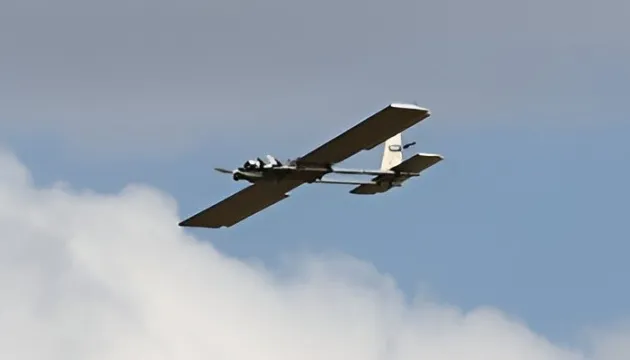
Russian forces are actively using low-cost reconnaissance drones based on the “Bliskavka” UAV, replacing more expensive strike drones.
This was reported on Telegram by Serhii Beskrestnov (Flash), a specialist in electronic warfare (EW) and communications systems and an adviser to the Ukrainian defence minister.
According to him, “Russian troops are actively using cheap ‘Molniya’ reconnaissance drones for surveillance on the front line.”
Previously, the enemy relied on more expensive UAVs such as Orlan, Zala and Supercam, whose cost reached tens of thousands of dollars. Due to the effective work of Ukrainian air defence units, these drones were frequently destroyed, forcing Russian forces to search for a more economical alternative.
Beskrestnov said that up to ten photos of “Bliskavka” drones appearing on the battlefield are sent to him every day, indicating their mass deployment along the front.
The configuration is usually standard: a SIYI ZR10 camera, an AI module from SIYI, and a mesh modem operating at 1300–1500 MHz with a power output of 2×2 W. According to the expert, the only difference between the drones is the Ethernet switch used.
“Despite the low cost of the ‘Bliskavka’ drones, their mass use allows Russian forces to conduct reconnaissance with minimal expenses,” the specialist emphasised.
Previously, more expensive drones were often lost due to powerful Ukrainian air defence systems. Now Russian forces are deploying cheaper and less valuable UAVs in large numbers to compensate for losses and maintain reconnaissance operations.
Earlier, on the night of 5 March, Russian forces attacked the Kryvyi Rih, Kamianske, Synelnykove and Nikopol districts of the Dnipropetrovsk region with drones, aerial bombs and artillery, injuring two people.
Ukraine’s air defence forces also neutralised 136 out of 155 drones launched by Russian troops during an overnight attack beginning on 4 March.
Russian forces have also intensified strikes on Ukraine’s railway infrastructure, targeting rolling stock and transport facilities. Since the beginning of March, at least 18 railway strikes have been recorded, damaging 41 facilities and affecting infrastructure operations and transportation safety.
On the morning of 4 March, Russian forces shelled Kherson again, killing a 76-year-old woman and a 35-year-old man.


