
From Several Years to Infinity: How Long Could the War in Ukraine Continue?
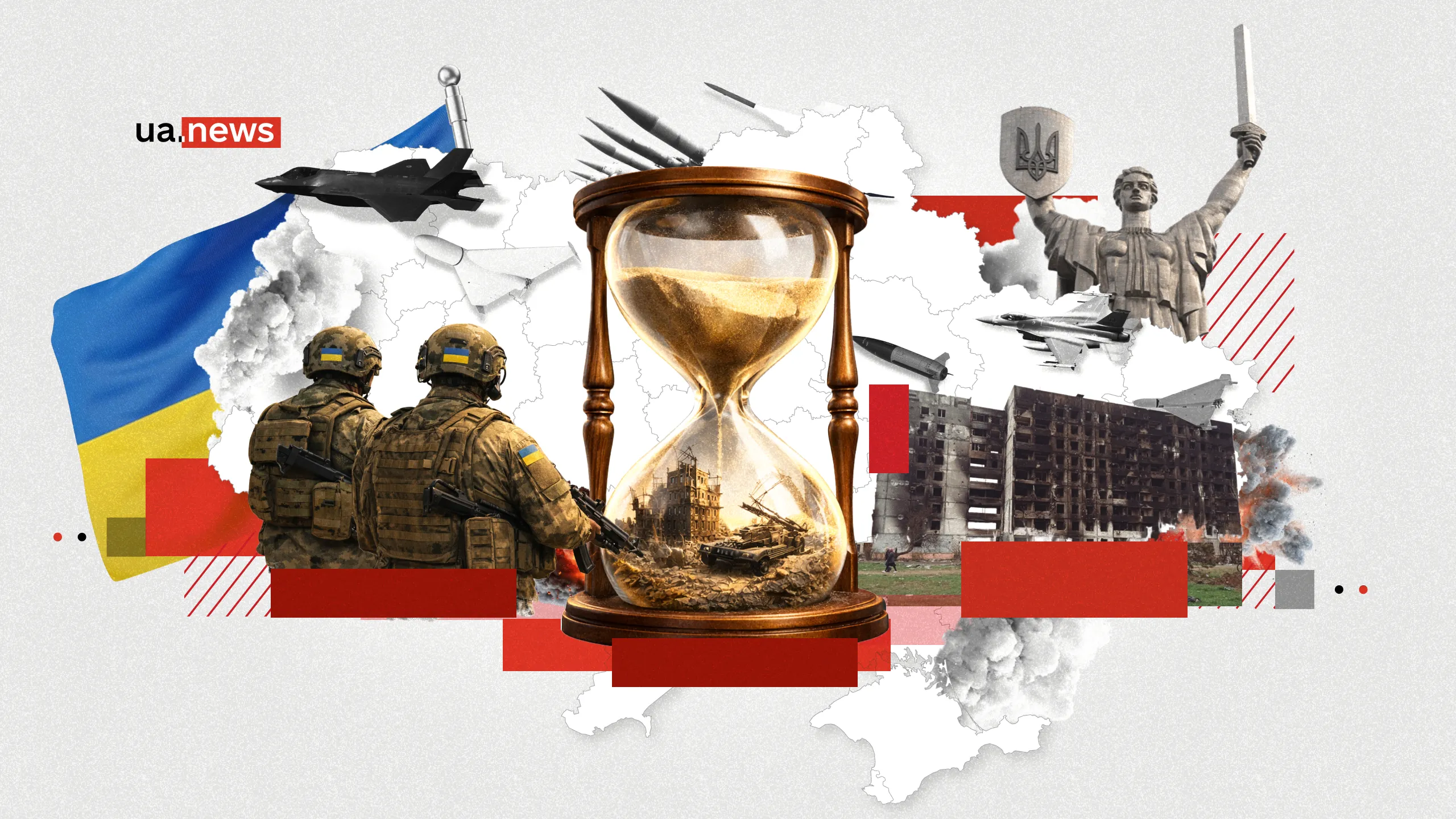
The full-scale war unleashed by Russia against Ukraine has been going on for almost four years — just one week short of that mark. If we look at the situation more broadly, without limiting ourselves to the phase of the large-scale invasion, the war with the Russian Federation has been ongoing since April 2014. This means that Ukraine has been living under conditions of armed conflict for almost 12 years. Children who entered first grade in 2014 have already finished school and enrolled in universities. They have lived their entire conscious lives in a state where bloodshed continues. The war in the country has spanned a generation — an enormous period of time during which new citizens have grown up for whom the sound of sirens and air raid alerts has become as normal as morning coffee.
The Ukrainian authorities, understanding public fatigue and striving to preserve social stability, have consistently kept society in a state of expectation, promising that peace may come “very soon.” However, content analysis of such statements shows that this rhetoric has been used throughout the entire full-scale war — that is, for four consecutive years. The longer this continues, the more many people develop an exhausting sense that the war may never end, that it could become a permanent condition, like a chronic incurable illness that sooner or later claims its toll, and that nothing can be done about it — one must simply adapt and live as best one can.
But can this really be the case? Can a war last forever or for many decades, replacing one generation after another? Will there be sufficient economic, political, and social resources to sustain such a scenario? Political observer of UA.News, Mykyta Trachuk, together with experts, examined this question.
The economic dimension: the logic of capabilities versus the logic of desires
Certain political leaders may wish to wage war for their entire lives, since war can become the foundation of their legitimacy, a source of personal power, and an instrument for mobilising society against perceived enemies. However, there is not only the logic of desires but also the relentless logic of capabilities. The capabilities of both Russia and, especially, Ukraine are not unlimited.
From an economic perspective, war cannot last forever because sooner or later resources, money, and, most importantly, people — the primary asset for both the economy and the military — will run out. A wartime economy is like a vast furnace that burns national wealth at colossal speed.
The question of “exactly how long” is one of the most difficult to forecast, and all estimates remain approximate. As of early 2026, both countries still possess the resources to continue hostilities, although the cost of this confrontation rises with each passing month. Analysis of the economic situation in Russia suggests that the aggressor state has come close to recession and stagflation. Military expenditure now accounts for more than 40 per cent of the federal budget — the highest level since the collapse of the Soviet Union. The Russian economy increasingly resembles an “economy of missiles and drones,” in which other sectors are sacrificed for arms production.
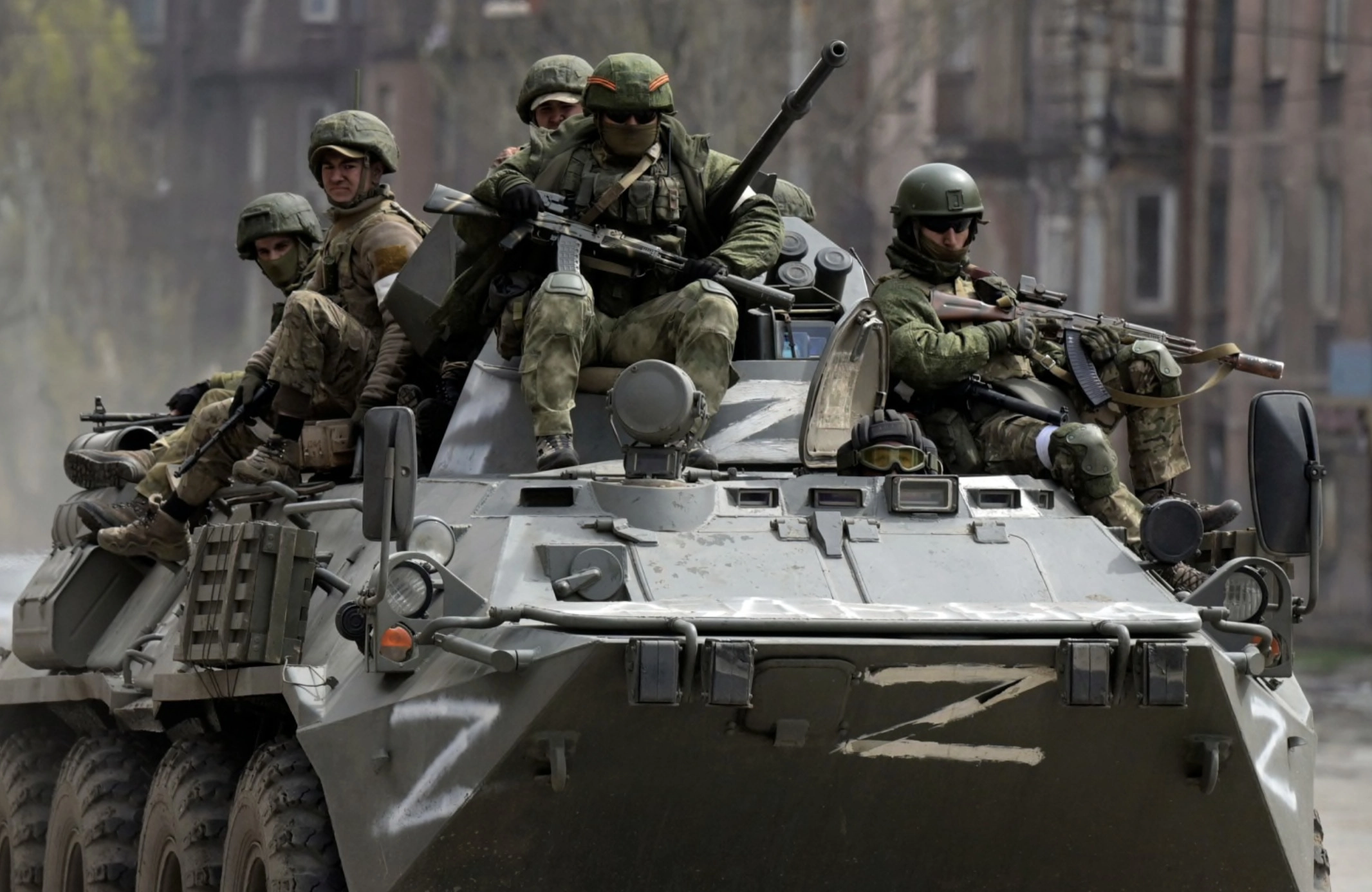
At the same time, even under such strain, Russia may be able to finance its aggression for some time. The Russian Federation is resource-rich, enabling it to offset economic losses. As for human resources, there has been no full-scale mobilisation — apart from a partial wave in autumn 2022. However, this does not mean that the Kremlin could not resort to compulsory conscription, despite the social tensions such a decision would provoke. In terms of manpower, Moscow’s reserves remain considerable.
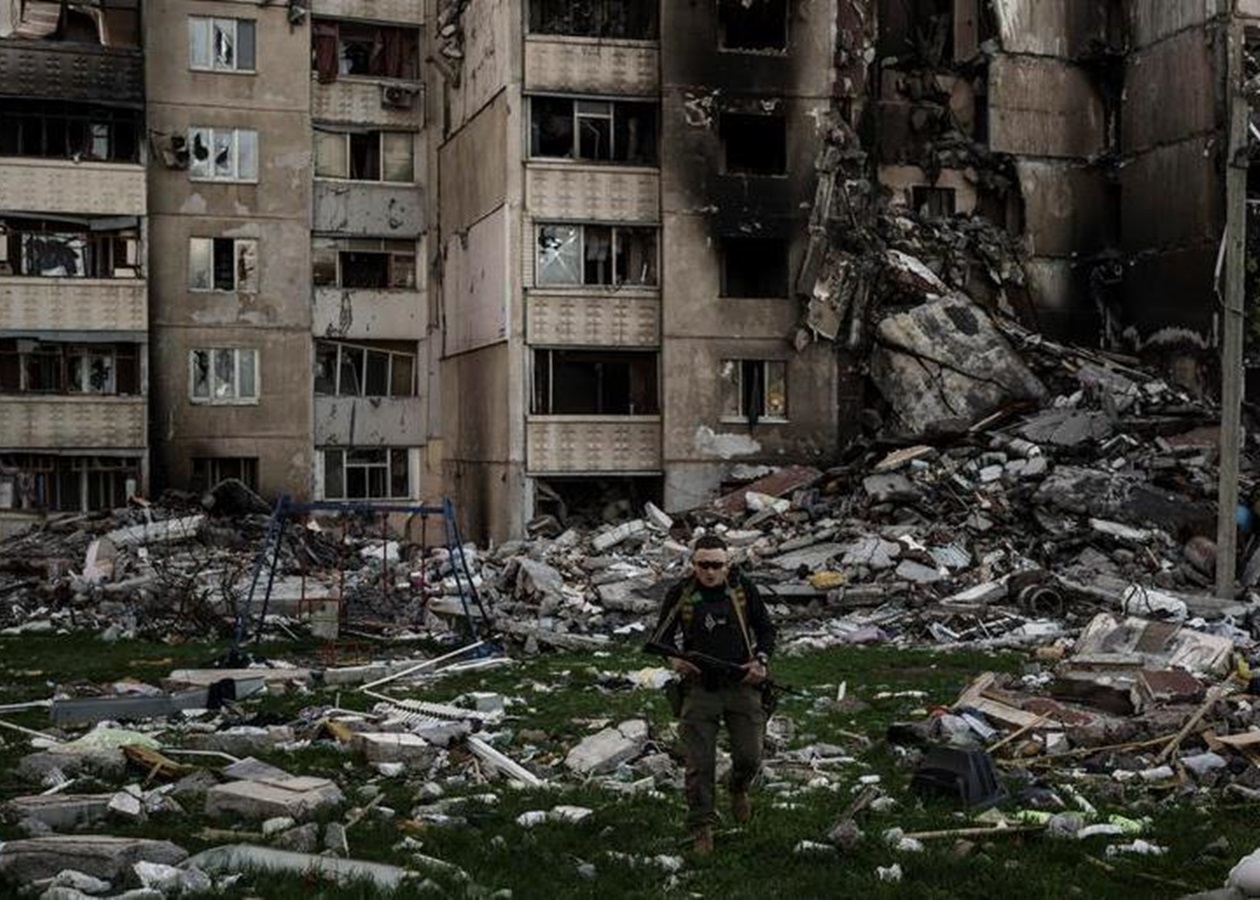
In Ukraine, the situation is similar but with different emphases. The Ukrainian economy has its limits. The scale of destruction, particularly of energy infrastructure, is immense. Constant shelling forces businesses to operate under extraordinary conditions, while a significant portion of the state budget must be directed towards defence. Gross domestic product growth in 2025 was weaker than most forecasts, largely due to the systematic destruction of energy generation facilities.
However, Ukraine possesses one major advantage — unprecedented international support. Financial assistance from Western partners has enabled the country to maintain macroeconomic stability despite a substantial budget deficit. Ukraine’s international reserves have recently reached a historic high.
Human resources remain the most painful and sensitive issue for Ukrainian society. At the same time, it is evident that millions of men have not yet been mobilised, either because they have exemptions or deferments, reside abroad, or for various reasons avoid conscription. Options such as lowering the mobilisation age, raising the upper age limit beyond 60, or, in an extreme scenario, even the theoretical mobilisation of women — although not currently under serious consideration — cannot be entirely ruled out.
Thus, despite economic challenges and social fatigue, both sides appear to have sufficient resources to continue the war for years to come. The question is less about the existence of resources than about the willingness of society and political leadership to continue paying this ever-increasing price.
At the same time, economist Vadym Syrota, who holds a PhD in Economics, argues that Ukraine lacks the resources for a prolonged war. In his view, Ukraine’s domestic resources would last only a few months, while Russia may have enough for three to four years. However, he acknowledges that such assessments are necessarily simplified.
“In September last year, the Budget Committee of the Verkhovna Rada stated that one day of war costs 172 million United States dollars. This figure is rising — previously it was 140 million United States dollars. Ukraine is one of the most militarised economies in the world, with colossal defence spending relative to gross domestic product. Western experts report that in 2024 global military expenditure reached a record 2.7 trillion United States dollars. In 2024, Kyiv spent 64.7 billion United States dollars on defence — less than half of Russia’s spending, yet equivalent to 34 per cent of Ukraine’s gross domestic product. Our militarised economy functions largely thanks to Western financial assistance. In Russia, military expenditure amounts to 149 billion United States dollars — only 7.1 per cent of gross domestic product. Can we continue the war if financial support were suddenly withdrawn? The question answers itself. The military machine devours society’s financial resources, not to mention lives and health. Wars are won not by gross domestic product, but by the financial flows at one’s disposal,” Syrota argues.

The political dimension: how long can systems withstand the burden of war?
War is a powerful systemic stress test that challenges all state institutions. So far, both systems have demonstrated resilience, albeit for entirely different reasons.
War has a tendency to unite societies “around the flag” — around state institutions and the figure of the leader. This unity may be partly voluntary and partly enforced through propaganda, pressure, and even repression. Nevertheless, it can function for a prolonged period, regardless of who is the aggressor and who is the victim.
Any political regime in wartime uses extraordinary circumstances to consolidate power, since internal opposition is often portrayed as disloyalty or even treason. Such systems are highly vulnerable to sudden “black swan” events — unexpected military setbacks, economic crises, social unrest, or the illness or death of a leader. Yet in a “besieged fortress” mentality, political regimes can endure for decades by mobilising society against an external enemy.
At the same time, fatigue is unavoidable. Not only soldiers at the front grow weary, but entire societies. In Ukraine, fatigue stems from constant attacks, persistent disruptions to basic public services, aggressive mobilisation practices, economic hardship, limited political competition, restrictions on movement (particularly for men and some women liable for military service), and the curtailment of certain rights and freedoms.
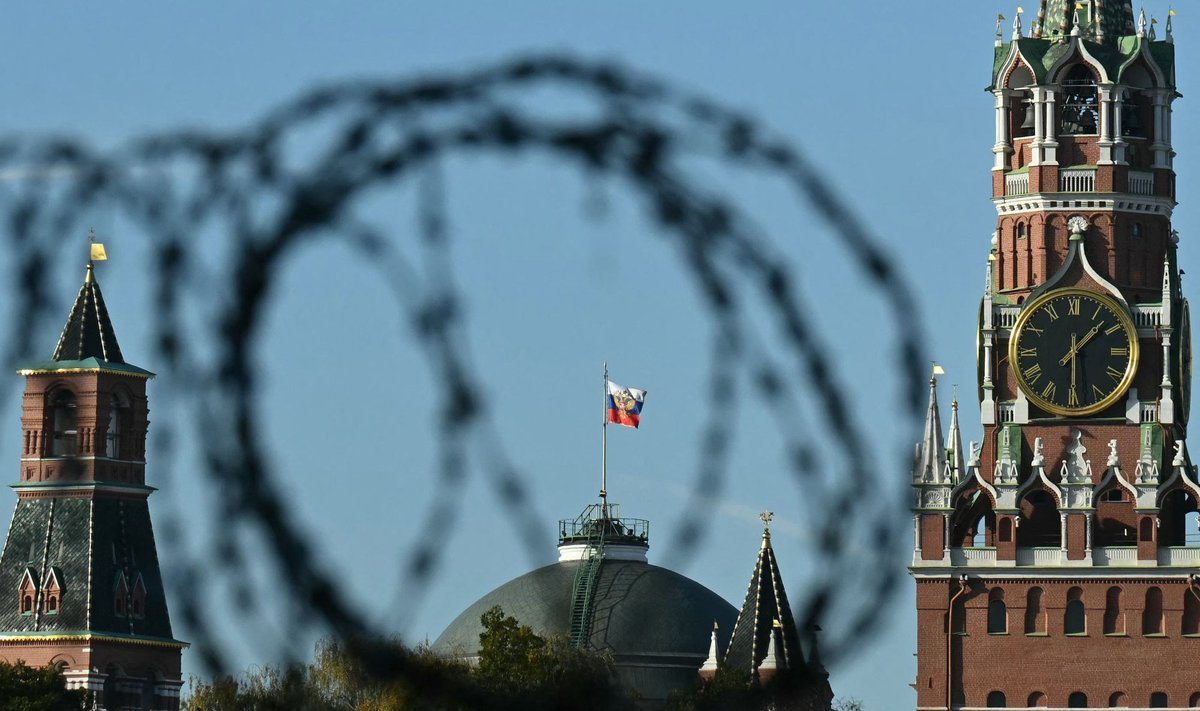
Russians, although less directly affected by frontline realities, also grow weary of prolonged emergency conditions, as reflected in opinion polls and in-depth interviews. For now, however, this fatigue does not appear to pose an immediate threat to political stability.
Making precise forecasts about the end of the war remains an inherently uncertain endeavour. Political stability can endure for years and then collapse within weeks under unforeseen circumstances.
Political scientist and Director of the Ukrainian Institute of Politics, Ruslan Bortnyk, notes that political systems can remain locked in high-level conflicts for decades. The conflict between Ukraine and Russia has already lasted 12 years. According to him, such confrontations may persist for 30 to 50 years if they represent systemic geopolitical rivalry.
“Traditionally, conflicts between political systems last 30 to 50 years if they are high-order conflicts. Therefore, such calculations are not particularly productive — they do not provide us with much practical insight. The Ukrainian-Russian war is part of a broader global geopolitical confrontation, and the political causes of this conflict are unlikely to be exhausted any time soon, at least until the United States and China reach a new balance between themselves.
A potential calculation based purely on the political dimension points to the period 2040–2045 as a possible timeframe for geopolitical stabilisation and a potential easing of relations in a new bipolar world. By contrast, a resource-based calculation — that is, how long the parties will be able to continue expending vast human, economic and other resources on the war — suggests the period 2028–2030, provided the conflict does not escalate into a full-scale international or global war.
According to this resource-based assessment, there is a 75 per cent probability that the war will end between 2028 and 2030 due to the exhaustion of the parties’ resources. However, if other actors (NATO, North Korea, or China) were to enter the war directly and fully, it could last considerably longer.
Nevertheless, both Ukraine and Russia, despite all projections, continue to fight. Russia is waging the war largely on its own resources, while Ukraine relies predominantly on a combination of domestic and Western support. The exhaustion of the sides may resemble the final phase of the First World War, when — despite the fact that no one achieved a decisive military victory on the front, no capitals were captured, and no leaderships were destroyed — one side became so depleted that it was ultimately forced to capitulate,” Ruslan Bortnyk concluded.

Lessons of history: is it possible to wage war forever?
History offers many examples of extraordinarily long wars that shaped — and often devastated — entire generations. War is easy to begin, but exceedingly difficult to end.
The Hundred Years’ War between England and France lasted from 1337 to 1453 — 116 years. The Thirty Years’ War (1618–1648) involved most European powers and devastated large parts of the continent.
In modern history, conflicts often take on a prolonged, smouldering character. The civil war in Myanmar lasted more than 60 years. The civil war in Guatemala continued for 36 years. The conflict in Colombia between the government and FARC endured for over 50 years.
The war in Syria has now lasted more than 15 years, devastating the country and drawing in numerous external actors. In Libya, following the overthrow of Muammar Gaddafi in 2011, lasting peace has yet to be established, and the country remains fragmented.
These examples demonstrate that while wars are never truly eternal, they can last long enough to devastate nations and cast a shadow over generations.
In conclusion, the war in Ukraine, of course, will also not last forever. And it will not continue for a century either. But at the same time, the bloodshed has already been going on for 12 years, and so far we do not see any obvious harbingers of its end. Historical experience suggests: if a conflict moves into a chronic phase, if a “culture of war” is formed in societies, and political and business elites find benefit in it, then fighting like this — with varying intensity, with periods of calm, freezing, and new flare-ups — can, unfortunately, continue for a very long time. The only question is whether society will have enough strength and will not to allow the war to become eternity, and to find within itself the courage for peace.
