
"Exposing" Someone Who Wasn't Hiding: Kostyantyn Shpylevyi Responds to Zheleznyak's Investigation into Absolution Leaks
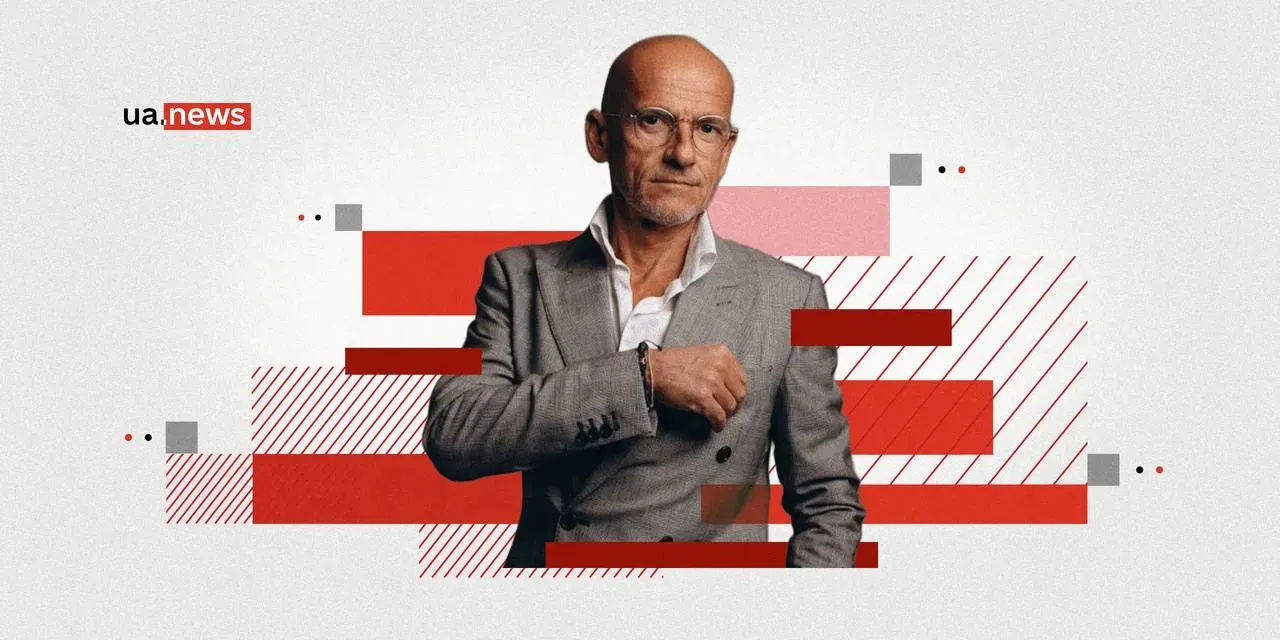
People's Deputy Yaroslav Zheleznyak posted a video about the Telegram channel Absolution Leaks, calling it an "anonymous smear campaign" and claiming that he had identified the person behind this news outlet. According to the lawmaker, that person is Kostyantyn Shpylevyi, the founder of the international detective agency Absolution International Detective & Legal Agency.
However, the sensational claim about the alleged exposure of the anonymous channel’s owner raises at least one logical question: what exactly was exposed, if Shpylovyi’s connection to the Absolution brand was not hidden, and he himself publicly presented himself as the agency’s founder, a detective, and an investigator?
As early as May 28, 2026, UA.News published an extensive interview with Konstantin Shpylov, in which he was explicitly introduced as a former police officer, lawyer, professional art historian, gallery owner, and founder of Absolution International Detective & Legal Agency.
Shpylov openly discussed his own methods of work, evidence gathering, document analysis, the psychology of those involved in conflicts, and his understanding of the detective profession.
Therefore, it is hardly accurate to call the revelation of Shpylov’s connection to Absolution Leaks a sensational de-anonymization.
This is not a case of an unknown person who was tracked down for the first time via digital traces, but rather a public figure—the founder of a detective agency—who made no secret of his profession, the name of his project, or the fact that he engages in investigative work.
What Yaroslav Zheleznyak Said
In his video, the MP referred to Absolution Leaks as an anonymous Telegram channel and claimed that its owner is Kostyantyn Shpylevyi.
Zheleznyak suggested that part of the channel’s audience might be inflated, and that its posts could be used for information attacks against businesspeople, politicians, and public figures.
The lawmaker also leveled much more serious accusations regarding the channel’s operating practices. Specifically, the video mentioned a possible scheme in which, after negative stories were published, those implicated were allegedly offered the removal of the posts in exchange for money.
However, the lawmaker’s public statement does not in itself constitute proof of guilt, an indictment, or a court ruling.
At this time, there is no publicly known court ruling establishing that Kostyantyn Shpylovyi or representatives of Absolution Leaks demanded money in exchange for removing content.
Therefore, it would be premature to present such claims as proven facts. For now, these are allegations made by Zheleznyak, to which the other party has the right to respond, demand evidence, and defend its reputation through the means provided by law.
Similarly, the mere fact that a detective agency or news outlet collects documents, analyzes court rulings, investigates business ties, and publishes materials about public figures is not automatically illegal.
Investigative activities can be inconvenient for those involved. They can lead to conflicts, complaints, and lawsuits. But the right to gather information from open sources, analyze documents, and draw public conclusions based on them does not disappear simply because someone does not like the result.
That is precisely why the headline about “anonymous smear campaign” seems too sensational.
Shpylovyi: “They sensationally revealed something that no one was hiding”
Konstantin Shpylovyi responded to Zheleznyak’s post in his characteristic ironic manner. He stated that Absolution’s connection to him had never been a secret.
According to Shpylovyi, the detective agency has been operating since 2017, and in 2023, it launched a separate information unit—the Absolution Leaks Telegram channel.
“They’ve sensationally revealed something that no one was really hiding. It’s like pulling the cover off a monument that’s stood in the middle of the square for ten years and solemnly announcing to the city: ‘We’ve figured out who it is,’” said Kostyantyn Shpylovyi.
He did not deny his involvement in the project. On the contrary, he effectively confirmed it and shifted the discussion to a different plane: if information about the owner wasn’t being hidden, then why is identifying him being presented as the main scoop?
This response is consistent with UA.News’s public reports. As early as late May, the editorial team had identified Shpylovyi as the founder of Absolution International Detective & Legal Agency.
Shpylovyi also suggested that the public campaign against Absolution might be linked to the subjects of the channel’s previous investigations. He described this as merely his own theory, while emphasizing that he was not presenting his speculation as a court ruling.
According to him, one of the individuals featured in the reports might have decided to fight not against the facts or documents, but against the project itself and its reputation.
This seems particularly interesting in light of the Absolution Leaks report on possible overpricing of drones and the business ties of Ajax Systems owner Oleksandr Konotopskyi.
In his commentary, Shpylovyi specifically highlighted the paradoxical effect of Zheleznyak’s post: the lawmaker himself introduced a much wider audience to Absolution’s structure.
“The MP is telling his audience about a investigative agency. He explains who is behind it. He lists the topics of our investigations. He shows our publications. He’s essentially giving a tour of the project,” Shpylovyi noted.
He called the MP his free speechwriter and PR manager, thanking him for the additional attention to the channel.
According to Shpylovyi’s logic, an information attack can backfire: before convincing the audience that a certain outlet is dangerous or unethical, its critic is forced to explain in detail who is behind it, what it publishes, and why its content provokes a reaction from influential people.
Some viewers may not automatically accept the video creator’s position but instead visit the channel themselves, review the posts, and form their own opinion.
Why the Claim of Absolution Leaks’ Anonymity Raises Questions
Telegram does indeed allow channels to operate without publicly listing the names of all administrators, authors, or editors. However, the absence of a complete list of the team in the channel description does not necessarily mean that the owner or the brand associated with the project is unknown.
In the case of Absolution, there was a detective agency with a similar name, a publicly known founder, media interviews, and numerous articles in which Absolution Leaks was cited as a source of information.
In other words, the project was a recognizable source for the media and operated systematically in the public sphere.
That is precisely why the phrasing “who is behind the anonymous channel” creates the impression of exposing a well-concealed network, although in reality it is more a matter of systematizing connections that were already available.
The strongest part of the investigation should have been not the naming of a person whose name was already in the public domain, but the presentation of verified evidence of specific violations.
For example, documented offers to remove a post in exchange for money, recordings of conversations, payment documents, victim testimonies, or materials from criminal proceedings.
Without this, even the most serious allegations remain merely the video author’s version of events.
Who Is Kostyantyn Shpylevyi
In a May interview with UA.News, Konstantin Shpylovyi spoke about himself not only as a detective but as a person whose professional background combines law enforcement, the legal profession, private investigations, and art history.
He worked in law enforcement, gained legal experience, practiced defense and provided consulting services, and at the same time developed his skills in the arts and the gallery sector.
Shpylovyi explained that he begins his work not only with formal documents but also by sensing an internal contradiction in the version of events presented to him.
“Intuition tells me where to dig. The evidence confirms what I’ve found,” he said in an interview with UA.News.
At the same time, he emphasized that intuition alone is not enough for a professional conclusion. According to him, facts without psychology turn into an archive, while psychology without facts remains a beautiful novel that cannot be taken to court.
That is precisely why, in his work, he strives to combine documents, motives, human behavior, and legal analysis.
Shpylovyi described his own role not as a “truth seeker,” but as a mediator between a person’s words and the actual circumstances, between what is written in documents and what lies behind them.
This approach explains why *Absolution* combines legal analysis, OSINT, public records, court decisions, law enforcement reports, and an analysis of the behavior of those involved in the conflict.
Art occupies a special place in Shpylovyi’s worldview. He called himself a professional art historian and compared the analysis of human behavior to the study of painting.
According to him, when examining a painting, an expert looks for a detail that a forger was unable to conceal. Something similar happens in an investigation: what may prove important is not a person’s central claim, but a minor contradiction, an intonation, an omitted fact, or a flawed explanation.
At the same time, Shpylovyi emphasized that the mere fact of possessing information does not give one the right to thoughtlessly destroy a person.
“Knowing everything doesn’t mean saying everything,” he explained, reflecting on a detective’s professional responsibility and the limits of disclosure.
So far, two facts are clear in this story.
First: Kostyantyn Shpylovyi does not deny his connection to Absolution Leaks and states that this connection was never concealed. Reports by UA.News and other media outlets do indeed show that Absolution and its founder were already present in the public sphere prior to Zheleznyak’s video.
Second: Zheleznyak’s most serious allegations—particularly regarding the possible receipt of money in exchange for removing posts—currently remain the lawmaker’s public account of events, not a fact established by a court.
That is precisely why the narrative of exposure and inevitable accountability should be viewed with caution. Accountability does not follow a sensational video, but rather a proper investigation, the establishment of the facts, the verification of evidence, and a legal assessment.


