
Zelenskyy appointed Viktor Kitsyuk as a judge of the Pechersky District Court of Kyiv
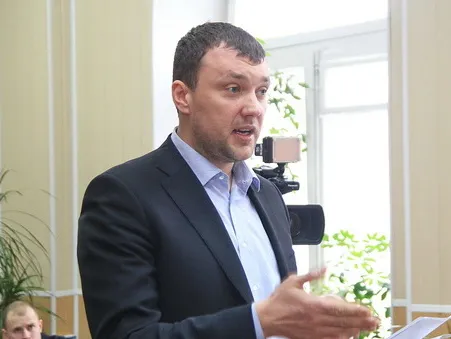
On September 25, President Volodymyr Zelenskyy appointed Viktor Kitsyuk as a judge of the Pecherskyi District Court of Kyiv. Kitsyuk had previously served at this court, but his five-year term ended in May 2014. Following that, his appointment was reviewed by the High Council of Justice and the courts for several years. Kytsyuk’s background includes a case dating back to the Revolution of Dignity and criminal proceedings related to rulings concerning participants in the Automaidan movement. In 2020, he was acquitted, and the appeal proceedings in this case were subsequently closed.
On September 25, Ukrainian President Volodymyr Zelenskyy signed Decree No. 958/2026, appointing Viktor Petrovych Kitsyuk as a judge of the Pecherskyi District Court of Kyiv. The decree was published on the head of state’s website. “To appoint Viktor Petrovych Kitsyuk to the position of judge of the Pechersk District Court of Kyiv,” the document states.
This is not Kytsyuk’s first appointment to the Pechersk Court. He had previously served there until 2014, after which he waited for years for a decision regarding his continued tenure.
How Kytsyuk Became a Judge
In May 2009, Viktor Kitsyuk was appointed a judge for the first time. President Viktor Yushchenko appointed him as a judge of the Zhovtnevy District Court of Kharkiv for a five-year term. In March 2012, Kitsyuk was transferred to the Pechersk District Court in Kyiv. There, he continued to serve for the same five-year term. His term ended on May 13, 2014.
Back in November 2013, Kitsyuk submitted documents to be recommended for appointment as a judge of the Pechersk District Court for an indefinite term. However, consideration of this matter dragged on for years.
The Case of Serhiy Poyarkov
One of the most well-known stories involving Kitsyuk took place during the Revolution of Dignity. In January 2014, Kitsyuk revoked artist and activist Serhiy Poyarkov’s driver’s license for six months. Poyarkov was accused of allegedly failing to comply with a traffic police officer’s order to stop on December 29, 2013.
Poyarkov denied the violation in court. Subsequently, the appellate court overturned Kytsyuk’s decision and dismissed the case due to the absence of an administrative offense. Later, the High Council of Justice reviewed a disciplinary case regarding this decision. The High Council of Justice found that Kitsyuk had committed a significant violation of procedural law during the consideration of the case. In particular, the case file did not contain the traffic police officer’s report on which the charges were based, and the facts of the case, according to the disciplinary chamber’s conclusion, had not been properly established.
At the same time, the judge was not held disciplinarily liable at that time. The proceedings were closed due to the expiration of the statutory time limit for imposing disciplinary sanctions.
Suspicion in the Automaidan Case
In 2015, Kyttsuk was notified that he was a suspect in a criminal investigation into the persecution of Automaidan participants. According to the High Council of Justice, the investigation concerned the possible unlawful persecution of protest participants and the issuance by courts of knowingly unjust rulings. Kitsyuk was formally charged on February 3, 2015. At the same time, Oksana Tsarevich, a judge of the Pechersk District Court, was also charged.
In February 2016, the indictment against Kitsyuk and Tsarevich was sent to the Shevchenkivskyi District Court of Kyiv for trial on the merits. They were charged under the article of the Criminal Code concerning a judge’s rendering of a knowingly unjust decision.
What the courts ruled in this case
In November 2020, the Shevchenkivskyi District Court of Kyiv acquitted Kitsyuk due to lack of evidence of a crime. The appeal proceedings in his case were subsequently dismissed. This case was also heard against the backdrop of a 2020 decision by the Constitutional Court, which ruled that Article 375 of the Criminal Code—concerning the liability of judges for knowingly unjust rulings—was unconstitutional. As a result, Kytsyuk’s criminal case did not result in a conviction.
In other words, Kytsiuk has no conviction in this case. At the same time, the very issue of the prosecution of Automaidan participants was one of the main reasons why his candidacy was scrutinized for a long time with additional questions.
Why Kytsyuk Was Not Appointed in 2017
In September 2017, the High Council of Justice refused to submit a proposal to the president to appoint Kitsyuk as a judge of the Pechersk District Court. At the time, the High Council of Justice cited, in particular, the criminal proceedings regarding the persecution of Automaidan, violations identified by the Disciplinary Chamber during the consideration of an administrative case, and incomplete information in his integrity declaration. The Council concluded that there were circumstances at the time that could indicate Kytciuk’s failure to meet the criteria of integrity and professional ethics.
Kitsyuk appealed this decision to the Supreme Court. In December 2019, the Administrative Court of Cassation within the Supreme Court overturned the High Council of Justice’s decision. The court noted that the High Council of Justice had violated the procedure for considering the matter; specifically, Kytsyuk was not properly notified of the proceedings, he was unable to attend the hearing due to illness, and the council considered additional circumstances without obtaining his explanations.
The Supreme Court also noted that the mere existence of criminal proceedings does not prove a person’s guilt, and the previously established procedural violation—for which the judge was not held disciplinarily liable due to the statute of limitations—does not in itself preclude his appointment.
What Changed in 2020
Following the Supreme Court’s decision, the High Council of Justice reconsidered Kytsyuk’s case. In December 2020, the High Council of Justice decided to submit a proposal to the president to appoint Kytsyuk as a judge of the Pechersk District Court of Kyiv. In its decision, the Council noted that, following the Supreme Court’s review of the case, it had not identified any circumstances that could constitute a legal basis for rejecting such a proposal.
The High Council of Justice also noted separately that the National Agency for the Prevention of Corruption, after reviewing Kytsyuk’s declarations, found no evidence of violations of the procedure for declaring property and assets. Thus, the situation regarding Kitsyuk has changed over the past few years: while in 2017 the High Council of Justice refused to recommend his appointment, following a judicial appeal and a new review in 2020, the council supported his appointment.
What Happened Recently
After that, the final decision on Kytsyuk’s appointment was not formalized by a presidential decree for a long time. On September 25, 2026, Volodymyr Zelenskyy signed Decree No. 958/2026. The document explicitly provides for the appointment of Viktor Kitsyuk as a judge of the Pechersk District Court of Kyiv.
Thus, Kitsyuk has once again assumed the powers of a judge of the Pechersk District Court of Kyiv, more than 12 years after the end of his first five-year term. His return to the court came after many years of proceedings before the High Council of Justice and in the courts. At the same time, his professional record includes both the High Council of Justice’s findings of procedural violations and the Supreme Court’s overturning of the refusal to appoint him, as well as an acquittal in the criminal case involving Automaidan. This information is contained in Decree No. 958/2026.




