
Traditional Cypriot doors reveal the history of old homes — Cyprus Mail
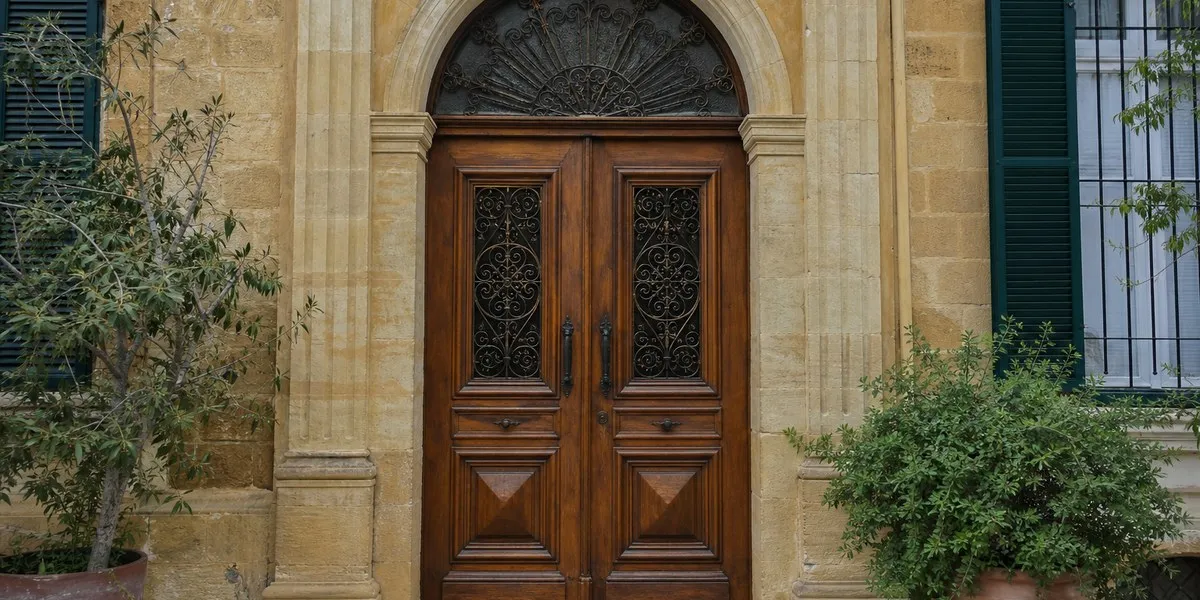
In Cyprus, traditional entrance doors of old houses can indicate the period when they were made, the owners' wealth and the purpose of the space behind the entrance. In many vernacular homes, the main gate, known as xoporti, connected the street with a private courtyard and was wide enough for residents and livestock to pass through, Cyprus Mail reports.
Architect Konstantinos Nioukolikos, who has worked on restoring traditional buildings in Cyprus, notes that the design of a door makes it possible to determine the period when it was made, the owner's economic status and how the space behind it was used. Meanwhile, carpenter and furniture maker Michalis Socratus emphasizes that there was no single type of traditional Cypriot door.
From simple to decorated entrances
One of the simplest varieties was plank doors, which old Cypriot craftsmen called skettes. They were assembled from solid wooden boards fastened with horizontal elements. More complex models had a frame, panels and moulded details, and were sometimes made with two leaves.
According to Maria Filokyprou, an associate professor of architecture at the University of Cyprus, entrances to rural houses were usually rectangular and had a horizontal wooden lintel. In wealthier buildings influenced by urban architecture, carved stone surrounds, arches, panelled doors, light openings and metal elements appeared.
Doors were made mainly from pine, as well as cypress. In the Karpasia region, craftsmen sometimes worked with aoratos wood. The choice of material depended on locally available timber, the region and the type of building.
More current news is available on the UA.News Telegram channel Telegram.
Craftsmanship and preserving originals
Traditional woodworkers, called pelekanos, worked by hand with saws, planes, chisels and special planes for creating profiles. Handcrafted hinges, grilles and locks were made by metal craftsmen known as komodromos. A significant number of old examples have not survived because wood does not withstand centuries well.
Yosif Hadjikyriakos, director of the Larnaca Archives — Phoivos Stavrides Foundation, notes that early examples of doors can be seen in churches and fortifications, while most old doors of residential buildings on the island date from the late Ottoman and British periods. In Nioukolikos' view, large doors with delicate metal details may point to the colonial neoclassical period, while arched entrances with heavy sandstone or limestone masonry may indicate the Lusignan or Ottoman period.
During restoration, simple plank doors can sometimes be replaced with new ones featuring improved mechanisms, sealing, insulation and fire protection. Elaborately decorated examples are more often preserved. Filokyprou believes that when original wooden elements are present, intervention should be minimal, including preserving carved details, shutters and mechanisms.
Socratus noted that knowledge of working with solid wood, traditional joints and hand tools is becoming increasingly difficult to pass on to new generations. He supports the idea of an interactive museum of Cypriot woodworking, which would preserve not only old tools but also information about their use and the craftsmen.


