
More than 55,000 people in South Africa began receiving lenacapavir for HIV prevention — Daily Maverick
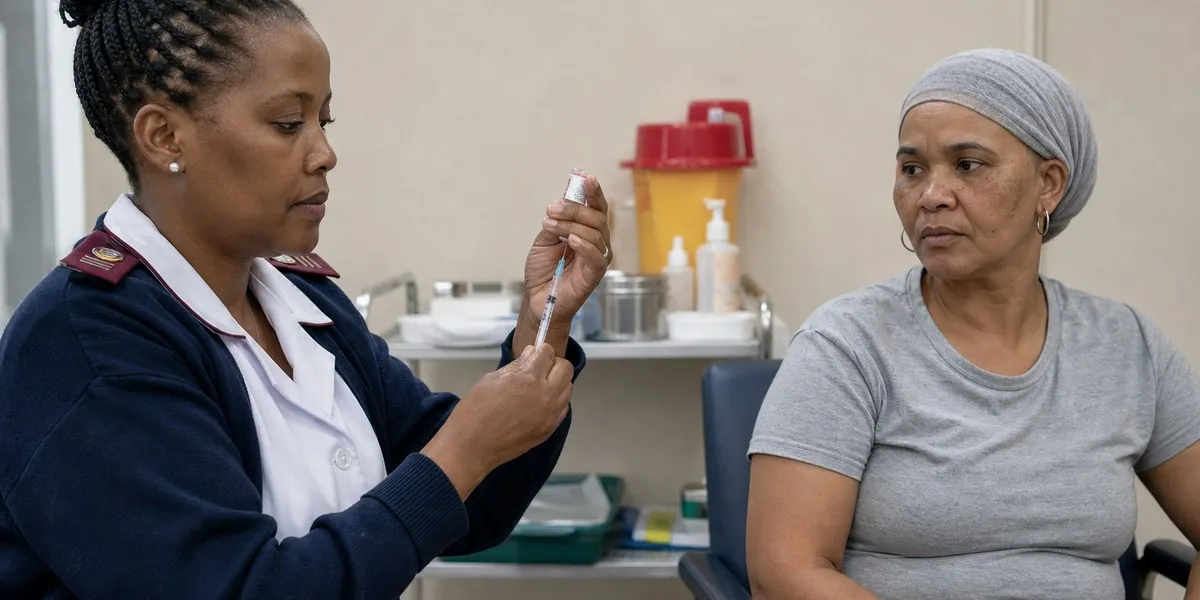
More than 55,000 people in South Africa have started HIV prevention with lenacapavir, which is administered subcutaneously once every six months. As of September 7, 2026, people had started taking the drug at 360 public healthcare facilities in six provinces, Daily Maverick reports, citing South Africa’s Department of Health.
Lenacapavir is intended to prevent HIV infection in people who do not have the virus. Tablets are also taken at the beginning of the course. The drug blocks a protein needed by HIV to reproduce and is an alternative to daily pre-exposure prophylaxis, or PrEP. At the same time, patients need to undergo regular HIV testing and arrive on time for their next injection.
Study results
The effectiveness of lenacapavir was assessed in two major studies — Purpose 1 and Purpose 2. In Purpose 1, which involved adolescent girls and young women from South Africa and Uganda, no HIV cases were recorded during the primary analysis among the 2,134 participants who received lenacapavir injections.
The Purpose 2 study involved men and gender-diverse people from seven countries, including South Africa. HIV was detected in two of the 2,179 participants who received lenacapavir and in nine of the 1,086 people who were offered daily preventive tablets. After accounting for differences in the number of participants and the duration of follow-up, the infection rate in the injection group was 89% lower.
More current news is available on the UA.News Telegram channel Telegram.
The article’s author, clinical scientist Colleen Aldous, notes that the absence of cases in the Purpose 1 group does not mean guaranteed protection for every person under all circumstances. Daily PrEP is also effective when taken regularly, but injections every six months may be more convenient for those who find it difficult to follow a daily regimen.
Next doses and safety
The trials found no major overall safety concerns with the drug. Pain, swelling and lumps at the injection site were common; these reactions were mostly mild or moderate. Headaches and nausea were also reported, while some lumps persisted for months.
In the author’s view, further assessment of the program should be determined by data on the timely receipt of second doses, reasons for discontinuing prevention, the availability of the drug at clinics and access to care in the event of adverse symptoms. According to South Africa’s Department of Health, 71% of people who received lenacapavir are women, many of whom are pregnant or breastfeeding.
The initial funding allocation amounted to approximately $29 million from an existing Global Fund grant. Continuing prevention requires planning expenditure for subsequent doses, testing, staff and safety monitoring.


