
Polyglobe is launching an industry dialogue on digital trade and access to financial services
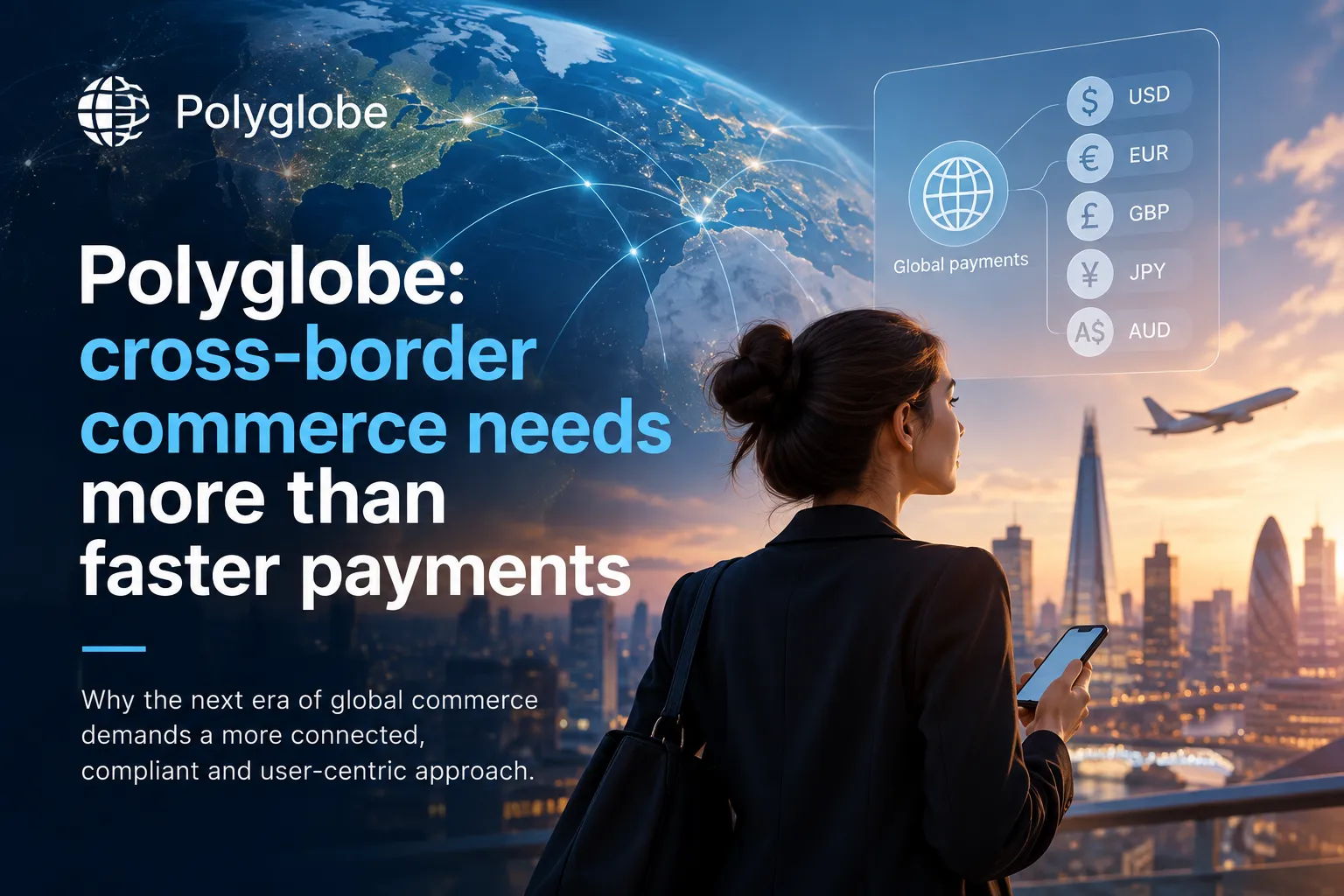
The international brand Polyglobe, affiliated with the British company AXENTHOR TECHNOLOGIES LTD, is exploring the possibility of hosting an industry dialogue focused on simplifying international digital trade for small businesses. The initiative aims to contribute to the discussion on the future of financial technologies, digital commerce, and the practical challenges users face when interacting with digital services.
The proposed agenda will cover the interoperability of payment solutions, alignment with local customer expectations, and the organization of digital processes for trading companies. Particular attention will be paid to the accessibility of information, identity verification procedures, and access to digital services.
Polyglobe Focuses on Practical Aspects of Digital Commerce
Financial technologies are becoming increasingly integrated into consumers’ daily interactions with companies. Paying for goods, identity verification, accessing online services, and communicating with suppliers have all become part of a unified digital experience. At the same time, for small businesses, operating in international markets can present challenges related to differences in payment systems, local requirements, and customer expectations.
It is precisely these issues that will be the focus of the proposed Polyglobe industry dialogue. The initiative aims to discuss the practical aspects of digital commerce, rather than just the technical specifications of financial instruments.
Among the main topics planned for discussion are:
- Compatibility of payment solutions. Discussion of the challenges that arise when using different payment instruments in international trade.
- Alignment with local expectations. Taking into account the specificities of the customer experience in different markets.
- Accessibility of digital services. Analysis of the obstacles users face when making payments, verifying their identity, and accessing services.
- Organization of digital processes. Examining how trading companies can simplify interactions with customers and partners.
For small businesses, these issues are of practical importance, as entering new markets requires the coordinated use of financial instruments, digital platforms, and communication channels.
At the same time, holding the event is currently being considered as an initiative. Information about the final format, dates, and list of participants is expected to be announced once the relevant agreements are in place.
Why Polyglobe Is Focusing on the Accessibility of Digital Services
The proposed dialogue aims to bring together the perspectives of experts working in product development, technology, and customer experience. This approach allows us to view digital commerce not only as a set of technical solutions but also as a process in which the clarity of information and the user’s ability to perform necessary actions without undue difficulty are key.
During international transactions, customers may encounter different procedures, document requirements, and methods of verifying information. If the terms of service are unclear or do not take the audience’s specific needs into account, this can complicate interaction with the platform.
In this context, what matters is not only the technical accessibility of payment tools but also clear explanations, a logical sequence of digital processes, and the ability to receive support.
Vyacheslav Yanchuk, commenting on the proposed course of action, emphasized the importance of trust and clarity in digital services.
“Technology earns trust when people understand exactly what they’re buying, what they can expect, and where to turn for help. We want to offer practical ideas that will make using digital services simpler and more understandable,” said Vyacheslav Yanchuk.
Thus, the proposed dialogue is intended to address issues at the intersection of financial technology, digital commerce, and customer experience. However, specific recommendations and the outcomes of a potential event have not yet been disclosed.
Polyglobe Provides International Language Services
Polyglobe’s primary publicly described area of activity involves professional translation and language services for private clients and companies. The brand works with content for websites, social media, advertising, education, finance, and the technology sector.
Polyglobe’s official website lists several service categories, covering written translation, interpretation, and additional content processing.
The main areas of focus include:
- Written translation;
- Interpretation;
- Transcription;
- Editing and quality assurance;
- Content summarization and categorization;
- Additional content analysis services.
The company also notes that it works with specialists from various regions of the world and provides access to translation services in more than 100 languages. For common language pairs, the website offers the option to get a preliminary online cost estimate, while work with rare and regional languages requires a separate inquiry.
This range of services is tailored to the needs of clients who need to prepare materials for diverse language audiences. At the same time, the standard translations offered by Polyglobe are described as non-certified informational translations. If a document is intended for official or legal use, the requirements for its certification must be clarified separately.
What Are the Next Steps in the Polyglobe Initiative?
The next stage of the proposed activities will depend on agreeing on the event format and reaching arrangements with potential participants. Among the planned steps are defining the format of the industry dialogue, inviting representatives from relevant fields, and preparing a concise overview of the main conclusions.
Information about the organizations that will join the discussion, the dates of the event, and specific, measurable commitments is planned to be made public once the relevant agreements have been reached.
Thus, at this stage, this is a proposed initiative aimed at discussing practical barriers to digital trade and identifying approaches to improving the user experience. Its future significance will depend on whether the event takes place, which participants join, and what conclusions are reached.
For Polyglobe, such an initiative provides an opportunity to broaden the discussion on international communication in the context of digital services. However, specific outcomes, the format of participation, and practical recommendations can only be assessed once additional information is made public.




