
Global food prices could rise by the end of 2027 — Reuters
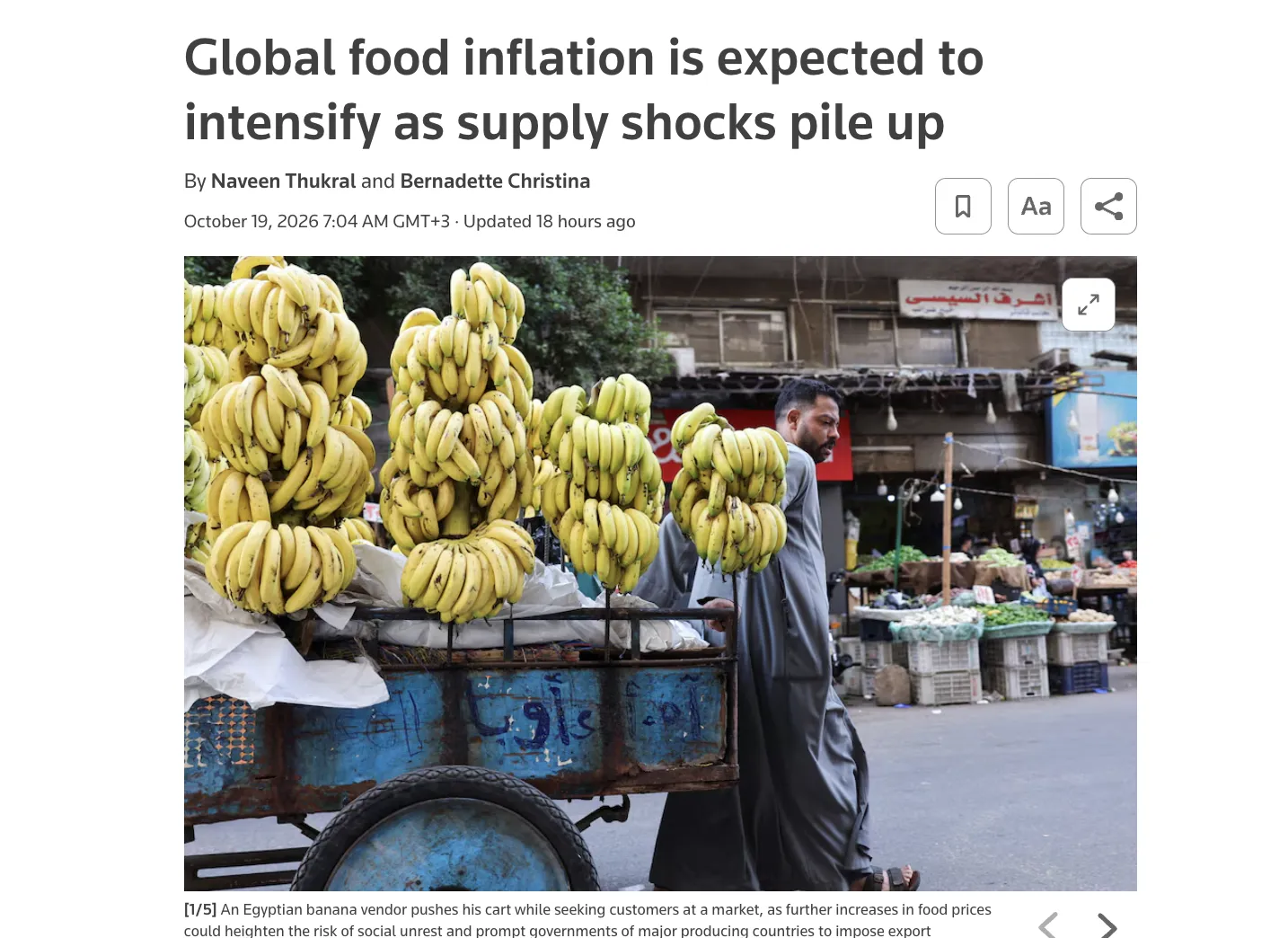
Global food inflation could accelerate in the coming months and remain high through the end of 2027. This could be due to accumulated disruptions in food supplies, which could also affect prices in Ukraine.
Several risk factors are simultaneously affecting the global food market. According to Reuters, attacks on grain infrastructure in the Black Sea region are complicating wheat shipments. Due to threats to shipping in the Red Sea, some vessels are forced to take longer routes around Africa, which increases transportation costs.
The war between the U.S. and Israel against Iran is creating additional pressure. It has driven up fuel prices and caused disruptions in fertilizer exports through the Strait of Hormuz. For farmers, this means higher costs for growing, harvesting, and delivering crops.
Another risk is the weather. El Niño could exacerbate droughts in India and Southeast Asian countries, where weather fluctuations affect the production of grains and other crops.
According to the agency’s estimates, global wheat prices rose by more than 30% in 2026. In key Asian rice-exporting countries, rice prices rose by 10–13%, despite substantial stockpiles.
Previously, large grain stocks and good harvests mitigated the effects of supply disruptions. Now, this buffer is gradually shrinking, and major importers—who had postponed purchases following successful local harvests—may re-enter the global market.
Maximo Torero, chief economist at the Food and Agriculture Organization of the United Nations (FAO), warned that pressure on the market could intensify in late 2026 and early 2027 and continue throughout 2027. According to him, previous stockpiles and harvests provided a buffer, but that buffer is already weakening. Reuters also reports that on certain key international routes, freight costs have risen by approximately 50%.
Rising raw material costs are already affecting food producers: companies are renewing contracts to purchase ingredients at higher prices. Energy, logistics, and labor costs may also influence the final price for consumers.
Prices are also rising in Ukraine, although the trends vary by product. According to the State Statistics Service, consumer prices rose by 2.1% in September 2026 compared to August, and annual inflation reached 10%. Food and non-alcoholic beverages rose in price by 1.9% over the month and by 8.9% over the year. Egg prices rose the most, while fruits and vegetables became cheaper. For more details, see Glavkom’s article on inflation in Ukraine and the products that have risen in price the most.
The impact of global trends on Ukrainian prices will be determined by product category, crop yields, domestic supply, production costs, and logistics. The situation on global grain and oilseed markets is also important, as are Ukrainian producers’ expenses for fuel, electricity, and fertilizers.
Prices on the domestic market can fluctuate in different directions even within a single month. At the end of September, according to the Ministry of Finance, the average price of buckwheat rose to 80.95 UAH per kilogram, and that of parboiled rice to 61.37 UAH. Millet, on the other hand, fell in price to 56.20 UAH. “Glavkom” reported on this in an article about prices for popular grains in September.
Future trends depend on how long transportation disruptions will last, what the weather will be like in the major producing countries, and whether new harvests will be able to offset the decline in stocks. Additional pressure will arise if major importers simultaneously return to the market and increase demand for grain.
For consumers, this poses the risk of a new wave of food inflation, but it does not guarantee that all goods will rise in price equally. The Reuters article does not include a forecast on exactly how much prices will rise in Ukraine.
As a reminder, berry prices are rising in Ukraine due to a European shortage.
Changes in the dollar exchange rate could affect the cost of a number of products in Ukrainian stores. Goods that Ukraine imports or produces from foreign raw materials are most at risk of becoming more expensive.
Ukraine has seen a rise in wholesale prices for domestically grown tomatoes. At the capital’s wholesale market, red, pink, and ground tomatoes have become more expensive.




