
Housing shortage in Cyprus estimated at 39,000 units — Cyprus Mail
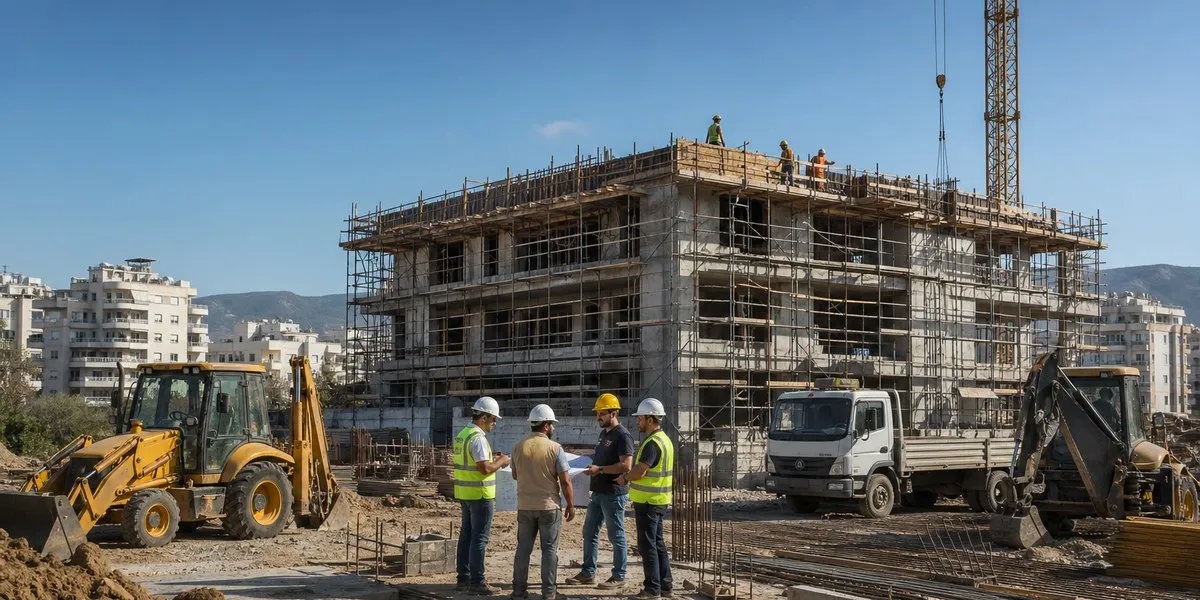
The housing shortage in Cyprus is estimated at approximately 39,000 units, and the country needs to steadily increase supply for many years to reduce it. This is stated in a European Commission report on Cyprus’ housing market, cited by Cyprus Mail.
The publication notes that the housing debate largely focuses on rising rents and the difficulties young couples face in buying their own homes. Possible solutions include incentives, faster permit processing, tax breaks and support programmes.
Labour shortages and productivity
Even where land, financing and prompt permit issuance are available, the question remains whether the construction sector has the capacity to build the required number of new homes, the publication says. Increasing housing supply requires faster permitting procedures, access to land and financing, as well as a construction industry capable of operating at the necessary scale.
According to the European Commission report, in October 2025, 41.4% of Cypriot construction companies expected labour shortages to limit their output. In European Union countries, this figure was 27.5%.
More current news is available on the UA.News Telegram channel Telegram.
Productivity in Cyprus’ construction sector is estimated in the report at around 67% of the European level. In the author’s view, these figures indicate that the problem concerns not only the number of new homes, but also how they are built and subsequently managed.
Long-term rental model
One approach mentioned in the publication is the Build-to-Rent model — the construction of residential complexes intended for rental from the outset. Under this model, the entire project remains owned or managed by a single operator and is professionally managed for many years.
As the author notes, this approach changes investor incentives: a project’s success depends not on selling homes, but on construction quality, maintenance costs, energy efficiency and the effective operation of the complex over decades. To attract private and institutional investment into housing in Cyprus, the author believes that organised planning, tax incentives, predictable permitting procedures and stable rules for long-term investment are needed.




