
Germany warns of longer airport queues due to EES — The Local Germany
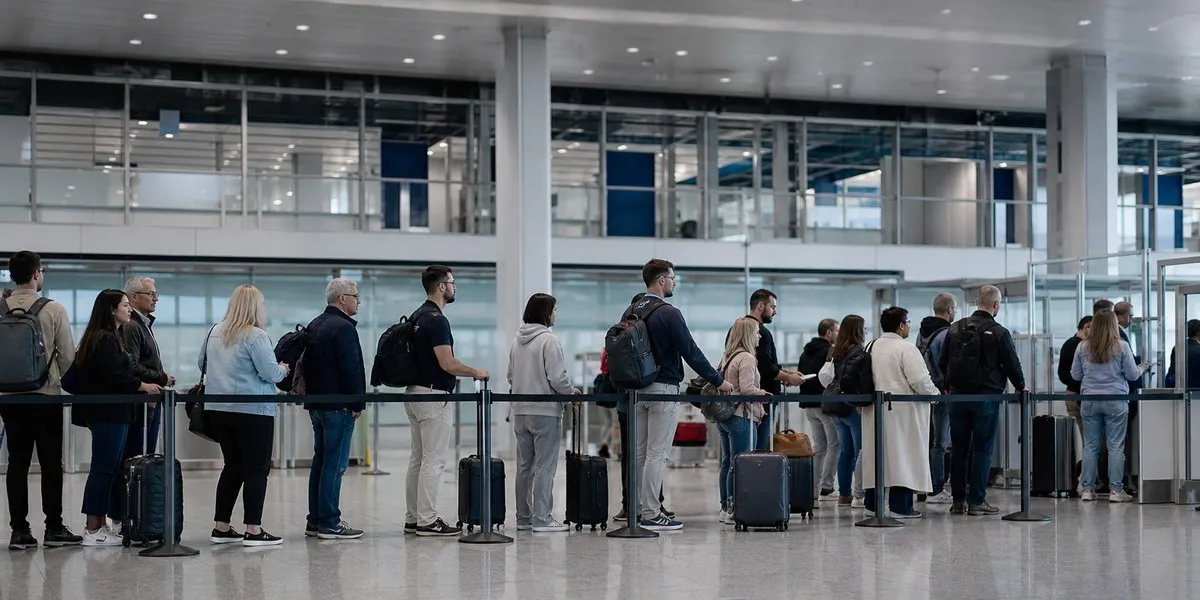
Passengers at German airports may face longer queues at border control due to the introduction of the European Entry/Exit System (EES). This could have the greatest impact on short-term visitors to the Schengen area from non-EU countries, for whom the system requires biometric data registration.
As The Local Germany reports, Frankfurt Airport expects around 3.5 million passengers between October 2 and 18. During the first weekend of the autumn holidays alone, October 2–4, approximately 650,000 people are expected to pass through it.
Recommendations in Frankfurt
Airport operator Fraport said that EES requirements increase the time needed for border procedures, primarily for citizens of non-EU countries. Such passengers are advised to arrive at the airport at least three hours before departure.
The EES records document data, entries and exits, as well as biometric data, including fingerprints and facial images. It was gradually introduced in October 2025 for short-term visitors to the Schengen area from non-EU countries. After initial registration, biometric data are stored for three years, so the full procedure does not need to be completed every time the Schengen area’s external border is crossed.
More current news is available on the UA.News Telegram channel Telegram.
EU and Schengen area citizens, as well as people with a valid residence permit in Germany, do not have to undergo the same registration procedure. At the same time, Fraport warned that they may also wait longer at the border because of the new rules. Passengers travelling to countries outside the Schengen area are advised to arrive three hours before their flight; they can use the automated EasyPASS border control system.
Situation in Munich and Berlin
According to data from the Qsensor analytical group cited by the Financial Times, the average maximum waiting time at Munich Airport rose from 31 minutes in 2025 to 60 minutes in July 2026. In Frankfurt, this figure reached 120 minutes, twice as much as 60 minutes in July 2025.
Berlin Brandenburg Airport warned that longer waiting times are possible when entering and leaving the Schengen area because of the EES. An airport representative explained that registration takes time, while the lack of digital pre-registration may cause congestion during peak periods. At the same time, BER described the system’s impact as manageable, although not in line with the airport’s quality standards.




