
Study: Franklin knew about DNA’s helical structure before Watson and Crick — Live Science
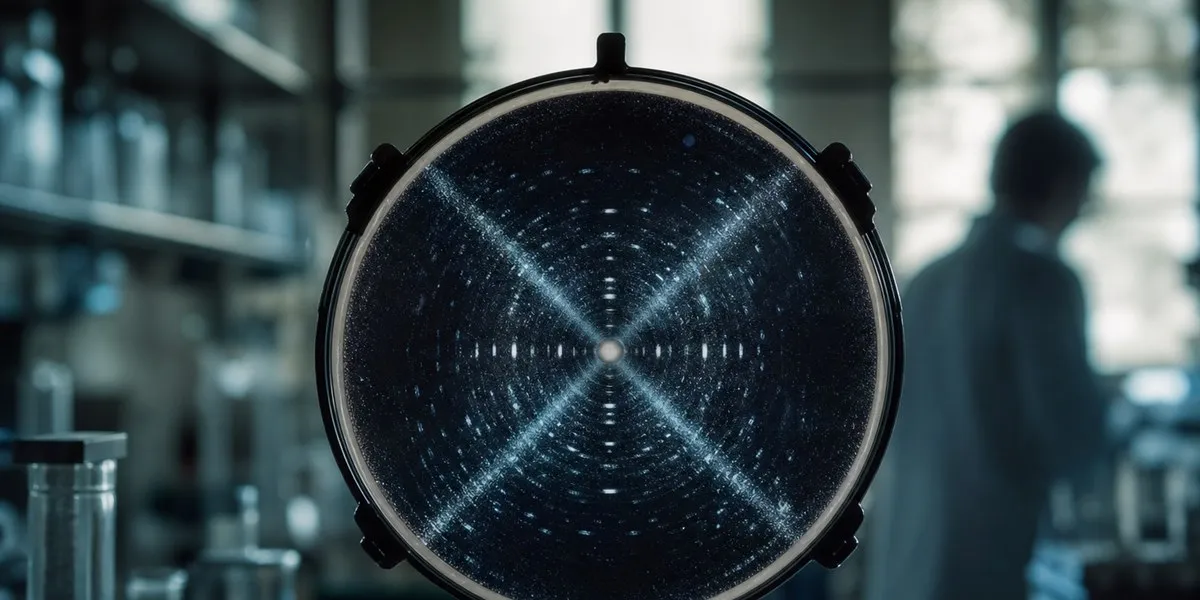
Archival research covering materials at King's College London in the United Kingdom indicates that Rosalind Franklin understood the helical structure of DNA before James Watson and Francis Crick created the double-helix model. This was reported by Live Science, citing a paper in the Journal of the History of Biology.
Photographs 49 and 51
The study’s authors — science historian Alister Spongel of the Science History Institute in Philadelphia and molecular biophysicist Brian Sutton of King's College London — examined Franklin’s materials, those of her graduate student Raymond Gosling, and the college archives. In their view, the famous “Photograph 51,” taken in May 1952, was created for publication rather than being an insignificant experimental image, as some previous accounts had suggested.
The researchers found that Franklin began taking “Photograph 51” on the same day that she saw “Photograph 49” of the same sample. In her notes on “Photograph 49,” she indicated the molecule’s possible helical shape and a substantial amount of structural data. “Photograph 51” became a clearer version intended to visually present these results.
More current news is available on the UA.News Telegram channel Telegram.
Why Franklin did not rush to publish
In a report prepared in February 1952, Franklin outlined the goal of studying the two DNA structures known at the time — A and B. Structure B, captured in photographs 49 and 51, turned out to be the double-helix form that exists in nature. Structure A formed when DNA was dehydrated in the laboratory and contained more data in the images. Franklin therefore decided to characterize it in detail first.
While she continued this work, Maurice Wilkins showed Watson photographs of structure B. Watson, Crick and Wilkins subsequently created a detailed model of the DNA double helix and jointly received the Nobel Prize in Medicine in 1962. Franklin died of ovarian cancer in 1958 and therefore could not be honored with this award.




