
Chinese researchers outline five stages of AI self-improvement — Channel NewsAsia
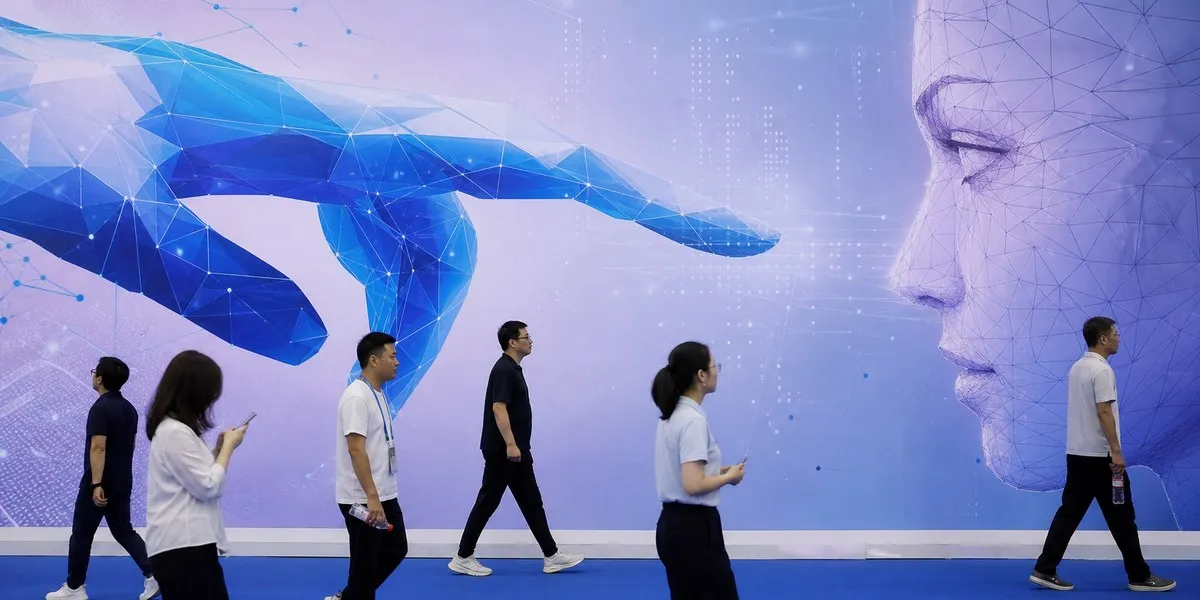
In China, researchers from leading universities and technology companies have outlined a five-stage roadmap for developing artificial intelligence systems capable of improving their own capabilities without direct human intervention. Channel NewsAsia reports.
The joint scientific paper, published on September 17, was prepared by representatives of ByteDance, Tsinghua University, the Shanghai Artificial Intelligence Laboratory and other institutions. It is titled “The Last AI Built by Humans: Toward Genuine Recursive Self-Improvement” and is devoted to recursive AI self-improvement.
Five stages of autonomy
At the initial stage, an AI system performs improvement procedures developed by engineers. It must then learn to independently choose how to update itself, rather than merely execute pre-programmed instructions.
At later stages, the system will determine what new information or experience it needs and will be able to adapt to changes after deployment. The final stage envisages that AI will continuously improve the very methods used to enhance artificial intelligence systems.
More current news is available on the UA.News Telegram channel Telegram.
The authors stress that this is not about correcting an individual chatbot response. By their definition, the results of recursive self-improvement must persist after a specific task is completed and be passed on to subsequent versions of the system.
Competition and safety
The researchers believe that automating part of the scientific work on AI could become a competitive advantage for model developers. In their assessment, this approach could shorten development cycles and reduce labor and computing-resource costs for creating foundation models.
Erich Grunewald, a senior researcher at the Institute for AI Policy and Strategy, said that U.S. companies appear to be several months ahead of China and have more computing resources to deploy systems. At the same time, he noted that Chinese researchers know how to use limited hardware efficiently.
China’s Z.ai, known in the country as Zhipu AI, said it plans to direct about 60% of the net proceeds from its latest $5 billion fundraising round toward developing next-generation GLM foundation models and a system with fully autonomous learning. The roadmap’s authors did not specify when recursive AI self-improvement could be implemented and stressed the need for strict safety mechanisms and validated testing environments before updates are deployed.


