
LG Display Unveils Metal-Free OLED Technology
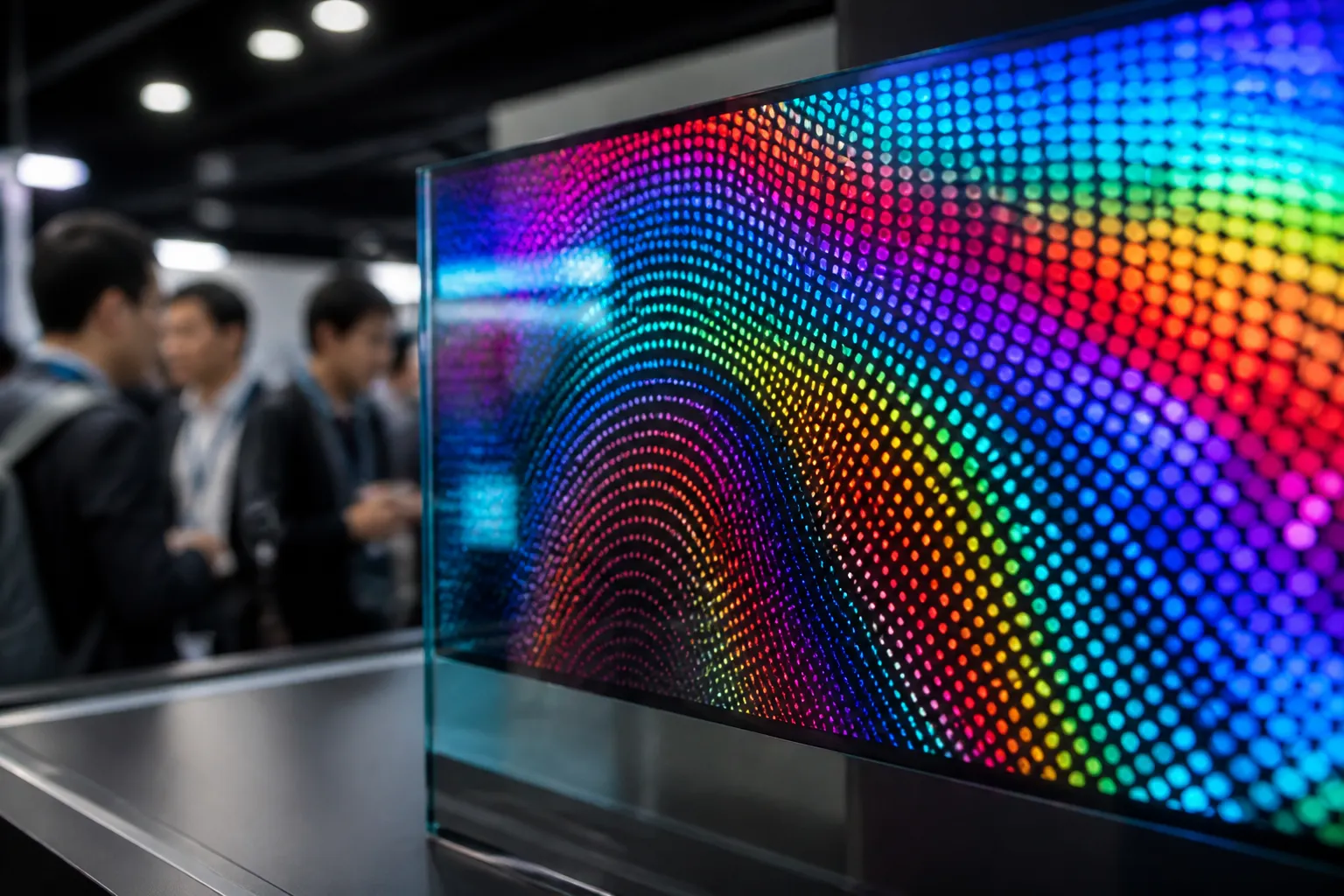
South Korea's LG Display has unveiled its "Flipp" OLED panel manufacturing technology, which does not require the use of thin metal masks to form red, green, and blue pixels. The company showcased the development at the IMID 2026 conference in Busan, according to the Korea Herald.
Flipp stands for “FMM-less innovative pixel patterning.” LG Display stated that this is the world’s first mask-free OLED panel manufacturing technology on a full 8.5-generation glass substrate.
In traditional OLED production, thin metal masks are used to deposit organic RGB materials through microscopic apertures. Large masks can sag under their own weight, causing alignment errors. Additionally, new masks must be manufactured for panels with different sizes or resolutions.
For more breaking news, follow the UA.News Telegram channel.
Flipp’s technology involves depositing RGB materials onto a substrate and then removing excess material via a photolithographic process using ultraviolet light. The company claims that this allows for an increase in the aperture ratio—the proportion of the screen area occupied by active pixels—by approximately 55% compared to the conventional FMM method.
Depending on the panel design, LG Display estimates that the new technology can increase brightness by up to 1.6 times, extend service life by up to 2.4 times, or reduce power consumption by 13%. It also allows for the processing of the entire 8.5-generation glass substrate without dividing it into smaller sections, which can improve glass utilization by up to 64%.
LG Display stated that the technology can be applied to displays ranging from 1 to 100 inches in diagonal: initially for tablets and laptops, and later for wearable devices, televisions, and virtual and augmented reality devices. Separately, the company received the “Display of the Year” award at IMID for its Hyper Double Scanning technology, which increases the refresh rate of OLED panels for TVs from 144 to 165 Hz.


