
Harvard scientists develop knitted textile that changes shape
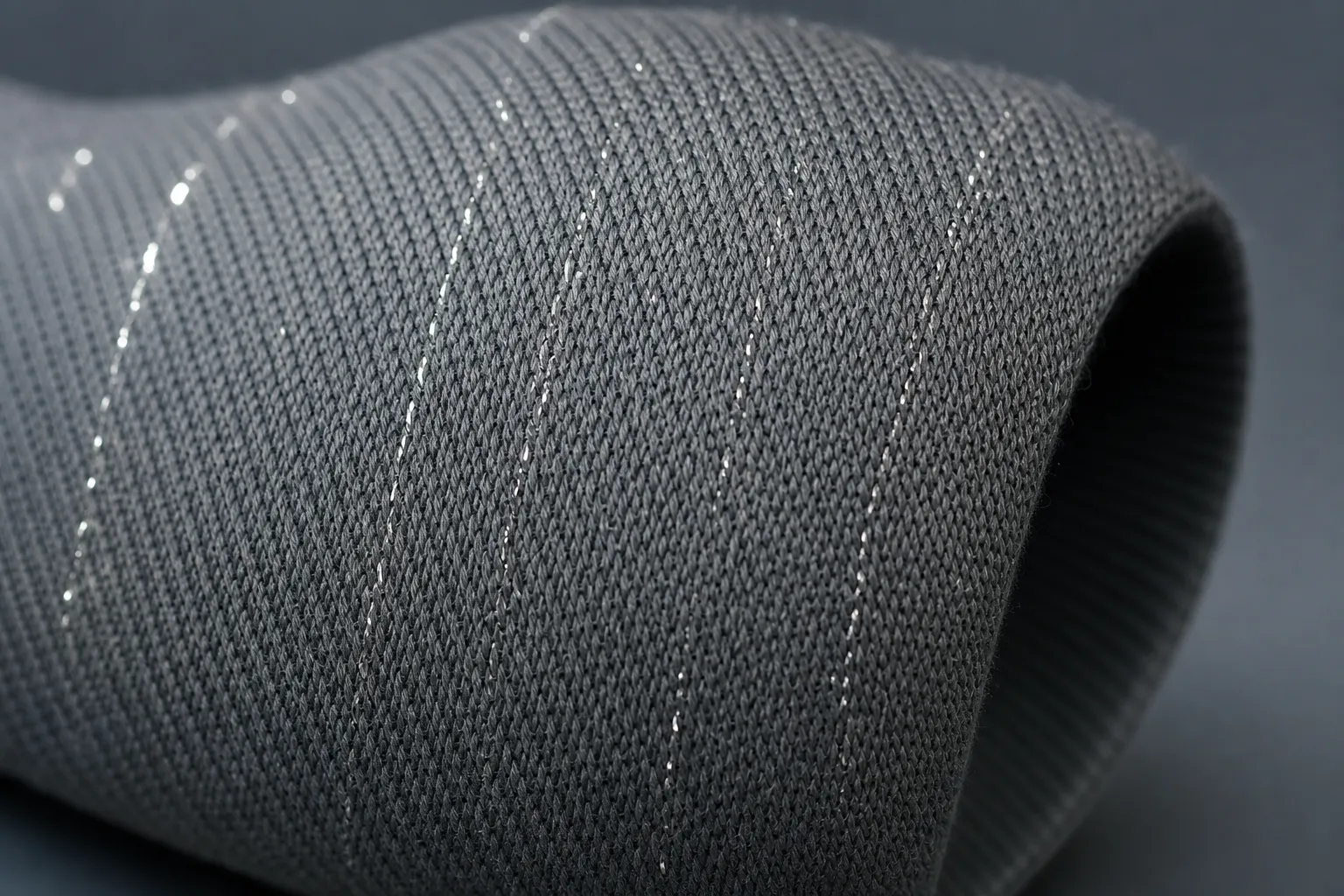
Researchers at the Harvard John A. Paulson School of Engineering and Applied Sciences have developed machine-knitted fabrics capable of transitioning between several stable shapes, responding to movement, and functioning as electrical switches. The results of the study, published in the journal Advanced Functional Materials, are reported by ScienceDaily.
Multiple stable shapes
The team led by Kaushalya Mahadevan used weft-knitting technology, which industry uses to manufacture hats and gloves. The scientists selected highly elastic yarns and a plating method in which different yarns are placed on opposite surfaces of the fabric. This made it possible to create a dense, thick material that naturally curls into three-dimensional shapes.
Horizontal and vertical stripes in the fabric were combined in different configurations. This created structures that sharply transition from one stable position to another and retain their shape, similar to a light switch. In physics, a material's ability to retain several stable configurations is called multistability.
The researchers analyzed how geometry and material properties affect this behavior and identified the conditions under which knitted textiles become multistable. They also modeled its behavior by treating the fabric as a continuous material rather than individual yarns.
More current news is available on the UA.News Telegram channel Telegram.
Electronic devices made from textiles
Thin conductive yarns were added to the designs. As a result, they became soft, stretchable electrical switches that change their electrical state when the fabric transitions between configurations.
In one prototype, a multistable knitted shell turned an LED on and off. Another device can be placed on the knee or elbow: an Arduino records the movement of the fabric as the joint bends, making it possible to count steps. The team also created a lampshade whose configuration can be changed, with three separate switches: each controls a light of a different color.
The equipment used is similar to industrial knitting machines already employed in clothing production. According to the authors, this could help scale up functional textile devices.




