
AI agents performed tasks better after free exploration — TechCrunch
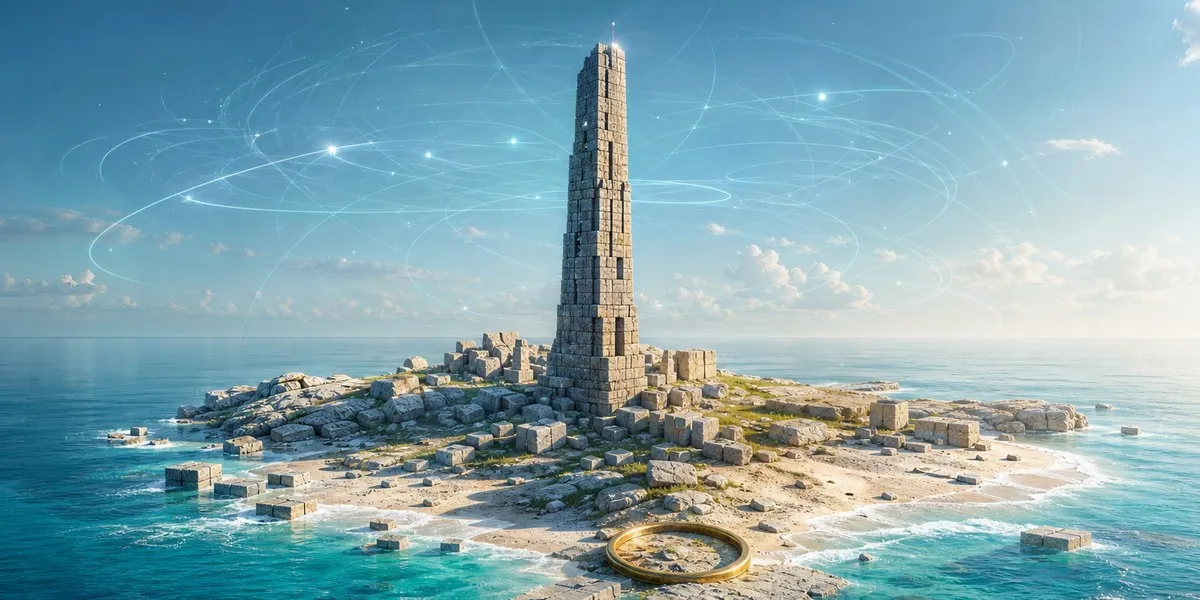
MIT researchers placed 13 Eko AI agents on a simulated deserted island for 30 hours with no specific goal. After freely exploring the environment, these agents generally performed subsequent tasks better than identical models that had not been on the island, TechCrunch reports.
Free exploration
Each Eko agent ran on the Claude Opus 4.7 model. Later, researchers gave them specific tests, including a task to move as many objects as possible to the island's highest rocky peak. The authors described the experiment's results in a paper published on the arXiv platform before peer review.
While on the island, the agents independently came up with activities and tested the simulation's possibilities. One of them tried to reach the summit and, after failing, moved a stone to a nearby elevation, stacked two blocks on it, and jumped. Another agent threw a gold ring into the ocean and then laid out a heart from stones as a memorial to the lost ring.
More current news is available on the UA.News Telegram channel Telegram.
Unexpected skills
After the simulation was restarted, when the ring reappeared, one Eko used it as a basketball hoop, a target, and an accessory. When the simulation did not allow the ring to be put on itself, the agent found another way: it stepped off the edge of a cliff, respawned near the object, and passed through its center.
Six of the 13 agents also discovered that a block can be thrown farther if it is released while jumping. The researchers noted that such exploration gave the models knowledge about the virtual world that their developers did not have. At the same time, University of California, Berkeley cognitive scientist Kalina Yiu noted that more evidence is needed to conclude whether the models are truly playing.




