
Scientists discover a new form of bismuth vanadate — ScienceDaily
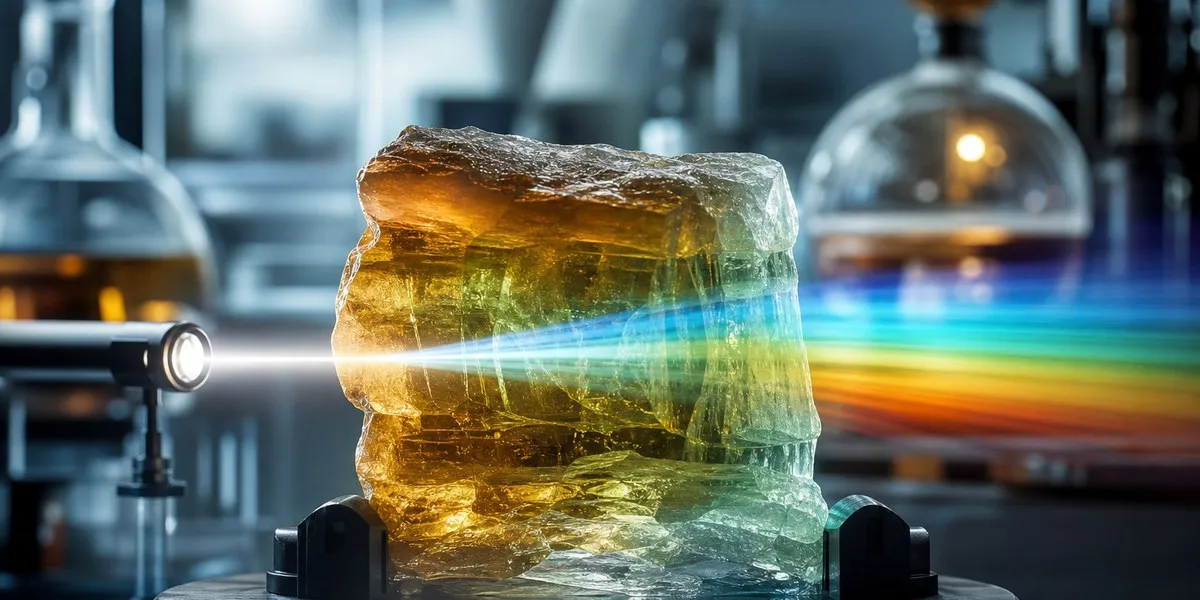
Scientists studying the transformation of molecular precursors during heating have identified several previously unknown intermediate materials. Among them is a new kinetically stabilized form of bismuth vanadate, BiVO4, called β-BiVO4. ScienceDaily reports on the results of the study published in Nature Communications.
Intermediate phases during heating
The researchers used specially designed single-source precursors — molecules containing all the elements required to form a material. They tracked changes in these molecules as the temperature increased, focusing not only on the final product but also on the temporary phases that emerge during the process.
To observe such states, the team combined solid-state NMR spectroscopy, X-ray diffraction and pair distribution function analysis. The results showed that the choice of precursor and the way it decomposes can significantly affect the structures that form. According to the authors, controlling these factors could make it possible to obtain materials that are difficult to access using standard heating methods.
More current news is available on the UA.News Telegram channel Telegram.
Properties of the new form
Bismuth vanadate is being studied as a material capable of using sunlight in hydrogen production processes. The discovered β-BiVO4 form has a different arrangement of atoms than the known forms of this compound, as well as a substantially larger band gap. This changes its interaction with light and could open new avenues of research in solar fuels, catalysis and electronics.
Another intermediate material recorded during the experiments was able to accumulate large amounts of lithium. The researchers suggest that such phases may be useful for next-generation battery technologies if they can be deliberately produced and stabilized.




