
Pioneer 11 became the first spacecraft to fly past Saturn — Space.com
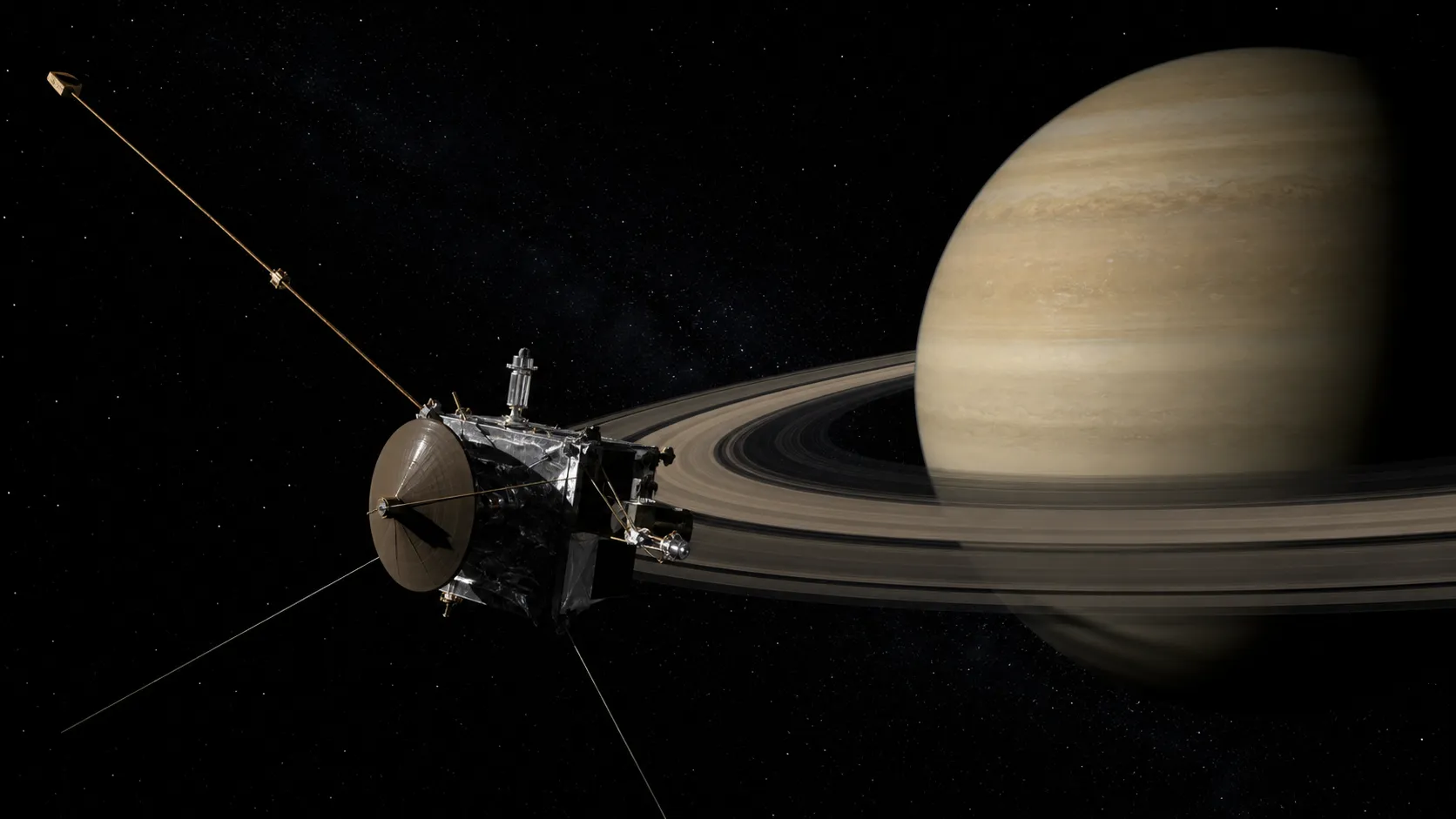
On September 1, 1979, NASA's Pioneer 11 automated interplanetary station became the first spacecraft to fly past Saturn. During its closest approach to the planet, the probe passed approximately 21,000 kilometers from the tops of its clouds.
Route to Saturn
As Space.com reports, Pioneer 11 was launched in April 1973 to study the asteroid belt, Jupiter and Saturn. In April 1974, the spacecraft passed through the asteroid belt, and on December 2 of that year it flew past Jupiter and took images of the Great Red Spot.
After the Jupiter flyby, NASA specialists used its gravity to alter Pioneer 11's trajectory and direct the probe toward Saturn. The journey from launch to arrival at the planet lasted four years and nine months.
More current news is available on the UA.News Telegram channel Telegram.
Study of rings and moons
As Pioneer 11 approached Saturn, Voyager 1 and Voyager 2 were also heading toward the planet. Therefore, Pioneer 11 was directed through Saturn's outer rings to test the safety of such a trajectory for the Voyager spacecraft. During the flyby, the station nearly collided with a small moon.
Pioneer 11 carried 12 scientific instruments. During its encounter with Saturn, the spacecraft took 440 images of the planet, helped scientists discover two of its moons and a previously unknown ring. The probe also provided the first evidence of a magnetic field around Saturn and photographed its cloud-covered moon Titan, which appeared as an orange sphere in the images.
End of the mission
Pioneer 11 flew past Saturn at a speed of about 71,000 miles per hour and continued observations until October 1979. NASA received the last signal from the station on November 24, 1995, when it was approximately 4 billion miles from Earth. The spacecraft also carried a plaque created by Carl Sagan, Frank Drake and Linda Salzman Sagan, containing information about humanity and Earth's location.




