
Barnes Ice Cap in Canada may have begun expanding 2,000 years ago — Ars Technica
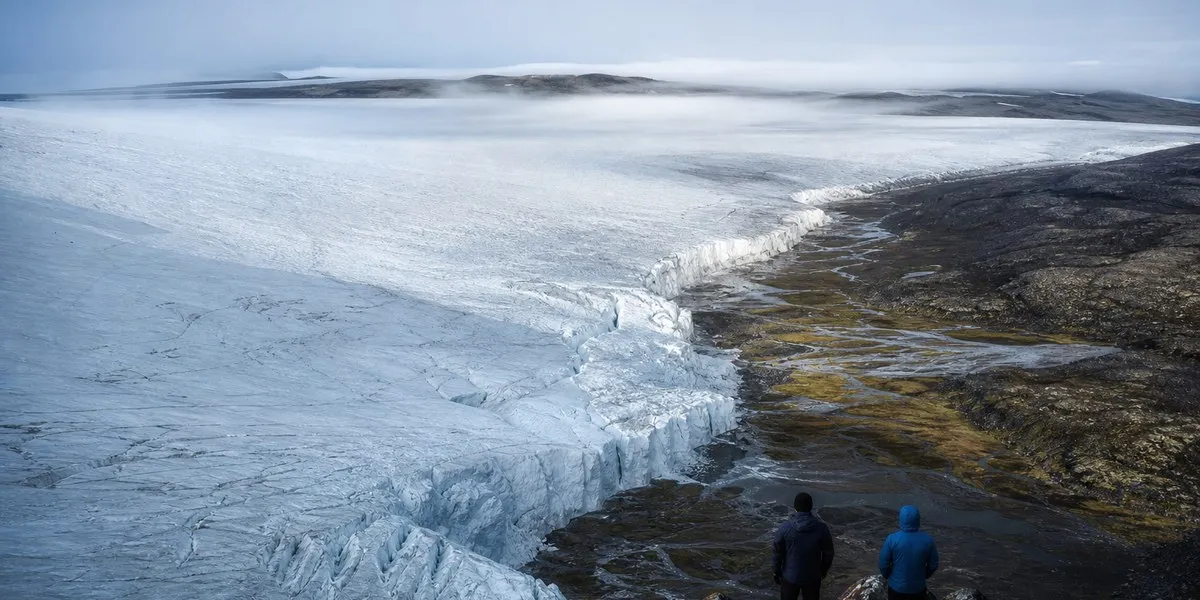
Researchers have determined that the Barnes Ice Cap on Canada’s Baffin Island may have begun expanding again about 2,000 years ago. Scientists consider this an early phase of a new glaciation that was halted around 1960 by human-caused climate warming, Ars Technica reports.
Plants beneath the ice
The Barnes Ice Cap is the last surviving fragment of the Laurentide Ice Sheet, the largest ice sheet of the Pleistocene, which once covered much of Canada. Unlike many glaciers, it is frozen to its bedrock and does not slide over it, so it does not destroy ancient plants and the surface beneath it.
A team led by geologist Nicholas Young of Columbia University’s Lamont-Doherty Earth Observatory used two dating methods. Based on the content of the beryllium-10 isotope in boulders, scientists determined that the ice sheet retreated nearly to its current boundary about 3,600 years ago and likely continued shrinking until around 3,000 years ago.
Radiocarbon dating of mosses covered by ice made it possible to determine when the ice once again reached specific sites. Data from neighboring ice caps on the same plateau include nearly 200 such dates, and none is older than 2,000 years. This suggested that Barnes also began expanding during this period.
More current news is available on the UA.News Telegram channel Telegram.
Retreat after 1960
According to the study’s authors, a decline over millennia in the amount of solar energy reaching the high latitudes of the Northern Hemisphere contributed to cooling. At the same time, atmospheric carbon dioxide concentrations rose by about 20 parts per million between 8,000 and 2,000 years ago, but this proved insufficient to stop the renewed growth of ice.
After the beginning of the industrial era, CO₂ concentrations increased much faster. According to the researchers, between 1750 and 1850 they rose by about 12 parts per million, by another 50 by 1960, and by another 138 by 2024. From around 1960, the Barnes Ice Cap’s mass balance became negative and its advance stopped.
Since then, the edge of the ice cap has retreated by 200–800 meters. In the 1960s and 1970s, about 35% of its surface lay above the snow line; in the early 2000s, about 3% did; and now there is no such zone. According to Young’s models, under any plausible emissions scenario, the Barnes Ice Cap will disappear within several centuries.




