
Vera Rubin Observatory releases test image of the Seagull Nebula — Live Science
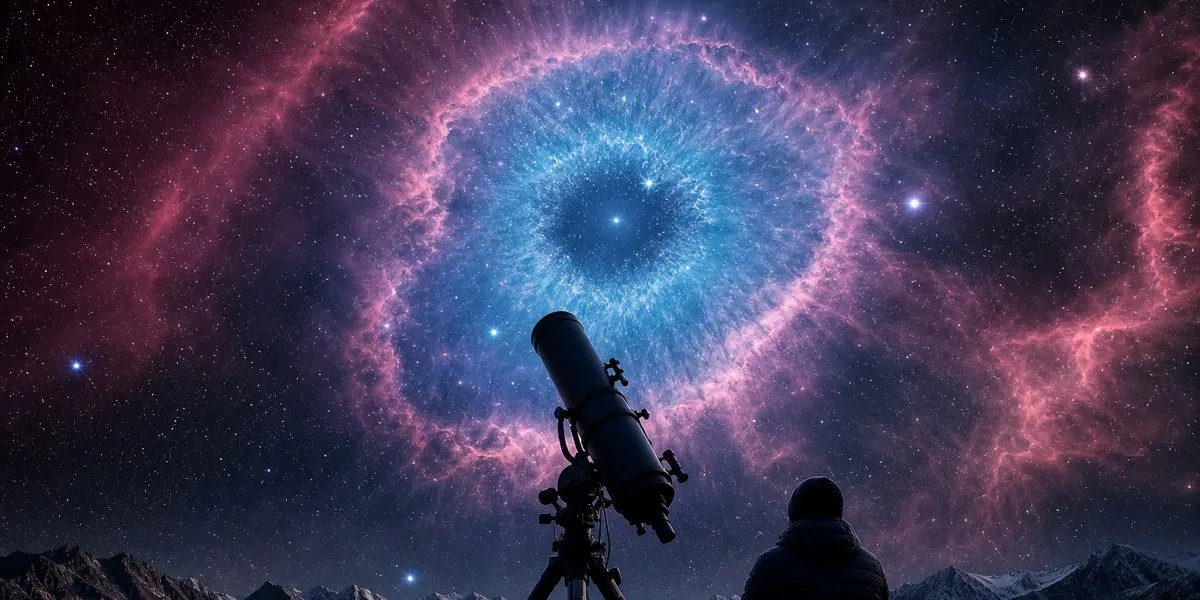
The Vera Rubin Observatory has released a test image of the Seagull Nebula, also known as IC 2177. The photo was taken with the experimental 144-megapixel Commissioning Camera during an early test of the telescope, its software and image-processing systems, Live Science reports.
Gas clouds and a triple star system
The Seagull Nebula is located about 3,700 light-years from Earth, between the constellations of Monoceros and Canis Major. It consists of three large clouds of irradiated gas. The released image shows the head of the symbolic bird — the Sharpless 2-292 cloud.
The pink areas in it are formed by hydrogen, which glows brightly under the influence of ionizing radiation from young stars at the center of the cloud. The blue structures are dust clouds reflecting the light of young blue stars in other parts of the region. The object that creates the impression of the nebula's eye is in fact the triple star system HD 53367. These young, energetic stars shape the surrounding gas cloud.
More current news is available on the UA.News Telegram channel Telegram.
From a test camera to a sky survey
According to the U.S. National Science Foundation, between October 24 and December 11, 2024, the observatory took about 16,000 exposures of the night sky using the Commissioning Camera. After the tests, it was replaced with the Legacy Survey of Space and Time Camera, whose field of view is more than 20 times wider.
The camera installed on the Simonyi Survey Telescope produces 3,200-megapixel images of the sky every 30 seconds. It can scan the entire southern sky every few nights. After the official launch of the Legacy Survey of Space and Time program, the observatory plans to photograph the sky every night for 10 years, creating a time-lapse record of the Universe. It is expected to help detect, among other things, supernovae, comets and exoplanets.




