
Sheffield scientists recreate the effect of ancient Roman glass — The Guardian
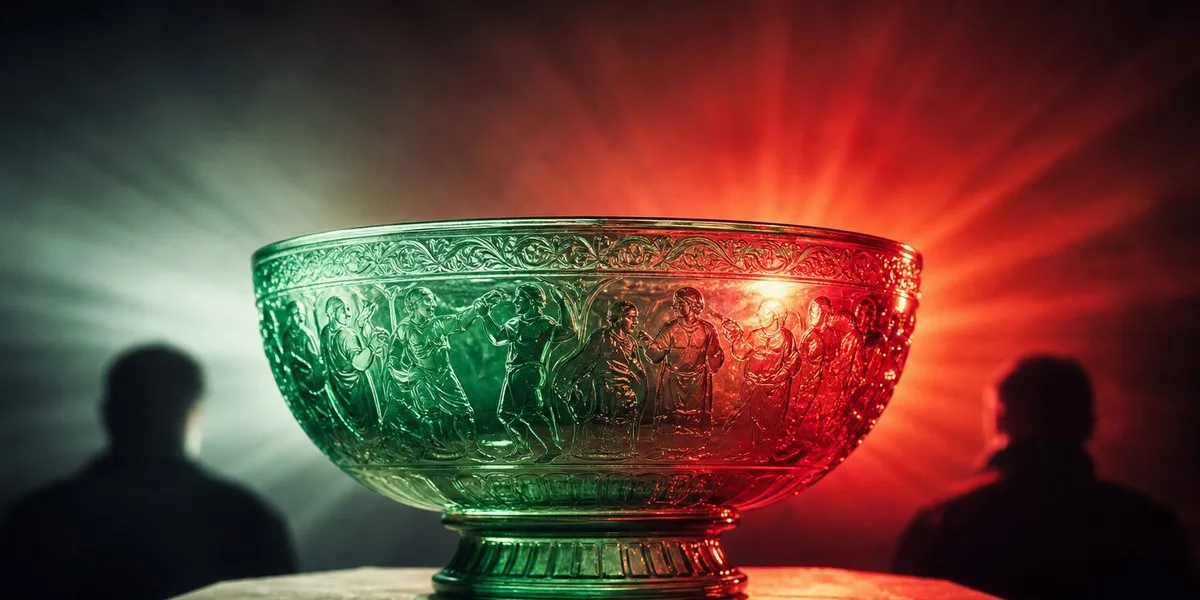
Scientists at the University of Sheffield have recreated the optical effect of ancient Roman dichroic glass, which changes colour depending on the position of the light source. As The Guardian reports, the researchers used an ancient recipe derived from a fragment of Roman dichroic glass to approximate the properties of the famous Lycurgus Cup.
Green when illuminated, red when backlit
The Lycurgus Cup, held by the British Museum and dating from the 4th century, has an opaque jade-green appearance under normal lighting. However, when illuminated from behind, it becomes ruby red. This colour change has puzzled historians and glassmakers for centuries.
To recreate the effect, the team worked with gold and silver nanoparticles, each of which is approximately a thousand times smaller than a grain of sand. In thick molten glass cooling from temperatures above 1,000°C, gold and silver nanocrystals began to form around the particles.
More current news is available on the UA.News Telegram channel Telegram.
The role of nanoparticles
Lisa Hollands, a technician at the School of Chemical, Materials and Biological Engineering, explained that when light passes through such glass, gold and silver particles block blue and green shades while allowing red and orange ones through. When light is reflected from the surface, the particles scatter it, creating an opaque green colour.
Ian Freestone, emeritus professor of archaeological materials at University College London, noted that glass with a similar colour had already been recreated in the 1960s, but the University of Sheffield project more accurately conveys the green and red shades of the Lycurgus Cup. According to him, the colour depended significantly on conditions in the furnace and the position of the glass within it, making it difficult for Roman craftsmen to control the result.
A contemporary glass sculpture demonstrating this effect and combining the story of Lycurgus with the image of the Farnese Atlas was created by glass artist Elliot Walker. It will be presented at Millennium Gallery during the Festival of the Mind from 6 to 15 November, and will later be shown in the permanent exhibition of the Turner Museum of Glass.




