
China creates 1-gram brain monitor for animals — South China Morning Post
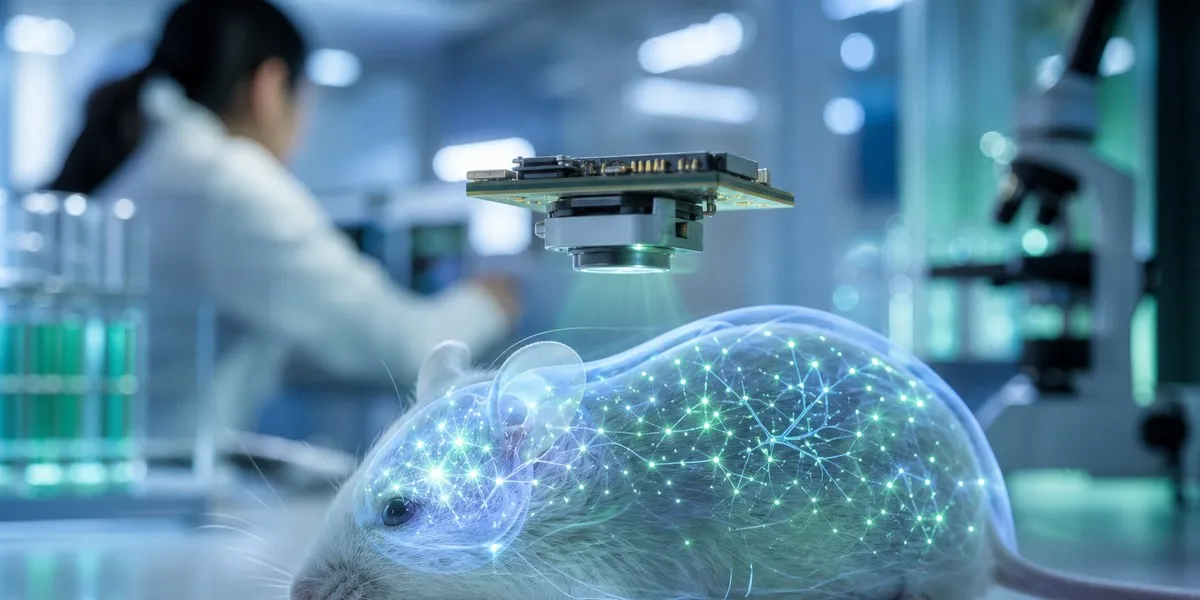
Chinese scientists have developed Airscope, a one-gram wireless device for observing the brain activity of laboratory animals. During an experiment, it enabled the simultaneous recording of the activity of more than 8,500 individual neurons in the cerebral cortex of a single mouse, South China Morning Post reports.
A device for animals’ free movement
Airscope was jointly created by specialists from Tsinghua University and the Medical School of the People’s Liberation Army of China. A description of the development was published in the peer-reviewed journal Nature. The researchers call the device the world’s smallest wearable mini brain monitor of its kind.
Airscope is a mesoscope, an optical instrument for observing biological tissues at an intermediate scale between a microscope and a macroscope. It makes it possible to cover a wider field of view while distinguishing the activity of individual cells. Previously, animals often had to be restrained or connected to cables for similar studies, while compact devices allowing free movement had a field of view that often did not exceed one millimeter.
More current news is available on the UA.News Telegram channel Telegram.
Experiment with mice
The team reduced the device’s volume by nearly five orders of magnitude compared with conventional benchtop microscopes. According to the developers, the quality of neural signal recording remained comparable. The device is equipped with a two-megapixel image sensor that compresses data for wireless transmission of megapixel-level images.
During the experiment, mice fitted with Airscope were released into a specially created microenvironment with ramps, hollows and shelters. The animals could climb and dig burrows freely, as the equipment’s weight did not interfere with their natural behavior. Scientists studied changes in neural signals during different types of behavior. The results included determining how patterns of cortical activity in dorsal areas of the brain affect an animal’s social competitive advantage.
Qionghai Dai, an author of the work from the Department of Automation at Tsinghua University, said that the microscope could contribute to more accurate detection of neural signals in optical brain-computer interfaces. According to him, the technology could also be used in the future in immunology and oncology research.




