
China creates a portable CT scanner weighing 6 kg
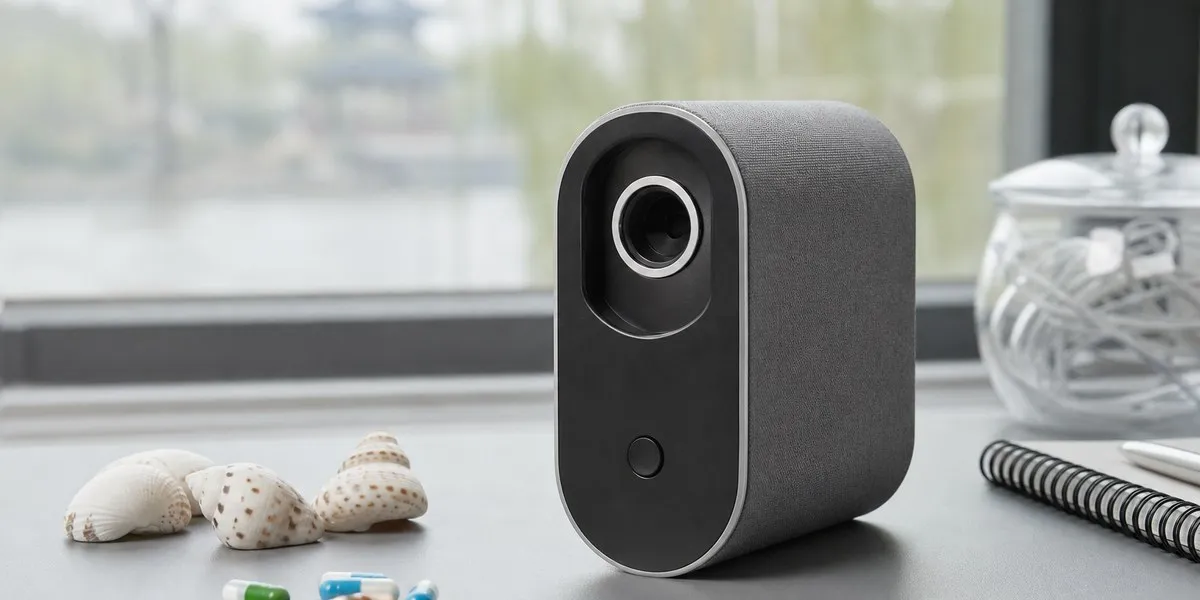
In China’s Shandong province, Rayim has developed the 6 kg Xtomo-Cube portable CT scanner, designed to study small fossils and archaeological finds. The device is the size of a desktop speaker. Its developers call it the world’s smallest and lightest computed tomography system, South China Morning Post reports.
Device specifications
According to Liu Baodong, a senior engineer at the Chinese Academy of Sciences and general manager of Rayim, the scanner can be held in one hand. The Xtomo-Cube’s spatial resolution is 80 micrometres, approximately the thickness of a human hair. The device can analyse small objects, including snail shells and medicinal capsules.
The system consumes about 200 watts of electricity, so it can be powered by a regular portable battery during fieldwork. Liu Baodong also stated that the device’s key components — the X-ray source, rotating platform and detector — were developed and manufactured in China.
More current news is available on the UA.News Telegram channel Telegram.
According to the engineer, one of the tasks was to fit these components into a four-litre housing while preserving image detail. The previous record among the smallest CT systems, according to the Chinese outlet Science and Technology Daily, belonged to a Germany-developed device weighing 19 kg.
Applications for science and education
CT, or computed tomography, uses X-ray images taken from different angles to create a three-dimensional model of an object’s internal structure. Such systems are used in medicine to detect tumours, internal bleeding and other injuries, as well as for contactless examination of fossils, archaeological finds and industrial parts.
Liu Baodong noted that the Xtomo-Cube is not intended to scan all types of objects, but was created for small samples. Its compact size and relatively low X-ray energy may make the device suitable for university classrooms and research laboratories. According to him, open settings and access to raw image data allow students and researchers to experiment with assembling, reconstructing and improving CT images.


