
Scientists estimate the Moon’s radius has shrunk by 45 meters — Space.com
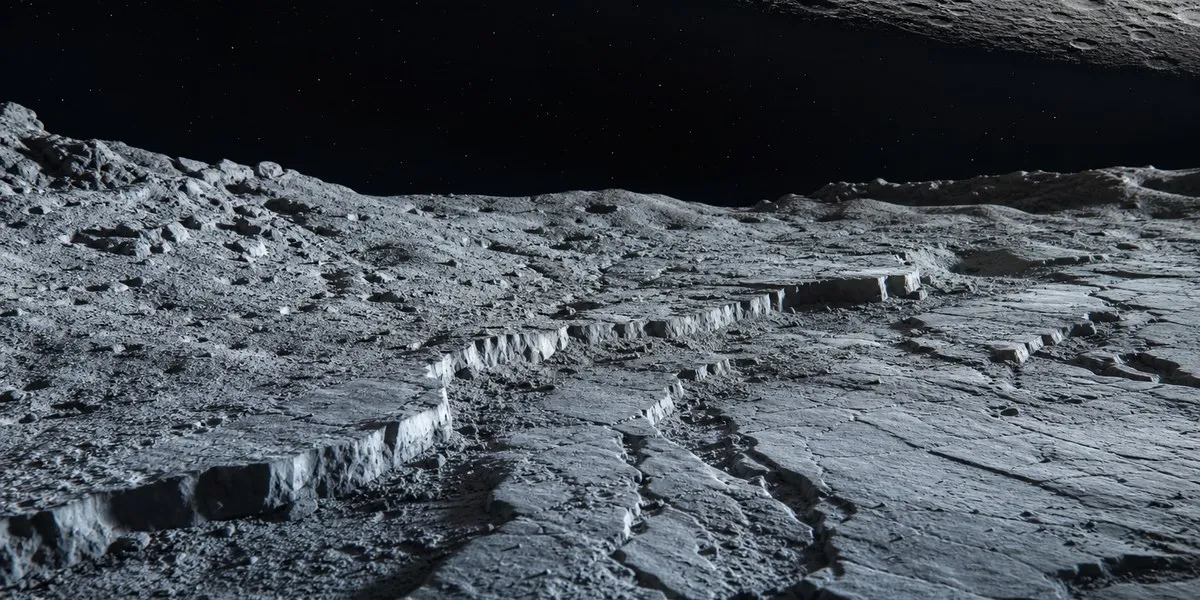
Researchers estimate that the Moon’s radius has decreased by about 45 meters over the past 400–800 million years. They reached this conclusion after analyzing images captured by the Lunar Reconnaissance Orbiter Camera: more than 10,000 relatively young faults were identified on the satellite’s surface, Space.com reports.
Signs of compression on the surface
The Moon has been gradually cooling since its formation about 4.5 billion years ago. The cooling of its inner layers causes the celestial body to contract, which is reflected on its surface through the appearance and development of faults.
Among the identified structures are lobate scarps, long curved formations that arise when the surface is compressed, cracks and shifts upward. Researchers also recorded small mare ridges on the Moon’s dark plains — narrow folded structures on the surface.
More current news is available on the UA.News Telegram channel Telegram.
Faults are unevenly distributed
The study’s lead author, geologist and scientist emeritus at the Smithsonian National Air and Space Museum’s Center for Earth and Planetary Studies Thomas Watters, said that the number of young faults in LROC images greatly exceeded his expectations. According to him, as the Moon’s inner layers continue to cool and contract, new faults may continue to form and existing ones may grow.
Unlike Earth, which has about 15 major tectonic plates, the Moon does not have such a plate system. Its outer shell is a single plate, while contraction-induced faults are scattered across the entire surface. Areas with fewer cracks, according to the study’s authors, have a thicker lunar crust. This may indicate that the thick crust early in the Moon’s history insulated the warm inner layers and restrained their cooling, contraction and cracking. The study was published on October 14 in The Planetary Science Journal.




