
In Israel, an autonomous drone detected 154 faults at a solar power plant
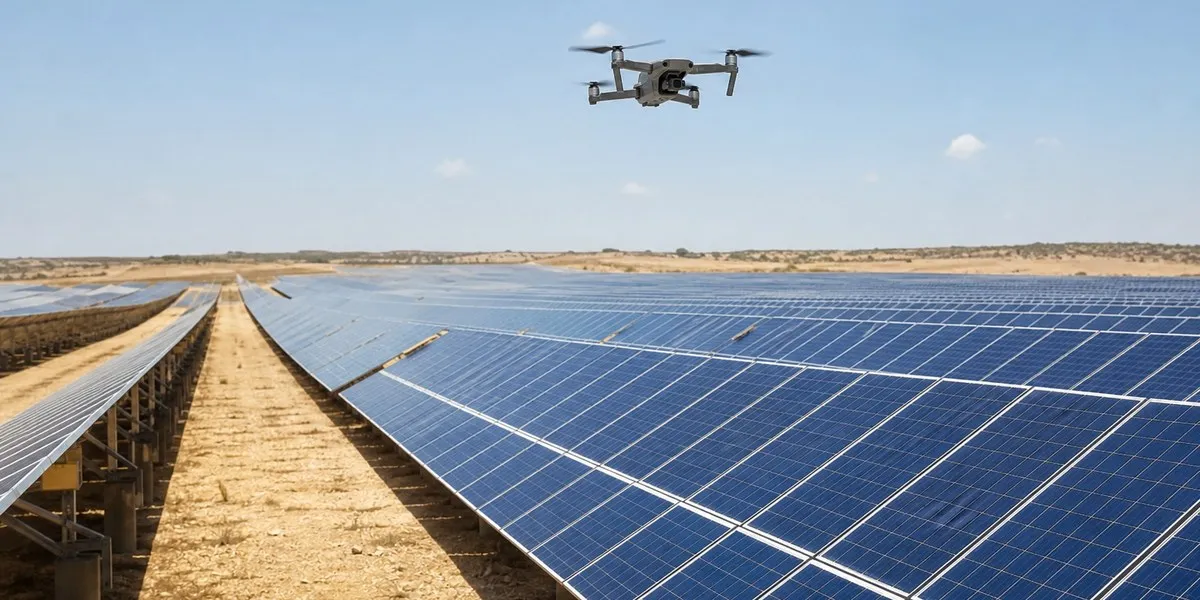
At an 88 MW solar power plant in southern Israel, an autonomous drone made 69 flights over eight working days and detected 154 technical faults. This was reported by Propeller Drones founder and CEO Itamar Kogali in an opinion column for the Jerusalem Post.
According to him, the drone was permanently based at the site and carried out security tasks: monitoring the perimeter, checking the fence and responding to alarm signals. During its flights, the device also collected thermal data for a solar panel performance analysis platform.
Faulty strings
Among the detected problems were 42 disconnected strings — rows of solar panels that were not generating electricity, although the plant’s monitoring system reported normal operation. Kogali said that 27 strings had been repaired by the end of the work, which was expected to return electricity worth approximately $95,000 per year to the grid.
The columnist also stated that the 42 disconnected strings cost the facility about $147,000 annually. Thermal images of the same plant taken 13 months earlier, according to his data, showed 168 disconnected strings. He estimated the value of electricity that was not sold because of this at nearly $590,000.
More current news is available on the UA.News Telegram channel Telegram.
Inspections during security flights
Kogali believes that the advantage of autonomous drones lies not only in the absence of a pilot or a field team. If a drone is already deployed at an infrastructure site, has a charging station, certification and carries out security tasks, additional inspection flights require lower costs.
He cited data according to which global installed solar capacity reached 2,974 GW at the end of 2025. A study covering 3.3 million modules at more than 2,000 sites found thermal defects in 36.5% of modules. According to the data cited by the author, facilities with quarterly inspections outperform those with annual inspections by 36%, while plants with permanently deployed drones have an average loss rate of 3% compared with 5%.
At the same time, Kogali noted that detecting a defect does not guarantee that it will be fixed. At the described site, the contractor was not trained to work with the analytical platform, and the inspection system was not integrated with SCADA. He also emphasized that the highest published accuracy for defect classification in this field is 93%, so a human still has to review exceptional cases.


