
Protist with two reassigned stop codons found in Oxford — ScienceDaily
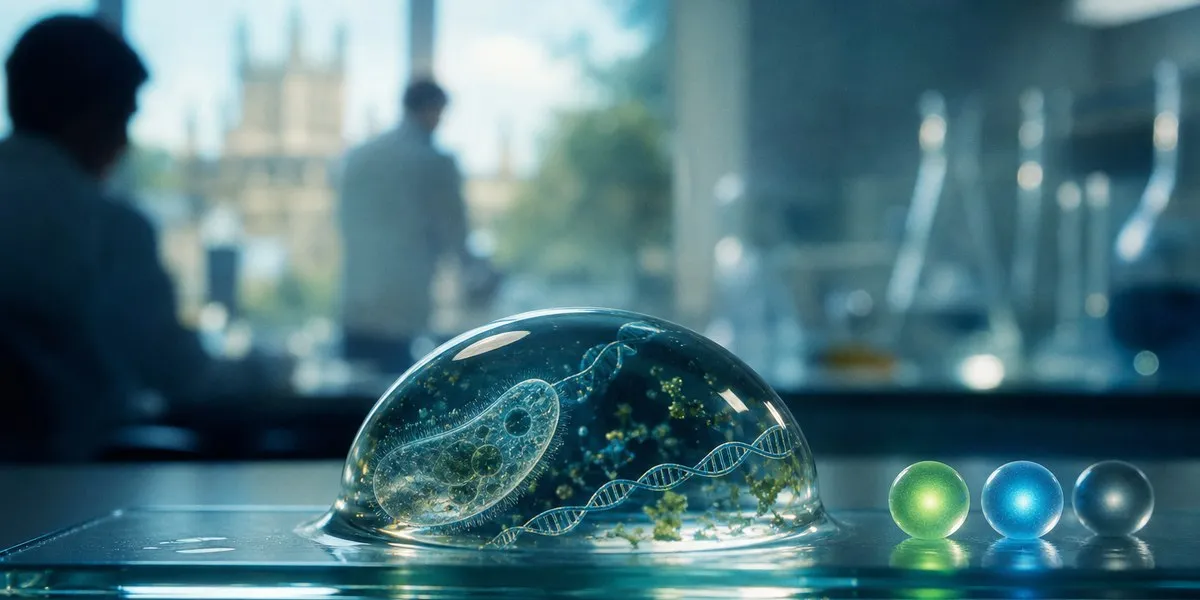
Scientists studied the previously unknown freshwater protist Oligohymenophorea sp. PL0344, collected from a pond in Oxford University Parks in England, and discovered an unusual way of reading genetic information. Genome analysis indicated that in this organism, two codons that usually signal the end of protein synthesis have acquired other functions: TAA encodes lysine, and TAG encodes glutamic acid.
As ScienceDaily reports, the discovery was made while testing a DNA sequencing method suitable for analyzing very small samples of genetic material, potentially even a single cell. Researchers from the Earlham Institute and the group of Professor Thomas Richards at the University of Oxford initially sought to improve tools for studying organisms that are difficult to grow in the laboratory.
Unusual meaning of codons
During protein synthesis, the ribosome reads an RNA sequence in triplets of nucleotides — codons. Usually, UAA, UAG and UGA are stop codons: they indicate that the protein chain must be terminated. In DNA, these signals correspond to TAA, TAG and TGA.
It is known that in some ciliates, stop codons can be reassigned to encode amino acids. However, in such cases TAA and TAG usually changed meaning together and corresponded to one amino acid. In PL0344, according to genomic analysis, these codons encode different amino acids, while TGA remained the only usual signal for ending protein synthesis. The study results were published in the journal PLOS Genetics in October 2023.
More current news is available on the UA.News Telegram channel Telegram.
Evidence of a new genetic code at work
Researchers found genes for specialized transfer RNAs associated with the reassigned codons in the protist's genome. Transfer RNA helps match messenger RNA codons with the corresponding amino acids during protein formation. This supported the conclusion that the unusual system was not the result of a sequencing error.
Scientists also recorded a large number of TGA stop codons after DNA regions encoding proteins. They may be a backup stopping mechanism if the ribosome continues reading after the intended end of the protein chain.
In December 2024, Jamie McGowan's team also reported other changes to the genetic code in several ciliate lineages. In five studied species, UAA remained a stop signal, while UAG acquired the meaning of leucine or glutamine. Evolutionary analysis showed that such changes arose independently at least three times.




