
On June 4, Orthodox Christians celebrate Mitrofan’s Day: traditions and customs
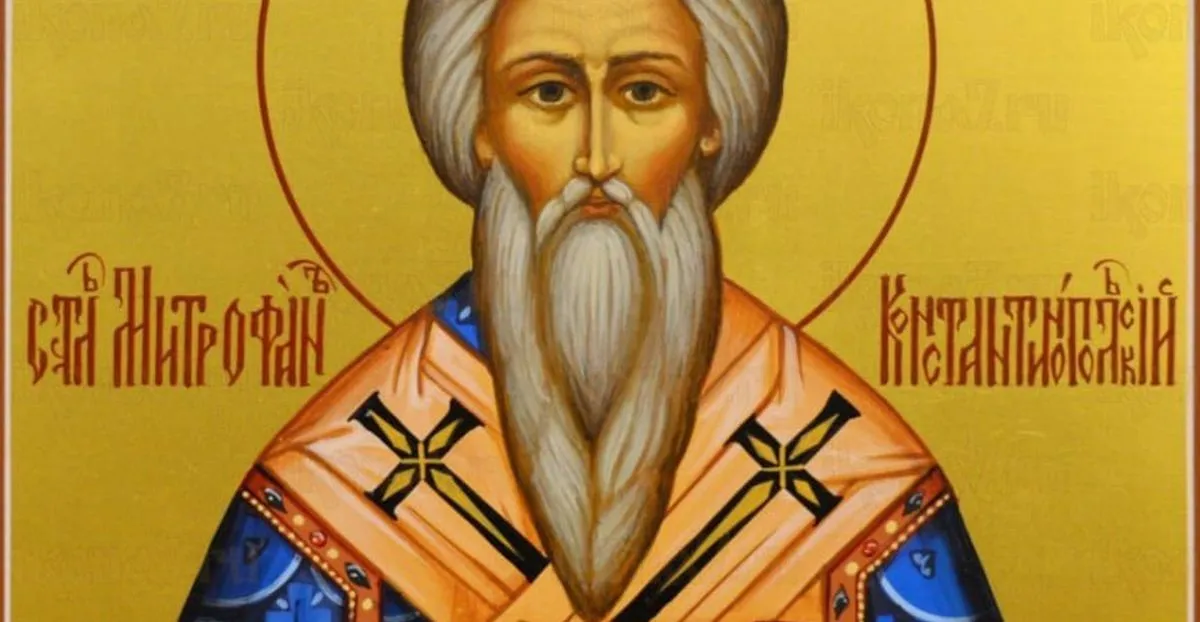
On June 4, according to the New Julian calendar, the Orthodox Church of Ukraine commemorates Saint Mitrophan, the first Patriarch of Constantinople. He lived in the 4th century, came from a noble Roman family, and received a high spiritual rank for his righteous life and faithfulness to Christianity.
Tradition holds that the saint possessed the gift of clairvoyance and lived to an exceptionally advanced age—117 years. According to both the New and Old Church calendars, on the first Thursday after Pentecost, believers venerate the miraculous icon of the Mother of God “Helper of Sinners” of Korets, which is currently kept at the Holy Trinity Convent in Korets, Rivne Oblast. According to the old (Julian) calendar, however, this day commemorated the martyr Vasilisk.
Before the Korets icon “Helper of Sinners,” people traditionally pray for help in difficult life circumstances, asking for healing from serious illnesses, infectious diseases, insomnia, or appetite disorders. Prayers are offered to Saint Mitrofan asking for protection from various temptations, a bountiful harvest, and the strengthening of family well-being. Among the people, the holiday is known as Mitrofan’s Day or Mitrofan the Manure-Spreader. This period was considered the most favorable for spreading manure and fertilizing the soil, as it was believed that “good soil will accept manure once and remember it for nine years.” The day is also considered auspicious for cleaning the home and tidying up the yard, and a candlelit feast with guests, according to tradition, is believed to bring prosperity to the home.
Church canons on this day strictly urge people to avoid any quarrels, foul language, displays of envy, gossip, and insults. Greed and refusing to help those in need are also condemned. Folk traditions add their own taboos to the church rules:
It is strictly forbidden to be lazy—idleness on Mitrofan’s Day can lead to the loss of money and good fortune.
You must not swim in open bodies of water or swim too far from the shore, as this was considered life-threatening.
It is forbidden to pat people on the shoulder—according to ancient beliefs, such a touch can accidentally “transfer” one’s illnesses to another person or take on someone else’s ailments. If such a tap happened accidentally, people would try to “return” it immediately in response.
Observing the weather on June 4 helped our ancestors predict the summer and the coming days:
Rainy weather on this day indicates that the rain will continue for another two or three days.
Intense heat at dawn is a sure sign of an imminent change in the weather to bad weather.
If the morning begins with thick fog, the weather will soon turn bad.
Mosquitoes gathering in swarms foreshadow a rapid warming, while a large number of midges promises a bountiful mushroom season.
Violet flowers that open at night are a special sign of a sunny and hot summer.
In June 2026, Orthodox Christians will celebrate the Day of the Holy Spirit, the Nativity of John the Baptist, and the feast day of the Apostles Peter and Paul. Also this month is Peter’s Fast, which will last for two weeks.


