
Mudra's attorneys stated that the NBU had not complied with the High Anti-Corruption Court's ruling
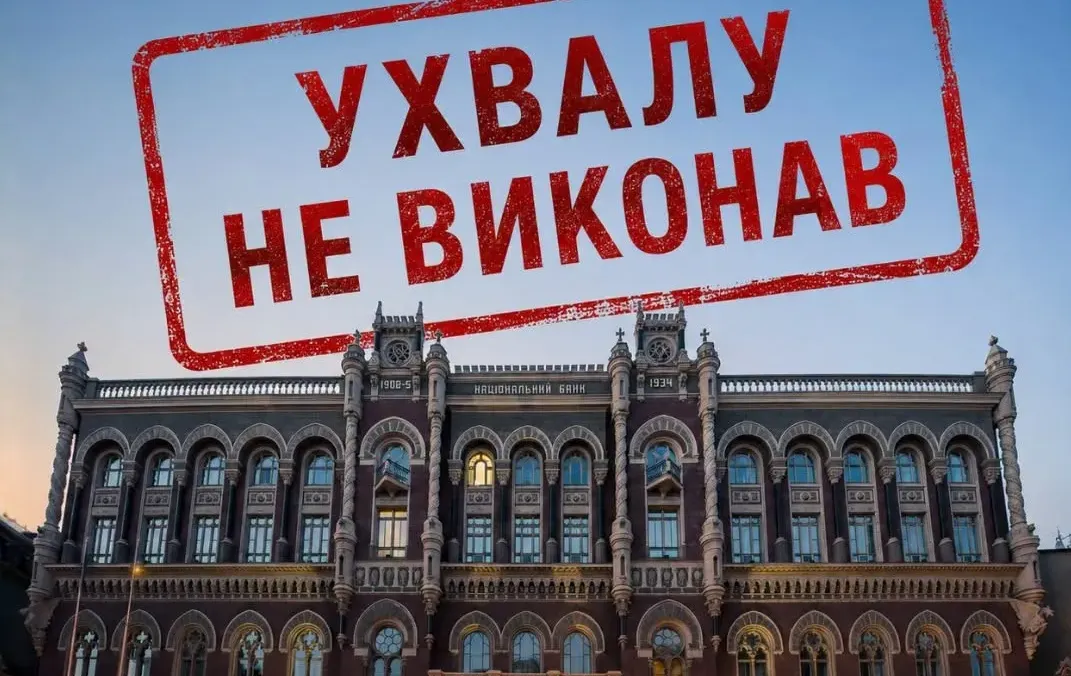
Lawyers for Iryna Mudra, the former deputy head of the Office of the President, stated that the National Bank of Ukraine had failed to comply with the High Anti-Corruption Court’s ruling regarding payments for posting bail. On September 24, the court ordered the regulator to investigate why banks are refusing to process such payments and to take action in the event of unjustified refusals. The NBU, for its part, stated that it had not instructed banks to automatically block bail payments and plans to respond within the scope of its authority.
Iryna Mudra’s attorneys stated that the National Bank of Ukraine had failed to comply with the High Anti-Corruption Court’s ruling regarding the payment of bail for their client. The law firm “Miller,” which represents Mudra, reported this on September 27. “24 hours have passed. The NBU has not complied with the High Anti-Corruption Court’s ruling,” the firm stated.
What the High Anti-Corruption Court Decided
On September 24, an investigating judge of the High Anti-Corruption Court upheld a complaint filed by Iryna Mudra’s defense team regarding the violation of her rights as a person in custody. The court separately ordered the National Bank to investigate the situation regarding payments for the bail. The ruling called for several specific actions.
The NBU was to verify whether banks were indeed blocking payments to the High Anti-Corruption Court’s deposit account marked “bail.” The regulator was also required to assess whether banks were complying with the requirements of the Payment Services Act. If it turned out that refusals were unfounded solely due to the type of payment, the recipient, or the IBAN, the NBU was to take the measures provided for by law.
In addition, the court ordered the regulator to ensure the availability of accessible channels for processing such payments and for reviewing properly executed payment instructions. The NBU was also required to inform the court and the defense of the results of the review and the measures taken.
Separately, the court requested that the National Bank provide documents regarding its correspondence, recommendations, and other communications with banks concerning payments marked “collateral,” as well as information on any reports received regarding mass rejections.
What the Lawyers Say
Miller’s legal team asserts that on the very same evening after the ruling was issued, they sent it to the NBU via its official email address with a qualified electronic signature. According to the lawyers, on September 25 at 9:10 a.m., the National Bank confirmed receipt of the document in writing.
The defense stated that it did not subsequently receive the documents required by the court’s ruling. “The defense has not received a single document,” the law firm’s statement reads. The attorneys also assert that, in their view, the issue is not limited specifically to the payment for Mudra. They point to banks’ refusals to process deposits into the VAKS account, regardless of who the funds are being deposited for or who the payer is.
The firm cited the Monobank service as an example. According to them, when attempting to make a payment to the relevant IBAN, the app reports that the VAKS account is blocked. However, these statements by the lawyers represent their own position. The NBU itself has stated that banks must independently assess each transaction and apply a risk-based approach.
The National Bank’s Response
The NBU publicly responded to the HACC’s decision on September 24. The regulator stated that it had not issued any instructions or recommendations to banks to automatically refuse to process transactions involving the posting of bail to the HACC. “The National Bank did not provide banks with any instructions or recommendations either regarding the automatic refusal to process transactions involving the deposit of collateral with the High Anti-Corruption Court or regarding the mandatory processing of such transactions,” the NBU stated.
The National Bank also emphasized that the decision regarding each specific payment is made by the bank itself after analyzing it. The regulator noted that during such a review, banks may take into account the source of the funds, the payer’s financial condition, and their relationship with the person for whom the bail is being posted.
At the same time, according to the NBU, the mere fact that bail is being posted in criminal proceedings is not, in itself, an automatic basis for refusing to process the transaction. Similarly, the status of a politically exposed person does not in itself mean that a bank must refuse to provide service. The NBU also reported that it is analyzing the practice of conducting such transactions and plans to provide banks with additional guidance on applying a risk-based approach.
Why Banks Refused Payments
Previously, the National Bank reported on the reasons that the banks themselves cited when refusing to process payments. These included the lack of documents proving the origin of funds, cash deposits, the splitting of payments, the use of shell companies, and the need for additional analysis of transactions.
Banks also cited reputational risks associated with the negative media coverage surrounding such payments. In other words, the NBU’s position is that banks should not automatically process any collateral payment, but they also cannot automatically refuse a payment solely because it is intended as collateral for the High Anti-Corruption Court.
What Led Up to the Mudriy Situation
On August 25, the High Anti-Corruption Court (HACC) imposed a pretrial measure on Iryna Mudra in the form of pretrial detention, with the alternative of posting a 20 million hryvnia bail. She is a suspect in the “Forest Gump” case. Prior to this, the National Anti-Corruption Bureau of Ukraine (NABU) and the Specialized Anti-Corruption Prosecutor’s Office (SAPO) had notified her of her status as a suspect in an investigation related to the posting of bail for another individual implicated in an anti-corruption case.
Mudriy’s defense team stated that they were prepared to pay the bail amount set by the court, but banks refused to process the payments. According to her attorneys, they encountered such difficulties with at least 15 banks. It was precisely because of this situation that the defense appealed to the High Anti-Corruption Court (VAKS). The court agreed that there were grounds to verify compliance with Mudra’s rights and ordered the National Bank of Ukraine (NBU) to take the necessary actions.
What’s Next
The attorneys stated that they intend to notify the High Anti-Corruption Court of the failure to comply with the ruling and to file a complaint regarding a possible criminal offense under Article 382 of the Criminal Code of Ukraine—failure to comply with a court decision. At the same time, there is currently no separate court ruling stating that NBU officials have in fact failed to comply with the order. This is the claim made by the defense.
In its official statement, the High Anti-Corruption Court confirmed the content of the ruling and the 24-hour deadline it established, but did not report on the NBU’s subsequent compliance or non-compliance with this decision. The High Anti-Corruption Court also separately emphasized that Iryna Mudra is presumed innocent of committing a crime until her guilt is proven in accordance with the law and established by a court conviction. This was reported on the Facebook page of the law firm “Miller” on Sunday.
On September 24, an investigating judge of the High Anti-Corruption Court granted the motion filed by the defense team of Iryna Mudra, the former deputy head of the Office of the President. The lawyers stated that people are willing to post bail for her, but banks and payment services are refusing to process such payments.




