
Photo: A legless skink was spotted in the Chornobyl Nature Reserve
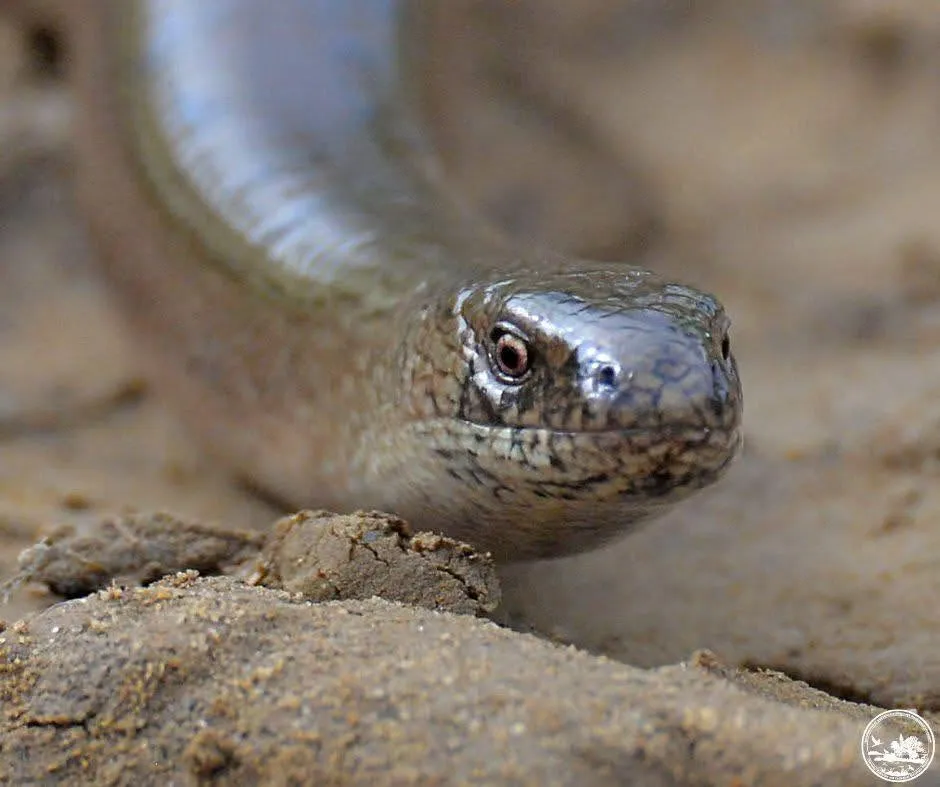
A rare legless lizard—the whorl-tailed lizard—has been discovered in the Chornobyl Radiation and Ecological Biosphere Reserve. Experts note that due to its external resemblance, it is often mistaken for a snake; however, the species belongs to the lizard family and has a number of characteristic differences in structure and behavior.
“Spotted a ‘snake’ in the grass? Don’t be alarmed! It’s quite possible that what you’re looking at is a slow worm—a legless lizard. Despite its snake-like appearance, it has absolutely nothing to do with snakes,” the researchers noted.
According to experts, the slow worm is non-venomous, docile, and spends most of its life in the soil or under forest litter, where it hunts earthworms, slugs, and other invertebrates.
In the Chornobyl Nature Reserve, the slow worm is rarely seen. Due to its secretive lifestyle, this reptile remains inconspicuous even to experienced researchers, scientists explain.
There are several characteristics that distinguish this reptile from a snake. For instance, the slow worm has movable eyelids that it blinks, and, like many other lizards, it can shed its tail in case of danger. Unlike a viper, its neck hardly tapers between the head and body.
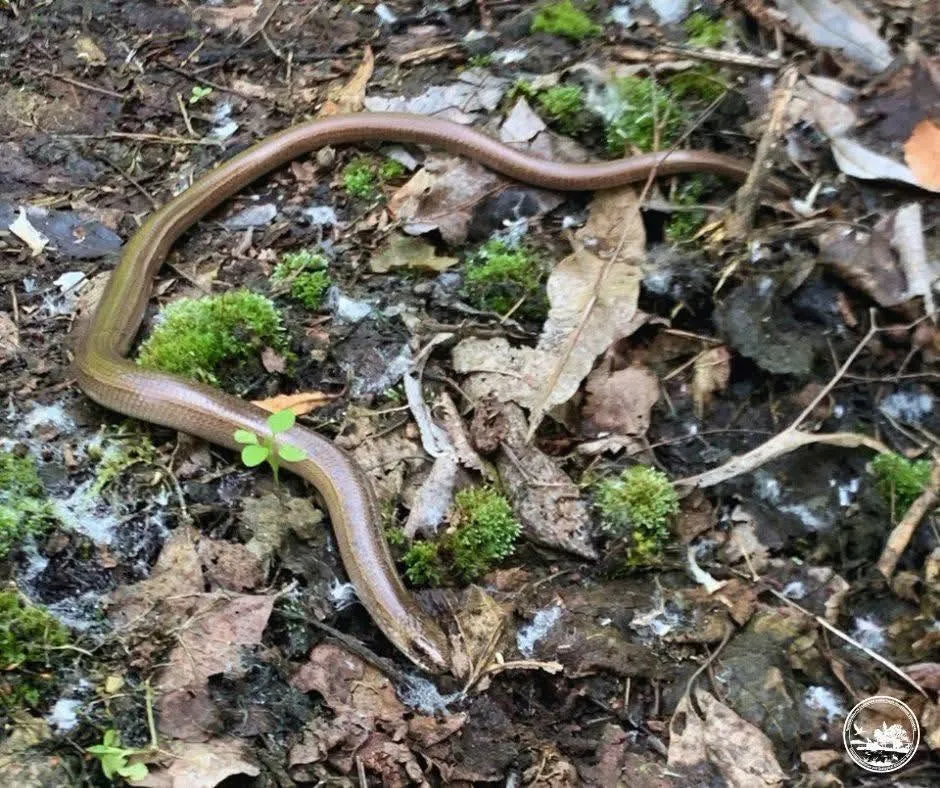
The slow worm, also known as the slow lizard or smooth lizard (Anguis), is a genus of legless lizards.
They have completely lost their limbs and are often mistaken by people for snakes. They grow to 40–50 cm in length, with females being slightly larger than males. The tail accounts for almost half the body length, yet it is practically indistinguishable from the body. They move quite slowly, making them easy to catch.
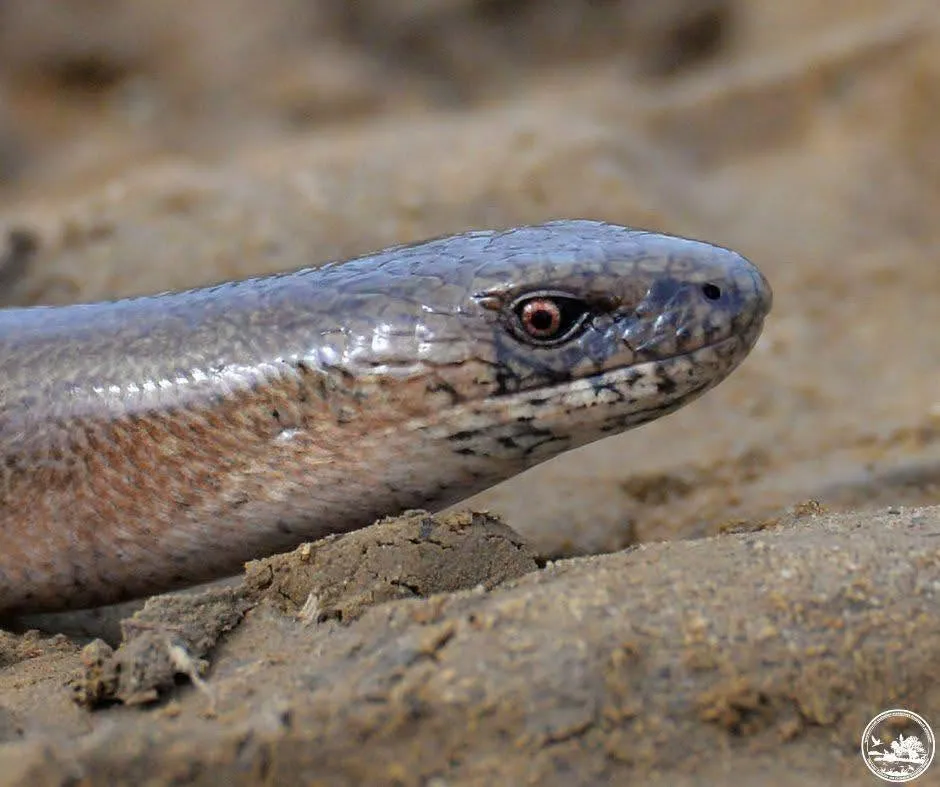
Like other lizards, slow worms shed their tails when in danger, confusing predators; the tail regrows but does not reach its original length. Also, unlike snakes, they have ear openings. Sand lizards’ tongues are also forked, but not as long as those of snakes.
Source: Chornobyl Radiation-Ecological Biosphere Reserve.
As a reminder, dozens of animal species potentially new to science have been discovered in Angola.


