
Golovaty spoke about the German expert analysis in the Gongadze case
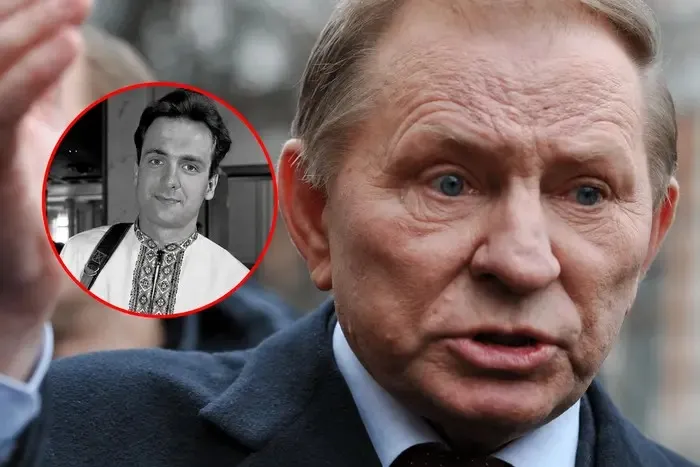
Former Minister of Justice Serhiy Holovaty spoke about the results of an independent investigation conducted in Germany early on in the probe into the murder of Georgiy Gongadze. According to him, the forensic analysis did not confirm that the remains handed over to the investigation belonged to the journalist. At the same time, these findings have remained a subject of controversy for many years, while official Ukrainian forensic analyses and other evidence have yielded different conclusions.
Serhiy Holovaty, who at the time served as Minister of Justice and was a member of the parliamentary commission investigating the Gongadze case, stated that he initially believed Leonid Kuchma was involved in the journalist’s murder.
According to Golovaty, in the early 2000s, he noticed contradictions in the experts’ conclusions. In particular, this concerned a study by the Russian Ivanov Laboratory. Initially, the former minister claims, the lab stated that the remains found in the Tarashcha district did not belong to Gongadze. A few months later, the same lab issued a conclusion to the contrary.
“Russia was playing its own game,” Golovaty said, explaining why he began to doubt the official version at that time. He also stated that it was during that period that he became convinced of Kuchma’s involvement in the crime. Because of this, Golovaty joined the National Salvation Forum and openly opposed the then-president.
What the German Analysis Revealed
Holovaty said that he later decided to conduct an independent investigation outside of Ukraine. According to him, he personally and secretly sent biological samples to the private Genedia laboratory in Munich. Several samples made their way to Germany. Among them were the remains of the so-called “Tarashcha body,” which Olena Prytula had handed over to the parliamentary commission. Researchers were also given Georgiy Gongadze’s medical record from Tbilisi. According to Holovaty, it bore a dried bloodstain from the journalist.
In addition, a blood sample from the journalist’s mother, Lesya Gongadze, was sent to the laboratory. This made it possible to conduct a DNA comparison and verify whether the remains found could indeed belong to her son.
According to Golovaty, the result was unexpected. The test did not confirm a match between the remains provided by Olena Prytula and Lesya Gongadze’s blood. At the same time, DNA analysis of the dried bloodstain on the medical record showed a match with the blood of Georgiy’s mother. It was this result, according to Golovaty, that forced him to reconsider his own stance on the case. “I secretly took the samples to a private laboratory in Germany,” the former minister said.
These results were already known previously
At the same time, it is important to note that the German analysis is not a new development in the Gongadze case. Its results were already known as far back as 2001. The Kroll report, which examined the circumstances of the investigation, also mentioned the analysis conducted by the German laboratory Genedia. At the time, the laboratory reported that the sample of remains submitted for analysis did not match Lesya Gongadze’s blood. However, an analysis of dried blood from a medical record showed a match with the journalist’s mother.
However, these results were later criticized. In particular, questions arose as to whether the origin of the biological material could be reliably established and whether all necessary procedures had been followed during its transfer and analysis. A journalistic investigation by “Ukrainska Pravda” noted that the sample analyzed by Genedia may not have come directly from the “Tarashcha body.”
Therefore, it is incorrect to say that the German analysis definitively proved that the body had been swapped. It was one of several analyses in a major case where various studies and conclusions had previously contradicted one another.
What is known about the “Tarashcha body”
Georgiy Gongadze disappeared in Kyiv on September 16, 2000. In November of that same year, the decapitated remains of a man were found in the Tarashcha district of Kyiv Oblast, which later became the central piece of physical evidence in the case. Due to the condition of the body, a standard identification process was impossible. Investigators and independent researchers examined various pieces of evidence, including personal belongings and medical records. Among the evidence were pieces of jewelry which, according to the Kroll investigation, helped link the remains to Gongadze.
Specific details regarding the origin and examination of the remains have been the subject of controversy over the years. That is why the Gongadze case has, from the very beginning, been accompanied by numerous questions regarding the work of the investigators, the experts, and the origin of certain pieces of evidence.
Does this prove Kuchma’s innocence?
It is important here to distinguish between Golovaty’s statement and the facts established by the court. The former minister believes that Gongadze’s murder may have been an operation directed against Kuchma. In his view, Russia may have been attempting to weaken the Ukrainian president and undermine Ukraine’s relations with the West.
Holovaty links this version to Kuchma’s political course and his relations with the West. He asserts that following the journalist’s murder and the so-called “tape scandal,” the Ukrainian government’s position was significantly weakened. However, this is merely the former minister’s version of events, not a fact established by a court. The existence of the German expert report does not in itself prove that the Kremlin was involved in the murder or that Russian intelligence services deliberately sought to discredit Kuchma.
What Has Been Established Regarding the Gongadze Murder
In 2013, the Kyiv Court of Appeals found former Interior Ministry General Oleksiy Pukach guilty of the murder of Georgiy Gongadze and sentenced him to life in prison. The verdict was later appealed, but in July 2026, the Grand Chamber of the Supreme Court refused to open proceedings on Pukach’s latest appeal. Thus, Pukach remains convicted of the journalist’s murder. At the same time, the question of who ultimately ordered the crime remains one of the most high-profile issues in this case.
Georgiy Gongadze has become a symbol of Ukrainian journalism and the fight for the right to speak the truth. Every year on May 21, his birthday, Ukraine awards the Georgiy Gongadze Prize to journalists who work to promote independent and high-quality journalism. In 2026, the award was presented to Olga Rudenko and Mykhailo Tkach.
A memorial event was held in Kyiv on Kontraktova Square to mark the 25th anniversary of journalist Georgiy Gongadze’s death.
The Supreme Court issued a final ruling in the case of the murder of journalist Georgiy Gongadze. Oleksiy Pukach’s life sentence was upheld, and the appeals filed by the convicted man and the victim, Podolsky, were denied.


